 CANADA
CANADA
CANADA
 By
Fr. “Double
Leaf / Fixed
Star”
By
Fr. “Double
Leaf / Fixed
Star” (Algonquian
& Iroquois). Cuoq, Jean-André. Études
philologiques sur quelques langues sauvages de l’Amérique. Par N.O.
Montréal: Dawson Brothers, 1866. 8vo (24.5 cm, 9.6"). 160 pp.
(Algonquian
& Iroquois). Cuoq, Jean-André. Études
philologiques sur quelques langues sauvages de l’Amérique. Par N.O.
Montréal: Dawson Brothers, 1866. 8vo (24.5 cm, 9.6"). 160 pp.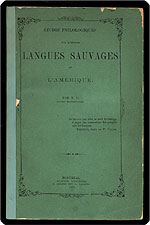
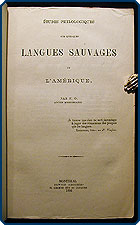
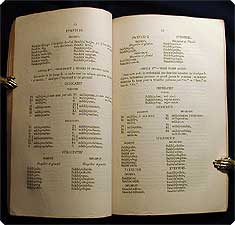
 Click the middle or right image for an enlargement.
 Father Cuoq (1821–98) was an extremely accomplished linguist as evidenced by his becoming fluent in both Algonquin and Iroquois; Field (Indian Bibliography, p. 93) writes glowingly of his mastery of these languages. His life as a missionary of the Order of Sulpitians, notably among the Nipissing at Lake of Two Mountains, certainly aided in his scholarly achievement.
• Pilling, Algonquian, 100-101; Pilling, Proof-sheets, 952; Field 391; Newberry Library, Indian Linguistics in the Edward E. Ayer Collection, Algonkin-14; Sabin 17980. Not in Banks; not in Evans, Masinanhikan. Original printed green wrappers, spine reinforced some time ago, edges chipped. Half-title with pencilled annotations. First text page rubber-stamped by a now-defunct institution; pages otherwise clean.

 American Ostervald — For FRENCH-Reading Users, 1824Bible. N.T. French. 1824. Ostervald. Le nouveau testament de notre seigneur Jésus-Christ... seconde édition Américaine. Boston: J.H.A. Frost, 1824. 12mo (18.2 cm, 7.1"). 379, [5 (1 blank)] pp.
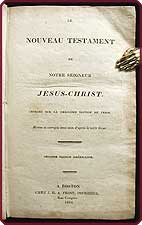
 French
Canadians and French émigrés in the
United States, this is a good example of an early American printing of a complete
Testament, either Old or New, in French.
French
Canadians and French émigrés in the
United States, this is a good example of an early American printing of a complete
Testament, either Old or New, in French.
• Shoemaker 15382. Contemporary speckled sheep, worn and abraded, spine with gilt-stamped leather title label. Front pastedown with early numerical inscription. Outer margins of last few leaves waterstained; some pages with mild cockling or light spotting, others with varying degrees of age-toning.

 A New Testament in
 CHIPPEWA Bible. N.T. Ojibway. O'Meara. 1854. Ewh oowahweendahmahgawin owh tabanemenung Jesus Christ, keahnekuhnootuhbeegahdag anwamand egewh ahneshenahbag Ojibway anindjig. Toronto: Henry Rowsell, 1854. 8vo (20.5 cm; 8"). 766 pp.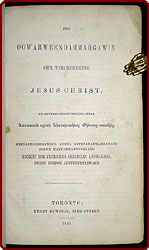
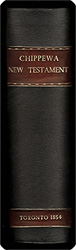 Click the images for enlargements.
 • Pilling, Proof-sheets, 2830 (who lists it as by James rather than Frederick O'Meara); Newberry Library, Ayer Collection, Chippewa-32; Darlow & Moule 3034; Evans, Masinahikan, 570. Recent black moiré cloth, spine with burgundy gilt-stamped leather title and publication labels. Soiling variously and mostly lightly, throughout, mostly to edges and corners; upper outer corner of initial blank repaired some time ago and some leaves at center with tip of lower outer corner chipped (nibbled) away; a few central leaves creased.  A copy not “fresh,” but still worthy. (21121)
 For a NEW unillustrated, PDF-format list of 100 Bibles, Testaments,
 Micmac
 MatthewBible.
N.T. Matthew. Micmac. 1871. Rand. Pela kesagunoodumumkawa tan tula
uksakumamenoo westowooklw' sasoogoole clistawti cotenink, Did Megumoweesimk.
Chebootook: Megumagea' Ledakun-Weekugukemkawa Moweome, 1871. 12mo. 126 pp.
MatthewBible.
N.T. Matthew. Micmac. 1871. Rand. Pela kesagunoodumumkawa tan tula
uksakumamenoo westowooklw' sasoogoole clistawti cotenink, Did Megumoweesimk.
Chebootook: Megumagea' Ledakun-Weekugukemkawa Moweome, 1871. 12mo. 126 pp.

 The 1870s saw major efforts at revision: Matthew and John were the first
to be revised. Printed at Halifax, Nova Scotia, they have a pronunciation
guide printed on the verso of their title-pages. We are proud to offer "Matthew"
in this new version, which Darlow and Moule state is a revised edition of No.
6781, published in 1853.
The 1870s saw major efforts at revision: Matthew and John were the first
to be revised. Printed at Halifax, Nova Scotia, they have a pronunciation
guide printed on the verso of their title-pages. We are proud to offer "Matthew"
in this new version, which Darlow and Moule state is a revised edition of No.
6781, published in 1853.
• Pilling, Algonquian, p. 420; Banks, p. 95; Evans 521; Darlow & Moule 6788. Not in Newberry Library, Indian Linguistics in the Edward E. Ayer Collection. Contemporary black cloth in imitation of pebbled morocco. Binding lightly spotted. Overall an impressively good copy.
 Typically,
a number of other BIBLES & BIBLE PARTS in
Typically,
a number of other BIBLES & BIBLE PARTS in CANADIAN INDIAN LANGUAGES


Ojibway
— OTTAWACatholic
Church. Catechism. Ojibway. A short compendium of the Catechism for the Indians, with the approbation of the Rt. Rev. Frederic Baraga, Bishop of Saut Sainte Marie, 1864. Rev. N. L. Sifferath, Missionary of the Ottawa and Otchipwe Indians. Buffalo, N.Y.: C. Wieckmann, (Aurora Printing House.), 1869. 12mo (18.3 cm, 7.2"). 62, 2 pp.
 Click either image above for an enlargement.
• Sabin 80996; Pilling, Algonquian, 462; Pilling, Proof-sheets, 3601a. Not in Banks; not in Evans. Original buckram, showing minor water damage; upper page margins waterstained, obviously to very lightly. Title-page with library stamps and some rough old pen-markings; first two leaves a bit torn at binding.
An American Indian'sEuropean Travel Copway, George (a.k.a. Kah-ge-ga-gah-bowh). Running sketches of men and places, in England, France, Germany, Belgium, and Scotland. New York : J.C. Riker, 1851. 12mo (19 cm; 7.5"). Frontis., 346, [2 (ads)] pp., 4 plts.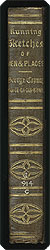
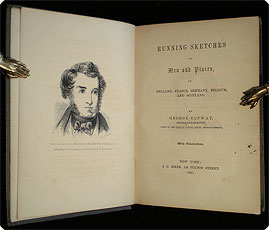
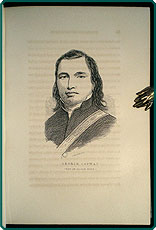 Click the interior images for enlargements.
 He was a talented speaker and a well-published writer. His autobiography, The life, history, and travels of Kah-ge-ga-gah-bowh (Philadelphia, 1847), went through several editions.
 The present work is one of the first published European travel accounts from the pen of a Native American. He describes what he saw and whom he met (Disraeli, Baron de Rothschild, Lord John Russell, and others), as well as how he was received by the Europeans. The main purpose of the trip was to represent Christian American Indians at the 1850 General Peace Conference at Frankfurt am Main, where in full native attire he delivered a protracted and passionate antiwar speech.
An uncommon work.
Provenance: Bookplate of St. Catherine's Hall Library of the Sisters of the Blessed Sacrament, the American order founded by “Mother” Katharine Drexel. Daughter of one of her time's richest families, Drexel used much of her fortune in efforts on behalf of American Indians.
• Sabin 16721. Not in Pilling, Proof-sheets; not in Field. On Copway, see: Dictionary of Canadian Biography (online). Publisher's charcoal grey cloth elegantly stamped in blind on covers; gilt center device on each cover and gilt tooling and stamping on spine. Bookplate as above on front pastedown; neat white number on spine; no other markings. A very good copy. (25245)

“I wish she would write a
Jalna book a year for the rest of her
life . . .”
De la Roche, Mazo. The building of Jalna. Boston: Little, Brown & Co., 1944. 8vo. [4] ff. 366 pp.
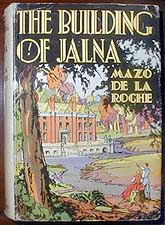 • First U.S. edition, second printing, of this episode in
  Canadian
writer De la Roche's multi-volume epic of Jalna. The front of the
dust jacket bears Lee Thayer's colorful depiction of Adeline sitting on a large
stump, with Capt. Whiteoak standing next to her gesturing at the construction
of Jalna in 1850.
Canadian
writer De la Roche's multi-volume epic of Jalna. The front of the
dust jacket bears Lee Thayer's colorful depiction of Adeline sitting on a large
stump, with Capt. Whiteoak standing next to her gesturing at the construction
of Jalna in 1850.
• Very good condition with a good+ dust jacket (small tears, price clipped from front flap).


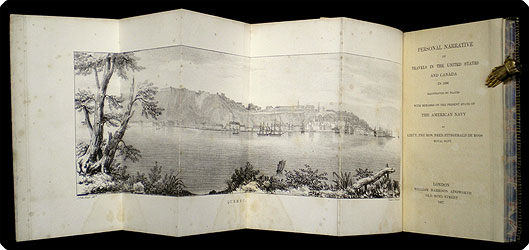
A Practical Yet Picturesque View ofthe U.S. & Canada De Roos, Frederick Fitzgerald [a.k.a. De Ros, John Frederick Fitzgerald]. Personal narrative of travels in the United States and Canada in 1826 ... with remarks on the present state of the American Navy. London: William Harrison Ainsworth, 1827. 8vo (21.8 cm, 8.55"). xii, 207, [1] pp.; 14 plts. (1 fold.).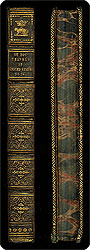
 Click the images for enlargements.
 The volume is illustrated with an oversized, folding panoramic view of Quebec along with 13 other plates, including two maps of the Niagara Falls region; views of Bristol, DE, and Chester, MA; and a bucolic depiction of the “Water Works of Philadelphia on the Schuylkil,” all engraved after De Roos's own designs.
Binding: Contemporary hunter green diced calf, covers framed in gilt double fillets and an interior blind rule with small gilt-stamped corner fleurons; spine gilt extra in five compartments. Board edges and turn-ins decorated with gilt rolls; rich blue marbled endpapers; all edges marbled.
• Howes D268; Sabin 19677. Binding as above, corners/joints scuffed and back joint starting from head; spine a little sunned, evenly and attractively. Scattered light foxing, pages and plates otherwise clean. An admirable book in a nice copy. (26665)
 Earnest & Illustrated
Duchaussois, Pierre. The Grey Nuns in the far north. Toronto: McClelland & Stewart, (copyright 1919). 8vo. [4], 287, [1] pp.; illus.
Earnest & Illustrated
Duchaussois, Pierre. The Grey Nuns in the far north. Toronto: McClelland & Stewart, (copyright 1919). 8vo. [4], 287, [1] pp.; illus.
 Click the images for enlargements.
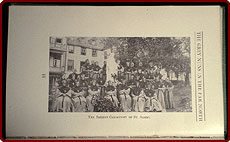
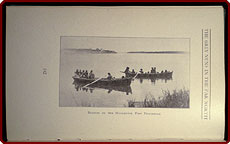
  This is illustrated with a good many half-tones.
• Publisher's green cloth, front cover and spine with black-stamped title; spine sunned and with inked call number, spine head chipped, corners slightly rubbed. Front pastedown with institutional bookplate, front free endpaper faintly rubber-stamped. (24822)
Missions around the World, Illustrated Edwards, Bela Bates. The missionary gazetteer; comprising a geographical and statistical account of the various stations of the American and foreign Protestant missionary societies of all denominations, with their progress in evangelization and civilization. Boston: William Hyde & Co., 1832. 12mo (19.4 cm, 7.6"). Frontis., [4], [ix]–431, [1] pp. (pp. 137/38 bound in out of order); 24 plts.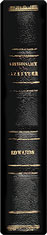
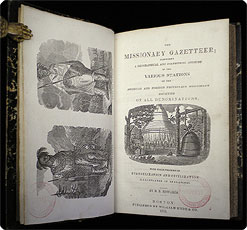 Click the interior image for an enlargement.
 The volume is illustrated with a total of25 wood-engraved plates and a wood-engraved title-page vignette depicting architectural views, native dress, dwellings, and religious sites.
• American Imprints 12263; Sabin 21891. Late 19th-century half roan with marbled paper–covered sides, spine with gilt-stamped title; edges and extremities showing moderate shelf wear (refurbished) . Front pastedown with old seminary bookplate, frontispiece and title-page with faded rubber-stamps of the same, one preliminary leaf with inked numeral in lower margin. Most plates with offsetting, pages with scattered light spotting; otherwise clean and unmarked. In fact, a nice copy of an interesting missionary and in part ethnographical work. (25507)

Cree Syllabics Guilloux, N., Father. [three lines in syllabic characters, which are transcribed as] Livre d'apologétique [then]. Winnipeg, Man.: Canadian Publishers Ltd., 1943. 8vo. [4], 114 pp.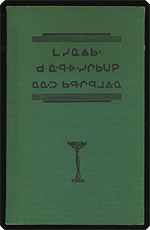
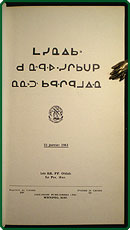 Click the interior image for an enlargement.
No copy traced via OCLC.
• Not in Banks. Not in Evans. Original printed cloth–covered stiff wrappers. Fine. (14756)
 CREE
Horden, John.
A grammar of the Cree language, as spoken by the Cree Indians of North
America. London: Society for Promoting Christian Knowledge, 1881. 12mo (161
mm; 6.375"). viii, 238 pp.
CREE
Horden, John.
A grammar of the Cree language, as spoken by the Cree Indians of North
America. London: Society for Promoting Christian Knowledge, 1881. 12mo (161
mm; 6.375"). viii, 238 pp.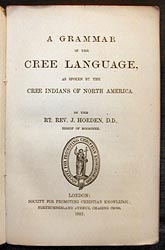 the first bishop of Moosonee, diocese of Rupert's Land.
Horden's approach here is rooted in descriptive grammar and is expressed in terms of classic Latin-based structure. He urges his language-learning students to begin with his grammar, but to "use the living voice of the Indians as much as possible" as their guide (p. vi).
A copy of the issue intended for field use: With the flexible, water resistant binding.
 A copy of the very uncommon "field use" issue.
For the INGALIKJetté, Jules. Canotlé Rannaga Kelékak. Délochét Roka. Winnipeg: Free Press no-rodeneletekteyar, 1904. 8vo (14.4 cm, 5.6"). 54 pp.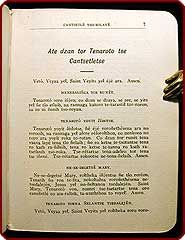
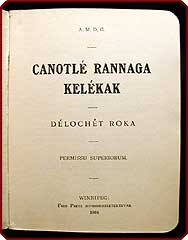 The Ingalik inhabited the middle part of the Yukon River Valley, Alaska.
Click the image to the right
The Ingalik inhabited the middle part of the Yukon River Valley, Alaska.
Click the image to the right• Cf. Wickersham, 1050, for another title by Jetté with the same imprint. Not in Evans; not in Banks. Original stiff cloth wrappers. Pages very slightly age-toned, otherwise fine.

A
Methodist Missionary
& Chippewa
Chief's HYMNSChippewa
& English
Jones, Peter, tr. Collection of hymns for the use of native Christians of the Chipeway tongue. [added title-age in Chippewa:] Nahkahmoonun kanahnahkahmoowaudt ekewh ahneshenahpaigk anahmeahchik. Kahahnekahnootahpeungkin owh Kahkewaquonnaby. New York: Printed at the conference office by J. Collord, 1829. 12mo (13.2 cm; 5.125"). [1] f., pp. [1–2], 3, then 37, 37, 38–92 pp.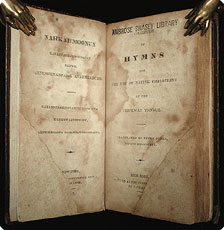
 Click the images for enlargements.
 Peter Jones (1802–56) was a mixed-blood Missisauga chief and a Methodist missionary at New Credit, Ontario.
• Pilling, Proof-sheets, 2024; Pilling, Algonquian, 266; Shoemaker 39161. Not in Sabin; not in Newberry Library, Ayer Indians; not in Boston Athenaeum, Schoolcraft Collection. Contemporary brown calf, modest triple-rule border on covers in blind; rebacked and spine blind-tooled with ruled compartments containing blind-stamped devices. Lower outer corners of both title-pages torn away and paper repairs made, with partial loss of imprint information on each page; old library rubber-stamp to top of English one. Staining, sometimes heavy; chipping of page edges; pp. 39/40 with large semicircular tear with loss of text. Far from a perfect copy, but copies are extremely uncommon in commerce these days. (25853)
Special
Type for the
Micmac
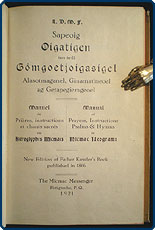
Kauder, Christian. Sapeoig oigatigen tan tetli
gômgoetjoigasigel...manual of prayers, instructions, psalms & hymns in Micmac ideograms.
Ristigouche, Quebec: The Micmac Messenger, 1921. 16mo (18 cm, 7.125"). 456 pp. (pp.i–xii never
bound in).
the
Micmac
Kauder, Christian. Sapeoig oigatigen tan tetli
gômgoetjoigasigel...manual of prayers, instructions, psalms & hymns in Micmac ideograms.
Ristigouche, Quebec: The Micmac Messenger, 1921. 16mo (18 cm, 7.125"). 456 pp. (pp.i–xii never
bound in).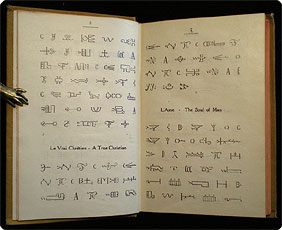
 Click the images for enlargements.
 The characters used to print this work were the invention of Father Christian
Leclercq, a 17th-century missionary, and later revised and improved by Abbé
Pierre Maillard. More than 5700 types were cut and cast for the book, and
the characters each represent words rather than sounds. This may well be the sole work printed in these
characters.
This issue without English language front matter (i.e., pp. i–xii).
• Pilling, Algonquian, p. 275 (ref). Publisher's yellow-brown cloth with simply gilt-lettered spine, to which one stain and general light soiling; each cover creased vertically from an old bump. All edges red. Internally clean. (25312)
French–Cree Dictionary with GrammarLacombe, Albert. Dictionnaire de la langue des Cris. Montreal: C.O. Beauchemin & Valois, 1874. [bound with his] Grammaire de la langue des Cris. Montreal: C.O. Beauchemin & Valois, 1874. 8vo (24 cm, 9.5"). 2 pts. in 1 vol. [7] ff., [v]–xx, 711 (i.e., 709), [3 (1 blank)] pp.; fold. map; [1] f., iii, [1 (blank)], 190 pp.; fold. chart.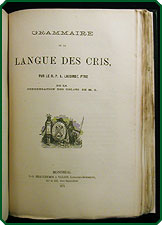
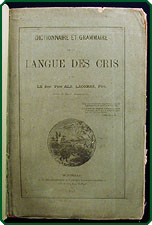 Click the images for enlargements.
 Several bibliographies, including Pilling's Proof-sheets and Ayer, treat this as two distinct works. Indeed, the dictionary and the grammar do each have their own distinct title-pages, pagination, and signature markings. They were issued together, however, though sometimes separated for sale. The publisher’s original paper wrappers are bound into this volume.
• Pilling, Bibliography of the Algonquian Languages, 283; Newberry Library, Indian Linguistics in the Edward E. Ayer Collection, Cree-93 & Cree-9; Pilling, Proof-Sheets of a Bibliography of the Languages of the North American Indians, 2155 & 2156. Not in Vancil, Cordell Collection. Recent black moiré cloth, spine with gilt-stamped leather title-label. Wrappers (bound in) dust-soiled and with edge chips; front wrapper partially adhered to half-title and back wrapper with Grammaire half-title affixed. Map partially adhered to an additional half-title. Page edges untrimmed; pages very slightly age-toned, else clean. Pagination jumps from 708 to 711 in pt. 1, but as the word listing goes from sagamité to sagamo it seems certain that the text is complete.
Lacombe's
Grammar
ofThis
“Beautiful”
Language
Lacombe, Albert. Grammaire de la langue des
Cris. Montréal: C.-O. Beauchemin & Valois, 1874. 8vo. [1] f., iii,
[1 (blank)], 190 pp.; fold. table.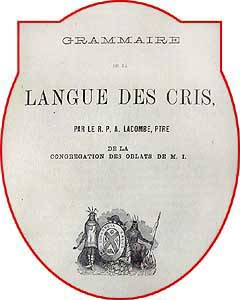
• Newberry Library, Indian Linguistics in the Edward E. Ayer Collection, Cree-95; Pilling, Algonquian, 283; Pilling, Proof-Sheets of a Bibliography of the Languages of the North American Indians, 2156; Banks 36. Not in Vancil, Cordell Collection. Modern maroon cloth with black spine and corners. Very good copy.
Micmac
Catechism WithIllustrations
Maillard, Antoine Simon. Le catechisme Micmac.
Ristigouche, P.Q. [Quebec]: Freres mineurs capucins, [1921]. 12mo. 128, 32 pp.; illus.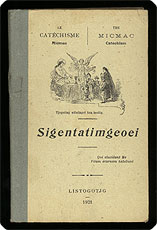
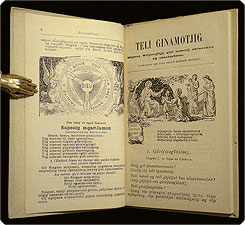 Click
the images for enlargement.
Click
the images for enlargement.
Up to p. 112, this issue is a reprint of the second edition (with the title-page labeled Deuxième edition, giving a date of 1913), after which comes a section entitled “Alasotmaganel” (rather than the “Gis Oen Melgitimg” of the actual 1913 printing). The closing section, “Gtapegiemgeoel,” is the same in both printings. The publisher's binding gives the date of 1921 on the front cover!
• Publisher's quarter cloth with printed paper-covered sides; cloth and paper showing light wear. Some offsetting and paper punctured around binding staples, otherwise a nice, even fresh copy. (12614)
Holy History & Christ’s Life, for the “Lake of Two Mountains”Mathevet, Jean-Claude. Ka titc Jezos Tebeniminang Ondaje Aking Enansinaikatek Masinaigan Ki Ojitogoban Kaiat Pejik Kanactageng Daje Mekatewikonaietc J. Cl.
Mathevet Enawindibanen. Vie de Notre-Seigneur Jésus-Christ par J. Cl. Mathevet, Ancien missionnaire du Lac des Deux-Montagnes. Deuxième édition, revue avec soin. Montréal: J.M. Valois, Libraire-Éditeur, 1892.
12mo (15.7 cm, 6.2"). xi, 384 pp.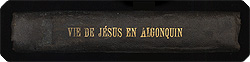
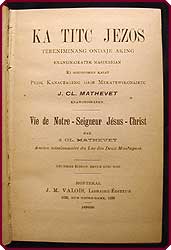
• Cf. Banks, 147; cf. Pilling, Algonquian, 345, for first (1861) ed. Not in Evans. Publisher’s cloth, with binder's title “Vie de Jésus en Algonquin”; cloth a bit wrinkled over spine and showing slight rubbing over corners, with signs of a now-absent shelf label on spine. Pages age-toned and a bit brittle as of the era, with sewing starting to loosen for some signatures. Back free endpaper with portion of upper margin torn and affixed to back pastedown.
Travelling
the Great
Northern Route
— 21
Plates &
a Large Folding
Map
Ontario
and St. Lawrence Steamboat Company. The
Ontario and St. Lawrence Steamboat Company's hand-book for travelers to Niagara
Falls, Montreal and Quebec, and through Lake Champlain to Saratoga Springs.
Buffalo: Jewett, Thomas & Co., Geo. H. Derby & Co., 1852. 12mo (19.1
cm, 7.5"). 158 pp.; 1 fold. map, 21 plts. (incl. in pagination).


 Click the images for enlargements. Niagara
Falls and beyond, from the “Great Northern Route. American
Lines” series. This particular journey is described as “one of the
favorite summer excursions so indulged in by all classes of the American people”
(p. 25). The volume is illustrated with an oversized, folding map (28 x 20 cm)
of the routes from Albany to Niagara Falls, Buffalo, and Montreal (with an engraved
image of the Falls), as well as a frontispiece and 20 other wood-engraved plates
depicting scenic views to be found along the way. The plates are mostly by Benjamin
C. Vanduzee and J.P. Hall, after John Van Cleeve.
Click the images for enlargements. Niagara
Falls and beyond, from the “Great Northern Route. American
Lines” series. This particular journey is described as “one of the
favorite summer excursions so indulged in by all classes of the American people”
(p. 25). The volume is illustrated with an oversized, folding map (28 x 20 cm)
of the routes from Albany to Niagara Falls, Buffalo, and Montreal (with an engraved
image of the Falls), as well as a frontispiece and 20 other wood-engraved plates
depicting scenic views to be found along the way. The plates are mostly by Benjamin
C. Vanduzee and J.P. Hall, after John Van Cleeve.
Provenance: Front pastedown with inked ownership inscription of Ida M. Hardy, dated 1867. The book itself, alas, provides no indication whether Ms. Hardy was a traveller of the actual or armchair sort.
• Sabin 57368. Not in Phillips, List of Maps of America. Publisher's brown cloth of Krupp's style Lea8, covers blind-stamped, front cover with gilt-stamped title; a little sunned with corners bumped and binding slightly cocked. Front pastedown with inscription as above, front free endpaper with mostly erased pencilled inscription. Mild smudging to some page edges; a few leaves with light waterstaining to lower outer portions. One leaf torn, repaired some time ago with cellophane tape, touching but not obscuring five words; map with short tear from lower edge, upper edge a bit crumpled. A solid copy, with map and all plates. (26666)
Parry’s
First Voyage — Plates,
Maps,
StoriesParry, William Edward. Journal of a voyage for the discovery of a north-west passage from the Atlantic to the Pacific.... London: John Murray, 1821. 4to (27.3 cm, 10.75"). [4] ff., xxix, [3], 310, [2], clxxix, [3 (2 adv.)]pp.; 14 plts., 4 fold. maps, 2 maps.

 Click any image above for an enlargement.
The copper-engraved, oversized frontispiece
map shows Baffin's Bay, Barrow's Straits, Prince Regent's Inlet, and the North
Georgian Islands, as well as the bay named after Parry's two ships.
• Arctic Bibliography 13145; Hill (2nd ed.) 1311; Sabin 58860. Recent quarter calf over marbled paper–covered sides, spine with gilt-stamped leather title and author labels, and gilt-stamped anchor decorations in compartments. Title-page and a few others, plus reverse of 1 map, lightly stamped by a now-defunct institution. Pages gently age-toned, with occasional offsetting from engraving and the odd spot or smudge. One map with small portion of inner margin reinforced; final two leaves with inner margins reinforced; one plate with tears into image and mounted. Final advertisement leaf bound in before final text leaf. All edges marbled.
Seeking
theNorthwest
Passage,
1824–25
Parry,
William E. Journal of a
third voyage for the discovery of a north-west passage from the Atlantic to
the Pacific: performed in the years 1824–25, in His Majesty's ships Hecla
and Fury. Philadelphia: H. C. Carey & I.
Lea, 1826. 8vo. (24.1 cm, 9.5"). Fold.
map, 232 pp. 

• Shoemaker 25670; Sabin 58867. On Parry, see: The
Dictionary of National Biography, XLIII, 392–93. Quarter
cloth over paper with paper spine label, antique style. Map
tattered on the edges, affecting ruled border, and with two closed tears.
Lightly cockled with bumped corners; foxing and old damp-staining. A
leaf of advertisements has been bound in at front—see our second illustration, here. Ownership
inscription on title-page.
Methodism's Start in America Peck, George. Early Methodism within the bounds of the old Genesee Conference from 1788 to 1828; or, The first forty years of Wesleyan evangelism in northern Pennsylvania, central and western New York, and Canada. Containing sketches of interesting localities, exciting scenes, and prominent actors. New York: Carlton & Porter, 1860. 8vo (19.3 cm, 7.6"). Frontis., 512 pp.; 1 plt. Click the image for an enlargement.
 The work is illustrated with a frontispiece portrait of the author done by A.H. Ritchie, one plate of Capt. Parish's residence at Ross Hill, Wyoming, and one in-text steel engraving.
• Sabin 59471. Publisher's brown textured cloth, spine with gilt-stamped title and sunned with adhesive shelving label at foot; binding rubbed overall with spots of light discoloration, cloth lost at spine extremities, and starting to split at back joint. Front pastedown with institutional bookplate, front free endpaper with inked ownership inscription. Foxing and staining intermittently throughout, notable but never of the worst kinds. (25820)
Around
the World “Overland”?
— including
HAWAII?
Simpson, George, Sir. An overland journey round the
world, during the years 1841 and 1842. Philadelphia: Lea & Blanchard, 1847. 8vo (21.3 cm,
8.4"). 273, [3], [17]–230, [2 (blank)] pp.


 Click the images for enlargements. CANADA
and thence to California, Hawaii, Alaska, and Russia before returning to London.
His careful observations include much commentary on the degree of “civilization”
among various peoples and the results thereof — often not positive, especially
with regards to the impact of missionaries on local culture and morality. Simpson
also provides economic and trade analyses, linguistic comparisons, culinary
critiques (in particular, his distaste for the garlicky food served in California),
and descriptions of local flora and fauna.
Click the images for enlargements. CANADA
and thence to California, Hawaii, Alaska, and Russia before returning to London.
His careful observations include much commentary on the degree of “civilization”
among various peoples and the results thereof — often not positive, especially
with regards to the impact of missionaries on local culture and morality. Simpson
also provides economic and trade analyses, linguistic comparisons, culinary
critiques (in particular, his distaste for the garlicky food served in California),
and descriptions of local flora and fauna.


A CANADIAN'sFirst & Last Appearance Sturrock, W. A military mite to the mountain of literature, or, The rhymes of a red coat. Quebec: Middleton & Dawson, 1858. 12mo (16.5 cm; 6.375"). 40 pp., [2] ff. . Click the image for an enlargement.
• TPL 5826. Publisher's printed paper–covered boards, outer corners chipped and a lighter spot to front cover where there once was an old label of some sort affecting one word of type (“Price”); old, light waterstaining (with a darker edge) and some soiling to same cover, with evidence of the onetime moisture visible also to back cover and intermittently in the interior (especially to early leaves). Fragile. (25512)

PLACE AN ORDER | E-MAIL US | GO (BACK) TO TOPIC/INTEREST TABLE | PRB&M HOME
All material © 2010
The Philadelphia Rare Books & Manuscripts
Company