
 CONDUCT
CONDUCT
CONDUCT
 Elegant Production — GORGEOUS Copy
  (A
German Guide). Ebhardt, Franz. Der gute Ton in
allen Lebenslagen. Leipzig & Berlin: Julius Klinkhardt, [1889]. 8vo. viii,
774, [2 (adv.)] pp.
(A
German Guide). Ebhardt, Franz. Der gute Ton in
allen Lebenslagen. Leipzig & Berlin: Julius Klinkhardt, [1889]. 8vo. viii,
774, [2 (adv.)] pp.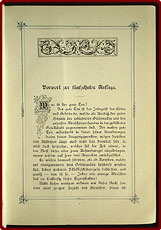

 Click the interior image for an enlargement.
 Binding: Publisher's crimson cloth, front cover and spine gilt- and black-stamped, back cover black-stamped. All edges gilt. Actually, breathtaking.
• Binding as above, clean and bright with only very faint traces of wear to corners and joints. Pages clean; some lower outer corners slightly crumpled. It is hard to imagine a better copy. (23709)


Duty Revisited with a New Spin: Faith Added Anonymous. The new Whole duty of man, containing the faith as well as practice of a Christian; made easy for the practice of the present age ... fourteenth edition. London: Edward Wicksteed, [1756]. 12mo (18.1 cm, 7.15"). Frontis., add. engr. t.-p., [2], xiv, 556 (i.e., 565), [18], 584–85, [3] pp.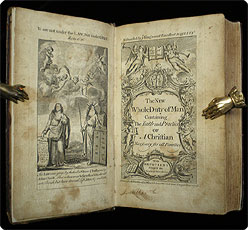
 Click the images for enlargements.
 The original Whole Duty is now generally ascribed to Allestree although, as the DNB says, “it has by some been supposed that Allestree joined [his good friend and biographer] Bishop [John] Fell” in writing it.” Allestree (1619–81) was a royalist Church of England clergyman; Bishop Fell reports that “few of his time had either a greater compass or a deeper insight into all parts of learning” (DNB). The hand responsible for the present alterations of his most famous work has not yet been identified.
The volume begins with a copper-engraved frontispiece depicting Moses giving the law and Jesus giving grace and truth, and an additional engraved title-page. The frontispiece to the original edition, done by Hollar, is reproduced here as a full-page illustration. The section of “Private Devotions: Containing directions and prayers for morning and evening . . .” has a separate title-page.
Provenance: Large ownership note of Nathan Levering on imprimitur page; the start, perhaps, of his second signature (much smaller) to the bottom of the title-page.
 This edition is uncommon, as are most of the other printings from this time period. OCLC and ESTC locate only three U.S. institutional holdings, two of which have since been deaccessioned.
• ESTC T80506. On Allestree, see: Oxford Dictionary of National Biography online. Contemporary speckled calf framed in gilt double fillets, recently rebacked, spine with gilt-stamped leather title-label and gilt-dotted raised bands; corners and edges rubbed. Lower edges (closed) institutionally rubber-stamped; frontispiece and several pages pressure-stamped; dedication with inked annotation and numeral. Front fly-leaf with early inked annotation consisting mostly of numerals; title-page verso with inked ownership inscription as above. Foxing and the occasional stain; one leaf with short tear from outer margin touching text without loss; one index leaf with tear affecting a few words. In fact, a decent copy of this interesting book. (25857)
 He GaveHimself the Last WordChurchill, Charles. The conference. London: G. Kearsly, 1763. 4to (25.2 cm, 9.9"). [2], 19, [1 (blank)] pp. (lacking half-title).
• ESTC T1702. Recent marbled paper–covered boards, front cover with printed paper label. Half-title lacking. Title-page and two others stamped by a now-defunct institution; leaves with reinforced tears at inner margins.

 How
to be a
How
to be a Good
& Well-Liked
Little Girl
or Boy
Forrester, Francis [pseud. of Daniel Wise]. My Uncle Toby's
library. Boston: Brown & Taggard, 1862. 8 vols. (of 12). 8vo (15.5 cm, 6.2"). Each volume containing a frontispiece and either 64 or 62 pp.
Good
& Well-Liked
Little Girl
or Boy
Forrester, Francis [pseud. of Daniel Wise]. My Uncle Toby's
library. Boston: Brown & Taggard, 1862. 8 vols. (of 12). 8vo (15.5 cm, 6.2"). Each volume containing a frontispiece and either 64 or 62 pp.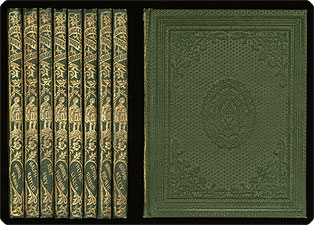
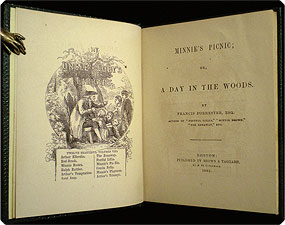
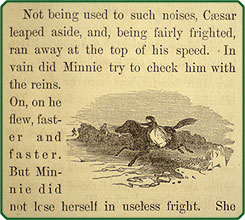
• Sternick 496.4 (describing binding as red). Publisher's blind-stamped green textured cloth, spines gilt extra; bindings fresh and clean. Eight vols. of 12 present. Each volume with inked ownership inscription dated 1863 on front free endpaper. Pages slightly age-toned with occasional faint offsetting from illustrations, generally clean. A beautiful set, virtually as new. (24423)
 For more SETS, click here.
DIFFERENCES
— Between
France
& SpainGarcía, Carlos. Antipatia de francesi e spagnuoli. Venetia: Presso Cristoforo Tomasini, 1640. 12mo. 216 pp.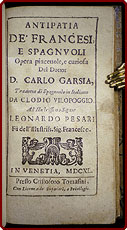

The subject of this work is the rivalry between Spain and France for political and religious supremacy in the Catholic realm of Europe, but the author also discusses national traits, as he sees them, such as manner of dressing, walking, eating, and talking.
• Palau 97802. Recent boards covered with marbled paper; leather spine label gilt with title. Some lower margins irregular due to natural paper flaws. All edges speckled red. A very good copy. (25812)


Not All Humor “Wears” Real Well . . . Lochore, Robert. Margaret and the minister, a true tale. Glasgow: Pr. for the booksellers, [1840?]. 12mo. 8 pp.
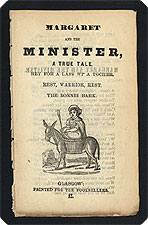
• NSTC 2M14137. Removed from a nonce volume. Pages clean. (16756)

Doing Good in the World Mather, Cotton. Essays to do good, addressed to all Christians, whether in public or private capacities. . . . To which are added, Treatises, On engagements, Religious education and Sanctifying the Sabbath-day. Johnstown, [NY.]: Pr. and sold by Asa Child, 1815. 8vo. [2], iii–iv, [xiii]–xxv, [1], [27]–195, [1] pp. (lacks pp. v–xii).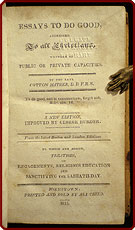
 Click the interior image for an enlargement.
 Preliminary pages include the testimonials or “Recommendations” (pp. iii–iv) and a “Preface” (pp. [xiii]–xxv). At the end are “On fulfilling engagements and paying debts. From a sermon by the late President Edwards,” “On the religious education of children. (From the Christian observer),” “On sanctifying the Sabbath-Day. By Sir Matthew Hale. (From the same),” and the table of contents.
• Sabin 46307; Shaw & Shoemaker 35227; Holmes, Cotton Mather, 112-E. Contemporary sheep, rubbed and abraded. Rebacked, with gilt title on red leather spine label. Offsetting from leather on endpapers, fly-leaves, and title-page, at edges. Variable foxing. Ex-library: Front pastedown with library bookplates, not uninteresting, and front free endpaper with early inked signature; title-page additionally with pressure-stamp and penciling on verso; institutional rubber-stamp on front free endpaper and at base of p. [iii]. Small paper loss at outer margin of pp. 151/152 and pp. 155/156 without any loss of text. Lacks “Editor’s preface, with a sketch of the author’s life” (pp. v–xii). (24571)
“Wretched Flea Was a Dear, Round-Faced Chinese Baby Boy” Muller, Mary [pseud. of Lenore Elizabeth Mulets]. Wretched Flea or, the story of a Chinese boy. Chicago & New York: A. Flanagan Co., © 1901. 4to. Frontis., [2], 158 pp.; illus.
 Click the images for enlargements.
 Prize copy: Front free endpaper with inked presentation inscription from a school principal, noting the recipient's perfect attendance in 1905–06.
• Publisher's orange cloth, front cover and spine with black-stamped title, front cover with black-stamped pictorial vignette; binding showing minor wear but overall very clean and attractive. Front free endpaper with inscription as above. Pages clean. (26697)

20 CHROMOSMurray, Hannah Lindley & Mary. The
toilet. Washington, DC: William Ballantine [Ballantyne], 1867. 8vo (21 cm, 8.25"). [4] pp.; 20 col. plts.


 Click the interior images for enlargements.
 Provenance: Inscription to Ellie Bond Robinson (from her cousin Elizabeth); elegant small booklabel, “Gardner.”
• Publisher’s textured cloth, framed in blind, front cover with gilt-stamped title; covers and corners showing very slight traces of wear. Front free endpaper with small booklabel and with inked gift inscription dated 1887. One flap (“Circumspection”) lacking, with all other flaps present and working. An attractive copy of an uncommon item.
“Rank Confusion” — That’s a Joke![Nares, Edward]. Heraldic anomalies; or, rank confusion in our orders of precedence, With disquisitions, moral, philosophical, and historical, on all the existing orders of society. By It Matters Not Who. London: G. and W.B. Whittaker (pr. by R. Gilbert), 1823. 8vo (19.7 cm, 7.75"). 2 vols. I: xxii, [2], 334, [2 (1 blank)] pp. II: [4], 372 pp.
 Single-click the image where the hand appears on
 Though Nares is quite capable of picking nits with a level of scrupulousness to match that of the most pedantic of scholars, he is also prone to flights of fancy such as pondering—after noting that a married woman’s moveable goods are unquestionably the property of her husband— “whether the female tongue is to be reckoned among the moveables . . . I believe it is pretty generally held to continue ‘in potestate Mulieris,’ even after marriage, and I know nothing to prevent it” (p. 148). This is followed up with references to Ovid, the Wife of Bath, and the much-storied Flitch of Bacon!
• Contemporary half calf with marbled paper sides, spines with gilt-stamped helm decorations and gilt-stamped leather title and volume labels (the volume labels recently supplied, in sympathetic style). Board edges showing light to moderate wear, with leather cracking at joints and crackled over the spines generally. Top edges gilt. Front pastedowns with bookplates now partially torn away; title-page of vol. II with an early inked ownership inscription in the upper margin. Delightful reading, as well as an overall attractive set.
For more SETS, click here.
Saving the Souls of the Rich via CHARITY Nelson, Robert. An address to persons of quality and estate ... To which is added, an appendix of some original and valuable papers. [with another related title, as below]. London: A. & G. Way, prs., 1715. 8vo (21.9 cm, 8.6"). Frontis., xxxi, [1], 267, [1], 55, [7] pp. [with] A poem in memory of Robert Nelson Esquire. London: Pr. by Geo. James for Richard Smith, at Bishop Beveridge’s-Head, 1715. 8vo. 21, [3] pp.
 Click the images for enlargements.
 The frontispiece portrait of Nelson was engraved by George Vertue after a painting by Sir Godfrey Kneller. The volume also includes all publisher's advertisements as well as the rather uncommon Poem in Memory of Robert Nelson Esquire.
 This was produced to be a handsome work, printed in large type on good paper with wide margins — the better to appeal to a “quality” audience?
• ESTC T85360; Goldsmiths’-Kress 5249. Poem: ESTC T25431; Foxon P538. Contemporary speckled calf, framed and panelled in blind with blind-tooled corner fleurons; rebacked with speckled calf, spine with gilt-stamped leather title-label, raised bands, and blind-tooled foliate compartment decorations. Original leather abraded, front cover with small chip to outer edge and area of faint discoloration from a now-absent label; title-page institutionally rubber-stamped (no other markings). Some signatures browned and foxed, most pages clean. (25999)
Christian Philosophy from the “English Malebranche”
Norris, John. A treatise concerning Christian prudence: Or
the principles of practical wisdom, fitted to the use of human life, and design'd for the better regulation of it. London: Samuel Manship, 1710. 8vo (20 cm, 7.9"). [12], 399, [5] pp.
“English Malebranche”
Norris, John. A treatise concerning Christian prudence: Or
the principles of practical wisdom, fitted to the use of human life, and design'd for the better regulation of it. London: Samuel Manship, 1710. 8vo (20 cm, 7.9"). [12], 399, [5] pp.
 Click the interior image for an enlargement.
 Provenance: 18th-century inscription, “Master Griffith Boynton”; 20th-century bookplate of the John Donne scholar Charles Monroe Coffin.
• ESTC T76120. On Norris, see: Dictionary of National Biography. Contemporary speckled calf, framed and panelled (with plain calf) in blind with blind-tooled corner fleurons, rebacked, spine with recent gilt-stamped leather title-label; edges and corners showing minor rubbing, front cover with small faint area of staining from a now-absent paper label. Front pastedown with private collector's bookplate (institutionally rubber-stamped), as above; front free endpaper with inked inscription, as above; title-page institutionally rubber-stamped in lower margin. Two pencilled marginal annotations; scattered pencilled bracketing. Pages age-toned, with occasional light spotting. (20902)
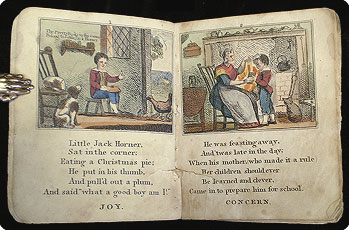
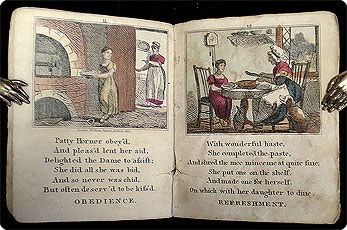
“Patty Horner obey'd, & pleas'd LENT HER AID . . .” The renowned history of little Jack Horner. Illustrated with sixteen elegant copper-plates. [London: William Darton, 1826]. Square 16mo (12.5 cm; 5"). 16 ff.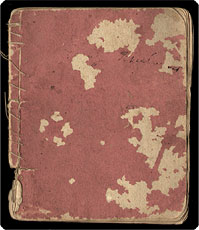
 Click the images for enlargements.
 In this edition all leaves are engraved on one side of leaf only, the engraved pages facing each other: each top half is filled with a hand-colored copper engraving with engraved text below. “The first stanza of this is the traditional nursery rhyme Little Jack Horner. The rest of the text varies considerably from the ballad usually appended to this nursery rhyme. Each stanza is labelled at foot with the activity or quality it represents: Joy, Concern, Prudence, Distress, Benevolence, Hope, Compassion, Gratitude, Reward, Industry, Obedience, Refreshment, Surprise, Encouragement, Affection, Liberality” (UCLA cataloguer).
Provenance: Signature of Henry Wheelwright inside front cover (and on it, though rubbed much away); ownership note of “Mary E. Basto 4 (or possibly 9) Yrs” to front free endpaper, with pencilled reiteration of that and the date 1844.
• Cf. Osborne catalogue, I, 98; Cf. Opie N790. Contemporary or near contemporary reddish wrappers with later oversewing. Lower inner margins of all leaves torn, sometimes into text. Portion of folio 3 missing, costing three words (knowable from the rhyme scheme) and touching two others with resultant loss of four letters. For a children's book whose edition was clearly read to death, this is far better than a good copy. (26014)
An AMERICAN Statesman in London Rush, Richard. Memoranda of a residence at the court of London, comprising incidents official and personal from 1819 to 1825. Including negotiations on the Oregon question, and other unsettled questions between the United States and Great Britain. Philadelphia: Lea & Blanchard, 1845. 8vo (24.5 cm, 9.6"). xii, 640 pp.


 Click the images for enlargements. social
and cultural activities while in London.
Click the images for enlargements. social
and cultural activities while in London.
• Sabin 74265; Howes R523; Allibone 1893. Publisher's brown
cloth, blind-stamped, spine with gilt-stamped title and blind-stamped decorations;
rubbed with cloth split at joints and front cover with spot of discoloration.
Ex–social club library: 19th-century bookplate on front pastedown, old
inked call number on endpapers and flyleaf (which has small old adhesions
of paper to verso); no other markings. Very light to moderate waterstaining
to upper inner portions of central third of the volume. Yes,
in its way, this belongs in this catalogue! (26480)
Canandaigua Imprint
Sampson, Ezra. The brief remarker on the ways of man. Or compendious dissertations, respecting social and domestic relations and concerns, and the various economy of life; designed for, and adapted to,the use of American academies and common schools. Canandaigua, N.Y.: Pr. by J.D. Bemis & Co., 1821. 12mo. 264 pp.
• Shoemaker 6710. Publisher's sheep. Abrasions to covers and spine, with pieces of leather flaked off; joints abraded. Foxing. Tear to rear free endpaper. Bookplate on front pastedown. (1078)

 OneMORE
for the BOYS
. . .
Scott, Thomas. A father’s instructions to his son. London: Pr. for R. Dodsley, 1748. 4to. 27, [1 (blank)] pp.
OneMORE
for the BOYS
. . .
Scott, Thomas. A father’s instructions to his son. London: Pr. for R. Dodsley, 1748. 4to. 27, [1 (blank)] pp.
 • Paternal words of wisdom on religion, social life, and assorted vices and virtues. ESTC lists 10 sites.
• Foxon S147. Recent marbled paper wrappers; lacking half-title.
How to Behave
inNapoleon’s
Court[Ségur,
Louis Philippe, comte de].
Étiquette du palais impérial. Année 1806. Paris: De l’imprimerie
impériale, 1806. 4to (25.7 cm, 9.9"). [1] f., 159, [1 (blank)] pp.

The work is generally attributed to the Comte de Ségur, a diplomat and historian who served under Rochambeau in the American War of Independence; he also published works on classical and Jewish history.
• Old-style blue morocco, covers framed in double gilt fillets, spine with gilt-ruled raised bands and gilt-stamped devices in compartments, leather turndowns tooled in blind. Tear in upper margin of one leaf repaired very unobtrusively; several leaves with closed tears or holes also professionally patched, just touching a few letters; one leaf with clear tape covering tear. Pages washed, resized, and very clean, with only a few faint spots; edges slightly brittle, with occasional very short tears.
Quaker Life inDutchess County, NY — 1779Society
of Friends. To the yearly meeting. Extracts taken from the minnets of our quarterly meeting held at the Oblong by adjournments from ye 1st of the 5 month to 3ed of the same inclusive. 1779. New York: Pr. by Melbert B. Cary,
Jr. at the Sign of the Woolly Whale, 1936. 8vo (20.2 cm, 7.9"). [12] pp. Long, breathless, run-on sentences make the expected Quaker standards of behavior, in this place and time, quite clear.
• Sewn in publisher’s color-flecked paper wrappers. A crisp, clean copy.

An Edition withMemorable Wood-Engravings Watts, Isaac. Divine songs, in easy language, for the use of children. New York: Clark, Austin, & Co., 1850. Square 16mo. 103 pp. two girls going vigorously at one other as a boy rushes to part them, this above the characteristically Watts'ian favorite, “Let dogs delight to bark and bite, let bears and lions growl and fight . . . “ (You kids, however, calm down and SHAPE UP!)
Additionally, this offers a full-page frontispiece and numerous sweet tailpieces.
Binding: Publisher's green cloth, elaborately stamped in blind and with spine gilt-stamped extra.
• Bound as above, lower outside corner of rear cover bumped and board creased. Foxing and typical staining, generally light. Very good. (24)
Handsome Copy Westlake, J. Willis. How to write letters: A manual of correspondence, showing the correct structure, composition, punctuation, formalities, and uses of the various kinds of letters, notes, and cards. Philadelphia: Sower, Potts & Co., 1879. 8vo. 264 pp.

• Publisher's brown cloth, front cover and spine with gilt-stamped title; binding slightly cocked, corners and spine extremities rubbed, gilt partially oxidized (quiet attractively). Back hinge tender. Front fly-leaf with early pencilled ownership inscription. Early portions of text with pencilled emphasis marks and some underlining. All edges red. A nifty period piece. (20333)


PLACE AN ORDER | E-MAIL US | GO (BACK) TO TOPIC/INTEREST TABLE | PRB&M HOME
All material © 2010
The Philadelphia Rare Books & Manuscripts
Company