 NATURAL HISTORY
NATURAL HISTORY
NATURAL HISTORY
 Into the Woods
  Abbott, Henry. Camps and trails. New York: Pr. for the author, 1918. 12mo (15.1 cm, 5.9"). 64 pp.; illus.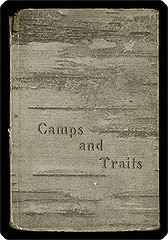
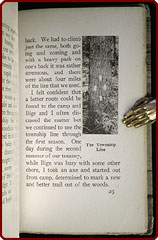
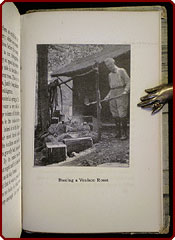
 Click the images for enlargements.
  The work is illustrated with a number of mounted black-and-white photographs.
Each book in the series was published by the author as a very limited edition and distributed to his friends as a Christmas gift; the present copy is  inscribed by Abbott: “Wishing you peacetime Christmas cheer.”
This is the original first, 1918 edition, not a modern reprint.
• Publisher's bark-patterned paper–covered boards, front cover with printed title; extremities chipped (most notably spine head). Front free endpaper with pencilled inscription as above; pages clean. (26848)

 Animal Stories — Fly-Fishing, Too!Aelianus, Claudius. [4 lines in Greek, then] Aeliani de natvra animalivm.... Londini: Gulielmus Bowyer, 1744. 4to (26.2 cm, 10.4"). 2 vols. I: xiv, xxvii, [35 (index)], 603, [1] pp. II: [605]–1128, [88 (index and addenda)] pp.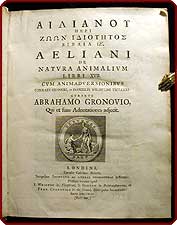
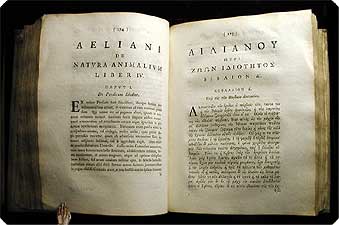
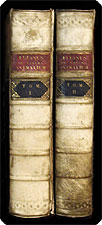
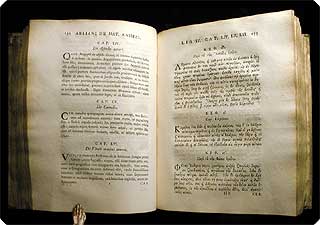
• ESTC T88657; Dibdin, I, 232; Schweiger, I, 2. Contemporary vellum-covered boards, covers framed and panelled in blind with central blind-stamped strapwork medallions, spines with gilt-stamped leather title and volume labels; front joints repaired and now strong, vellum soiled. Front free endpapers with early inked owner's name as above; shadow of shelf number once pencilled on title-page, erased. Spotting of various sorts and minor smudging in upper margins of some pages; leaves otherwise clean.

Creepy Crawlies & Winged Wish-they-weren'ts American Tract Society. Lessons from insect life. With numerous illustrations. Boston: American Tract Society, [1863]. 12mo. Frontis., 185, [1 (blank) pp.
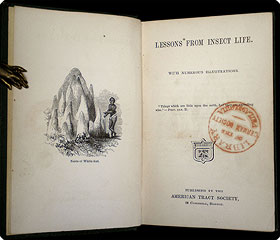
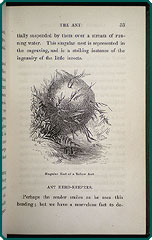 Click the images for enlargements.
 • Publisher's green textured cloth modestly blind-stamped at board edges and with the ATS logo blind-embossed in the center of each cover, spine stamped and lettered in gold, now dull. Ex–social club library: call number on pastedown, rubber-stamp on title-page, no other markings. Lacks the front free endpaper and with a very few stains; overall a very nice copy. (26267)

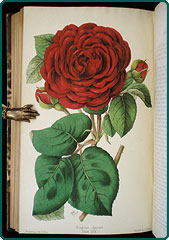
 Richly Hand-Colored Flowers Andrews, James, illus. The florist, fruitist, and garden miscellany. 1859. London: “Florist” Office, 1859. 8vo (21.6 cm, 8.5"). [4], 380 pp.; 12 col. plts.
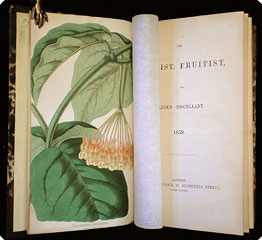
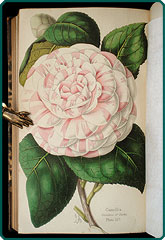
 Click the images for enlargements.
  12 hand-colored floral plates done by notable botanical illustrator James Andrews, as well as a number of in-text wood engravings; Andrews's fuschia plate is especially vivid.
• Contemporary half sheep and marbled paper–covered sides, spine with gilt-stamped title and gilt-stamped raised bands; binding moderately rubbed overall. All edges gilt. Trimmed during binding, in a few cases just touching edges of images. Front pastedown with private collector's rubber-stamp. Scattered faint spotting, pages and plates generally clean. You can imagine subscribers eagerly waiting for each issue of this. (26865)
 Wildcats, Bears, Rabbits, Otters, Skunks, Buffalo,
& “Wapite”Audubon, John James, & John Bachman. The quadrupeds of North America. New-York: V.G. Audubon, 1854. Royal 8vo (27.5 cm; 10.75"). 3 vols. I: viii, 383, [1 (blank)] pp., 50 plts. II: [2] ff., 334 pp., 49 plts. III: v, [1], 348 pp., [1] f., 51 plts.
Wildcats, Bears, Rabbits, Otters, Skunks, Buffalo,
& “Wapite”Audubon, John James, & John Bachman. The quadrupeds of North America. New-York: V.G. Audubon, 1854. Royal 8vo (27.5 cm; 10.75"). 3 vols. I: viii, 383, [1 (blank)] pp., 50 plts. II: [2] ff., 334 pp., 49 plts. III: v, [1], 348 pp., [1] f., 51 plts.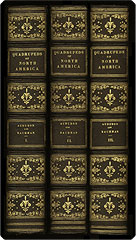
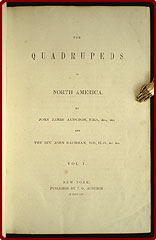
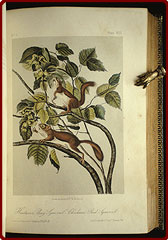
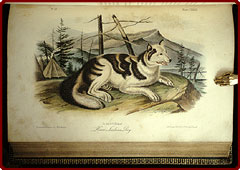
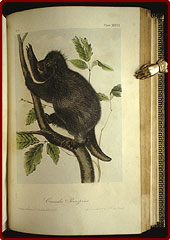
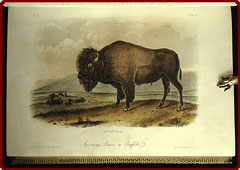
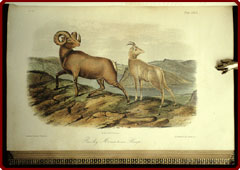
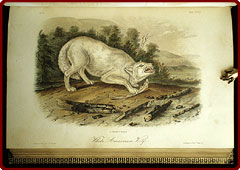
 155 fine handcolored lithographed plates by W. E. Hitchcock and R. Trembly after J.J. and J.W. Audubon, lithographed by J.T. Bowen.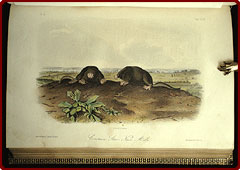
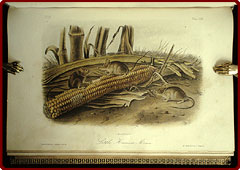
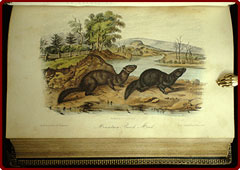
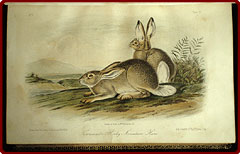
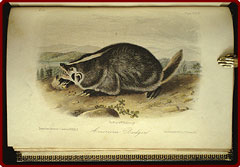
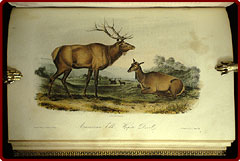 A lovely set. (23904)
 For more SETS, click here.
 “Fundamentall to the Erecting & Building of
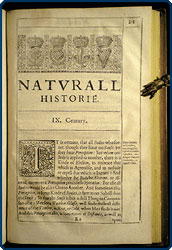
 a True Philosophy”Bacon, Francis. Sylva sylvarum or a naturall history in ten centuries. London: Pr. by J.H. for William Lee, 1627. 8vo (27.6 cm, 10.9"). Frontis., add. engr. t.-p., [10], 266, [16], 47, [3] pp. (lacking final blank f.).
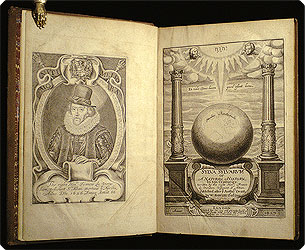
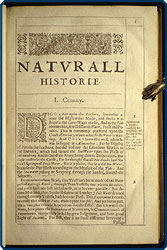 Single-click any image where the hand appears onNew Atlantis, an unfinished allegorical fantasy begun shortly after his political downfall and not long before his death. Together, the two works exemplify Bacon's scientific and literary accomplishments.
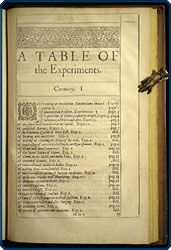
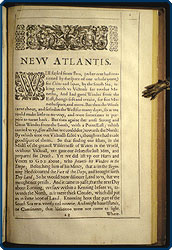
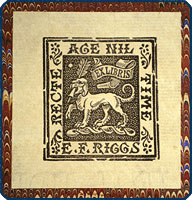
Provenance: Riggs family: Front pastedown with armorial bookplate of philanthropist Elisha Francis Riggs, who funded the Riggs Library at Georgetown University; volume inherited by T. Lawrason Riggs, founding chaplain of St. Thomas More Chapel, Yale University; donated to St. Thomas More Chapel Library; deaccessioned 2008.
• ESTC S106924; STC (2nd ed.), 1169; Gibson, Bacon, 171. On Bacon, see: Dictionary of National Biography. 18th-century calf framed in gilt single fillet, spine with recent gilt-stamped leather title and author labels, board edges with gilt roll; a little rubbed and covers with portions darkened. All edges stained yellow. Front pastedown with bookplate as above. Some pages gently age-toned, with occasional minor spotting. Small hole to added engraved title-page just beneath publication information, not affecting text. Final blank leaf (only) lacking. (24666)
 Volcanic Illustrations — Baily's Central American Survey Baily, John. Central America; describing each of the states of Guatemala, Honduras, Salvador, Nicaragua, and Costa Rica; their natural features, products, population, and remarkable capacity for colonization. London: Trelawney Saunders, 1850. 8vo (19.5 cm, 7.6"). Frontis., xii, 164 pp.; 2 plts.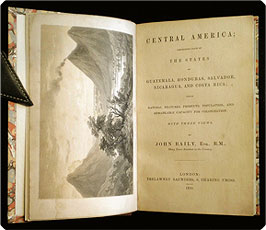
 Click the interior image for an enlargement.
 The volume is illustrated with three engraved views, all three incorporating volcanos. As usual, this copy does not include the oversized map, which was printed and published separately.
• Palau 21943; Sabin 2771; Nicaraguan National Bibliography 1476. 20th-century quarter red morocco and marbled paper–covered sides, spine with gilt-stamped title; minor wear to corners and spine extremities. Plates with light waterstaining to lower portions; frontispiece, title-page, and plates backed with linen. (25454)

A Celebrated Study of Nicaragua's Natural History Belt, Thomas. The naturalist in Nicaragua: A narrative of a residence at the gold mines of Chontales; journeys in the savannahs and forests. With observations on animals and plants in reference to the theory of evolution of living forms. London: John Murray, 1874. 8vo (19.4 cm, 7.6"). Frontis., xvi, 401, [1] pp.; 3 plts., 1 fold. col. map.
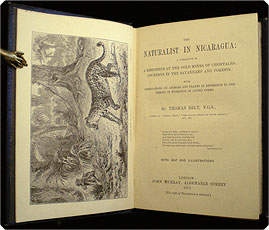
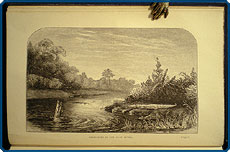 Click the interior images for enlargements.
 • NSTC 00522718; Palau 26647; Jackson, Guide to the Literature of Botany, 368. Publisher's blue cloth, covers framed in black-stamped designs, front cover with central gilt-stamped alligator vignette; binding slightly shaken, spine sunned, corners and spine extremities rubbed, sewing just starting to loosen. Two leaves with outer margins lightly waterstained; map edges lightly foxed. A nice clean copy. (24406)
The PLATES areInteresting & um, Explicit Boitard, Pierre. Nouveau manuel complet du naturaliste préparateur, ou l’art d’empailler les animaux, de conserver les végétaux et les minéraux, de préparer les pièces d’anatomie normale et pathologique ... nouvelle édition. Paris: Librairie encyclopédique de Roret, 1852. 12mo (14.7 cm, 5.8"). [4], 510 pp.; 4 fold. plts. (of 5).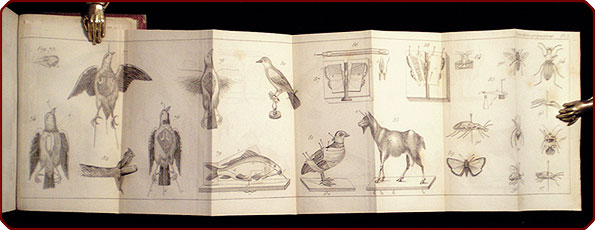 Click the interior images for enlargement.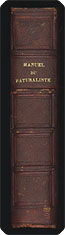
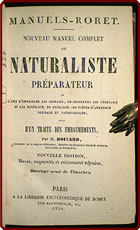
• Contemporary quarter morocco with pebbled cloth–covered sides, spine with gilt-stamped title; corners and spine extremities rubbed. Front pastedown with private collector’s bookplate, this and the front free endpaper then institutionally rubber-stamped. One plate lacking (no. 5). Pages slightly age-toned; plates with small spots of light foxing. (20363)
“Innocent Entertainment, Mingled with Correct Information & Sound Instruction” Chambers, Robert; & William Chambers, eds. Chambers' repository of instructive and amusing papers. Boston: Gould & Lincoln, 1853. 16mo (18.6 cm, 7.3"). 4 vols. I: [12 (8 adv.)], 31, [1], 32, 31, [1], 31, [1], 31, [1], 31, [1] 31, [1], 31, [1] pp.; illus. II: [10 (6 adv.)], 31, [1], 31 (lacking pp. 3–30), [1], 31 (lacking pp. 3–30), 31, [1], 31, [1], 31, [1], 32, 31, [1] pp.; illus. III: [4], 31, [1], 31, [1], 31, [1], 31, [1], 31, [1], 31, [1], 31, [1], 31, [1] pp.; illus. IV: [4], 31, [1], 31, [1], 31, [1], 31, [1], 31, [1], 31, [1], 31, [1], 31, [1] pp.; illus. .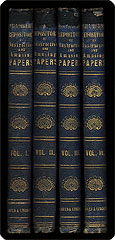
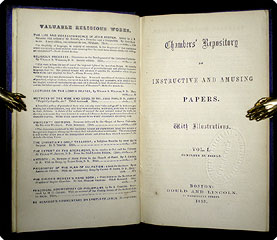
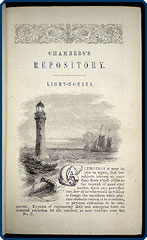 Click the images for enlargements.
 • Publisher's blue textured cloth, covers blind-stamped, spines with gilt-stamped title and compartment decorations; worn and scuffed with spines sunned and heads each with strip of dark cloth tape extending onto boards. Ex–social club library: Each volume with 19th-century bookplate on front pastedown, call number on endpaper, title-page pressure-stamped. Vol. IV lacking front free endpaper. Vol. II with one leaf with inner margin reinforced, several leaves with outer edges chipped, pp. 3–30 lacking from two articles. Paper slightly brittle, with occasional short edge tears; pages age-toned. (26396)
 Go Fish The child's book of nature; being figures and descriptions illustrative of the natural history of beasts, birds, insects, fishes, &c. Lancaster [MA]: Carter, Andrews, & Co., (copyright 1830). 16mo (13.2 cm, 5.3"). 16 pp.; illus.

 Click the images for enlargements.
 The book is illustrated with17 hand-colored, in-text wood engravings of different types of fish and one uncolored title-page vignette.
• American Imprints 852. Not in Rosenbach, Early American Children's Books. Publisher's printed paper wrappers, creased, paper worn and split along spine, edges rubbed. Moderate spotting throughout.
 Charming. (24547)
Illustrated IndigenousCustoms & Dress FIRST Edition in ENGLISH Clavigero, Francesco Saverio. The history of Mexico. Collected from Spanish and Mexican historians, from manuscripts, and ancient paintings of the Indians ... translated from the original Italian, by Charles Cullen. London: Pr. for G.G.J. and J. Robinson, 1787. 4to (28.5 cm, 11.2"). 2 vols. I: [2], xxxii, [4], 440, (441–44), 441–76 pp. (pagination skips v/vi, with text complete); 1 fold. map, 25 plts., 1 table. II: [4], 463, [1 (blank)] pp.; 1 fold. map, 1 plt.
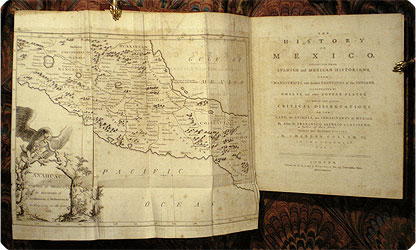 Click the interior images for enlargements.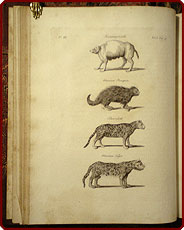
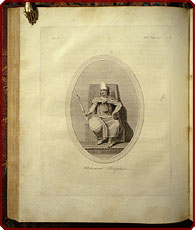
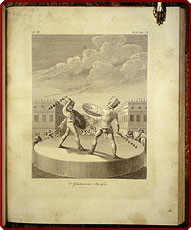
Thetwo oversized, folding maps were engraved by T. Conder; a genealogical chart in vol. I shows the descent of the Mexican kings from the 13th century, while numerous engraved plates depict Mexican artifacts, costumes, activities, flora and fauna, architecture, etc.
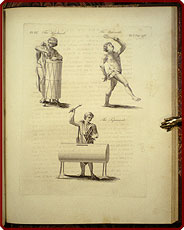
 For more SETS, click here.
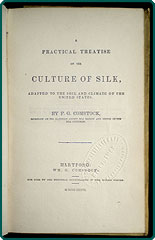
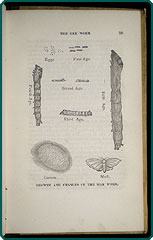
An ExpertPromotes AMERICAN Sericulture — His Son Promotes His Business Comstock, Franklin G. A practical treatise on the culture of silk, adapted to the soil and climate of the United States. Hartford: Wm. G. Comstock, 1836. 12mo (19.1 cm, 7.5"). 108 pp.; illus.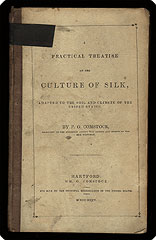
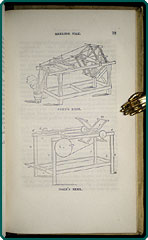 Click the images for enlargements.
 The advertisement on the back cover of this volume notes that William G. Comstock (the author's son and publisher) offered for sale 100,000 white Italian mulberry trees; 10,000 Chinese mulberry plants; and 2,000,000 “silk worms eggs,” among other items of sericulture.
• American Imprints 36859. Publisher's quarter brown cloth and printed paper–covered sides, moderately rubbed and soiled; spine sunned and a strip of black cloth tape across its head. Ex–social club library: 19th-century bookplate, call number on pastedown, front free endpaper with inked number covered over by black tape, pressure-stamp on title-page. No other markings. Pages clean. (26271)
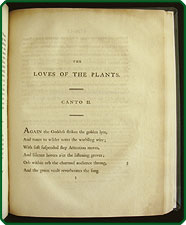
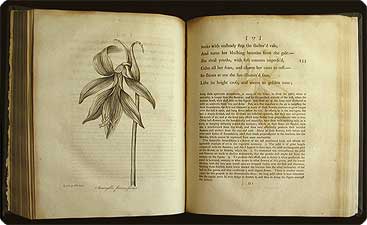
IMPERFECT. Well Worth HavingANYWAY.Darwin, Erasmus. The Botanic Garden; a poem, in two parts. London: Pr. for J. Johnson, 1791. 4to. I: xii, 214, 126, [2] pp.; [6 of 8] plts. (lacking two of the Portland Vase plates). II: [4], ix, 196 pp. [9 of 10] plts. (lacks the frontispiece). 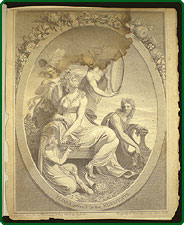
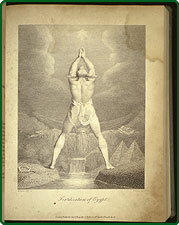 Click any image where the hand appears on
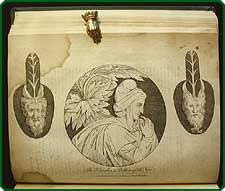
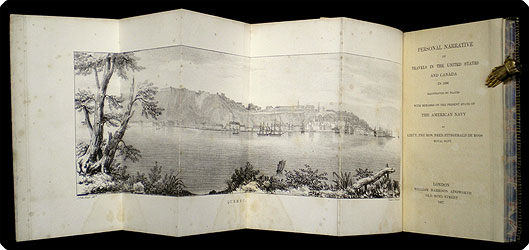
A Practical Yet Picturesque View ofthe U.S. & Canada De Roos, Frederick Fitzgerald [a.k.a. De Ros, John Frederick Fitzgerald]. Personal narrative of travels in the United States and Canada in 1826 ... with remarks on the present state of the American Navy. London: William Harrison Ainsworth, 1827. 8vo (21.8 cm, 8.55"). xii, 207, [1] pp.; 14 plts. (1 fold.).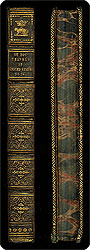
 Click the images for enlargements.
 The volume is illustrated withan oversized, folding panoramic view of Quebec along with 13 other plates, including two maps of the Niagara Falls region; views of Bristol, DE, and Chester, MA; and a bucolic depiction of the “Water Works of Philadelphia on the Schuylkil,” all engraved after De Roos's own designs.
Binding: Contemporary hunter green diced calf, covers framed in gilt double fillets and an interior blind rule with small gilt-stamped corner fleurons; spine gilt extra in five compartments. Board edges and turn-ins decorated with gilt rolls; rich blue marbled endpapers; all edges marbled.
• Howes D268; Sabin 19677. Binding as above, corners/joints scuffed and back joint starting from head; spine a little sunned, evenly and attractively. Scattered light foxing, pages and plates otherwise clean. An admirable book in a nice copy. (26665)
Illustrated Explorations of theCountryside Dibdin, Charles. Observations on a tour through almost the whole of England, and a considerable part of Scotland, in a series of letters, addressed to a large number of intelligent and respectable friends. London: G. Goulding & John Walker (pr. by T. Woodfall), [1801–02]. 4to (28.9 cm, 11.4"). 2 vols. I: 404 pp.; 27 plts. II: [2], 406, [2] pp.; 33 plts., 1 fold. map, 1 fold. chart.
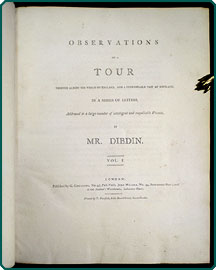
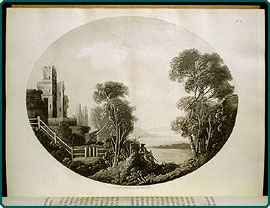
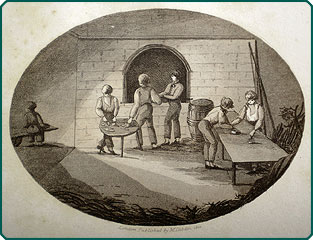 Click the images for enlargements.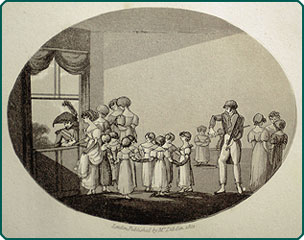
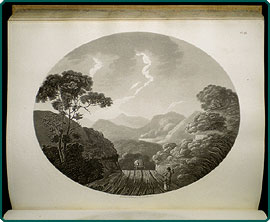
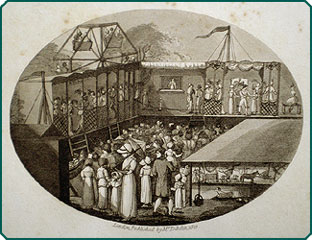
 illustrated with 60 copper-engraved and aquatint plates, one folding map, and one folding chart. The copper engravings are done in two different styles; one set consists of large renditions of scenery, the other of smaller depictions of people and everyday life — the former done from Dibdin's own paintings, and the latter from drawings by his daughter Anne.
• Anderson, Book of British Topography, 373; Lowndes 638; NSTC D1044. Not in Abbey, Life in England; not in Ray, The Illustrator & the Book in England. On Dibdin, see: Oxford Dictionary of National Biography online. Recent quarter caramel morocco and ochre cloth. Light to moderate foxing; mild offsetting around plates; four pages with patch of offsetting from now-absent laid-in item. Plates depicting people all with small area of waterstaining to upper inner portions, just touching corner of platemark without affecting images; scenic plates unaffected. All edges marbled. A solid, handsome, satisfying set. (26939)
The Lives of PlantsDigby, Kenelm. Discovrs svr la vegetation des plantes, fait par le Cheualier Digby, le 23. Ianuier 1660, en presence de Messieurs de l’Academie Royale d’Angleterre.... Paris: Chez la veuve Moet, 1667. 12mo (15. 6 cm, 6.2"). ã8A–G6H4 (-H4, blank); [16], 89, [1 (blank)] pp.

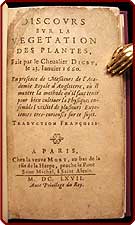
Rare. Searches via OCLC, RLIN, and NUC locate only five copies worldwide: Two in the U.S. (both at same university!) and three in France.
• Duveen D494. Recent calf with covers framed in single gilt fillets, spine with gilt-stamped title label and gilt-ruled raised bands. Leaves with some dustsoiling and dampstaining; now heavily sized, many with margins repaired and a few with stray pencil marks. Lacks final blank leaf (only). In fact, a rather nice copy of a very uncommon item.
Materia Medica — Ancient Knowledge Dioscorides Pedanius, of Anazarbos. Dioscoridis libri octo Graece et Latine. Castigationes in eosdem libros. Parisiis: Apud Petrum Haultinum (colophon: Excudebat Benedictus Prevost), 1549. 8vo (16.7 cm, 6.5"). [20], 392 ff. 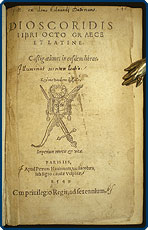
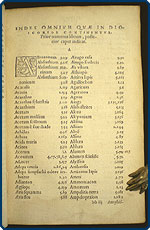
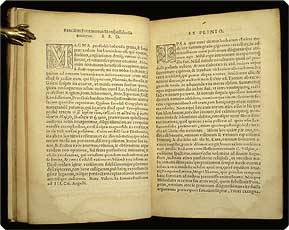 Click the interior images for enlargements.
The work was edited by Jacques Goupyl, and is laid out with the Latin translation by Jean Ruel in side-by-side columns with the Greek text.
Provenance: Early title-page inscription, “F.M. ex dono Eduardi Davenant.”
• Adams D656; Durling 1135; Index aureliensis 154.341; Pritzel 2295. 18th-century speckled calf (front cover) and sheep (back cover) rebacked with lighter-colored sheep preserving original gilt-stamped leather title-label; boards scuffed and worn. Title-page with inked inscription as above (and in same hand, “Illuminat mentem Lectio.” First two leaves creased; first and last few leaves with light to moderate waterstaining. A very few marginalia in a tiny, neat, early inked hand. (20639)
Creationist Guide to the Natural World — A Pretty 4-Volume Set Duncan, Henry. Sacred philosophy of the seasons; illustrating the perfections of God in the phenomena of the year. Boston: Marsh, Capen, Lyon, & Webb, 1839. 12mo (18.5 cm, 7.3"). 4 vols. I: xvi, 389, [1] pp. II: 391, [1] pp. III: 401, [1] pp. IV: 416 pp.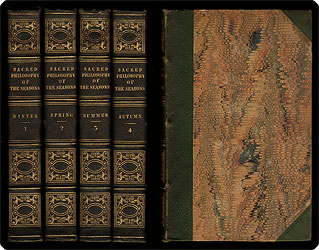
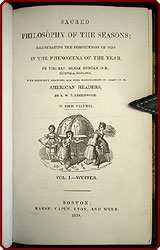 Click the images for enlargements. The practical sciences of agriculture, husbandry, and manufacture have their places here along with much on the physical and biological worlds as such.
Bindings: Publisher's half green morocco and marbled paper–covered sides, spines with gilt-stamped title and decorations; very attractive.
• American Imprints 55446. Spines slightly darkened; lightly rubbed. Ex–social club library: 19th-century bookplates, call number on endpapers, no other markings. A clean, sound handsome set. (27171)
Touting
“New Literary Connexions
inAMERICA”(English
Literary Periodical). The monthly magazine, and British register,
part I. 1798. From January to June, inclusive. Vol. V. London: R. Phillips, 1798.
8vo (22.5 cm, 9"). Frontis., [8], 552 (i.e., 554; lacking 499–504, 120 used
twice in pagination, 521–28 numbered 321–28) pp.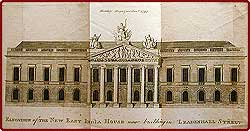 natural
history and voyages or travels; wedding, bankruptcy, and death
notices; remarks on pictures, or on theatrical and musical performances; and
assorted free-floating anecdotes and witticisms, as well as original poetry
and reviews of contemporary publications. The preface notes that “by means
of some new literary connexions in america,
we shall possess peculiar advantages in presenting to our Readers, accounts
of the most interesting circumstances belonging to the United States”—and
it was an American reader, in fact, who owned the present example.
natural
history and voyages or travels; wedding, bankruptcy, and death
notices; remarks on pictures, or on theatrical and musical performances; and
assorted free-floating anecdotes and witticisms, as well as original poetry
and reviews of contemporary publications. The preface notes that “by means
of some new literary connexions in america,
we shall possess peculiar advantages in presenting to our Readers, accounts
of the most interesting circumstances belonging to the United States”—and
it was an American reader, in fact, who owned the present example.
This volume’s oversized, folding frontispiece shows the front facade
of the “new East India House now building in Leadenhall Street”;
there is also one in-text engraving of Lethington House in East Lothian, residence
of the Maitland family.
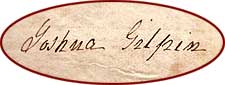
Provenance:
Front pastedown with inked ownership inscription of Joshua Gilpin,
a Quaker from Philadelphia who established the first paper mill in Delaware,
in 1787.
• Disbound with front cover, front free endpaper, and frontispiece separated; back cover lost, and signature sewing exposed/going, with many leaves loose. Now contained in a simple, acid-free phase box. Edges untrimmed. Minor offsetting and a few stray marks; mostly clean.
More
Varia . . .(English
Literary Periodical). The monthly magazine; or, British
register...Vol. XIX. Part I. for 1805. London: Richard Phillips, [1805]. 8vo (22.5
cm, 9"). [2], 719, [1 (blank)] pp. 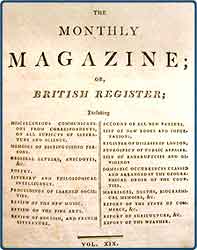
A preface to another volume in this series notes that “by means of some new literary connexions in america, we shall possess peculiar advantages in presenting to our Readers, accounts of the most interesting circumstances belonging to the United States”—and it was an American reader, in fact, who owned the present example.
Provenance: Front pastedown with armorial bookplate (bearing the motto “Factis dictisque simplex”: Make what you say simple) of Joshua Gilpin, a Quaker from Philadelphia who established the first paper mill in Delaware, in 1787.
• Paper-covered boards, worn and chipped, covers all but off, leather lost over spine; sewing going, with many signatures loose. Edges untrimmed, some signatures uncut; occasional offsetting or small spots, with pages mostly clean. Now housed in a simple, acid-free phase box.
 TO Part II
. . . TO Part II
. . . |