 NATURAL HISTORY
NATURAL HISTORY
NATURAL HISTORY
 “The Yaks are Strong & Hardy”
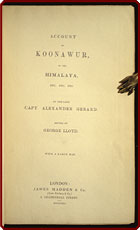
  Gerard, Alexander. Account of Koonawur in the Himalaya,
etc. etc. etc. London: James Madden & Co., 1841. 8vo (23 cm, 9"). xiii, [3], 190, [2], [195]–308 (i.e.,
310), xxvi, [2 (adv.)] pp.; 1 fold. map.
Gerard, Alexander. Account of Koonawur in the Himalaya,
etc. etc. etc. London: James Madden & Co., 1841. 8vo (23 cm, 9"). xiii, [3], 190, [2], [195]–308 (i.e.,
310), xxvi, [2 (adv.)] pp.; 1 fold. map.
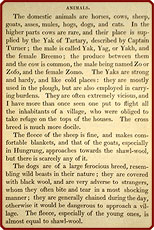
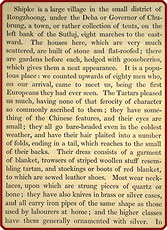
 Click the interior images for enlargements.
 Gerard's observations cover botany, linguistics, culture, and commerce, as well as geography. The area of his travels is depicted by an oversized, folding map of his own design.
• NSTC 2G5453; Howgego, II, G7. Contemporary brown cloth, spine with gilt-stamped title; rebacked and 95% of original spine reapplied, with the publisher's name at the foot of the spine chipped. Front pastedown and back of map each with institutional rubber-stamp (no other markings), front free endpaper with inked ownership inscription dated [18]49. Hinges (inside) reinforced. Last preface page with small inked annotation. Pages slightly age-toned; map with light offsetting and one short tear starting along fold, not touching image. (24291)

The Earthquake That Changed GuatemalaGonzález Bustillo, Juan. Extracto, ô Relacion methodica, y puntual de los autos de reconocimiento, practicado en virtud de commission del señor presidente de la Real Audiencia de este reino de Guatemala. Pueblo de Mixco [Guatemala]: Impreso en la oficina de A. Sanchez Cubillas, 1774. Folio (29.5 cm; 11.675"). [2], 86 pp. (without final leaf with one erratum) 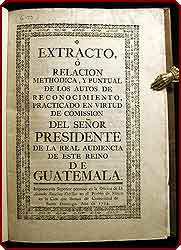
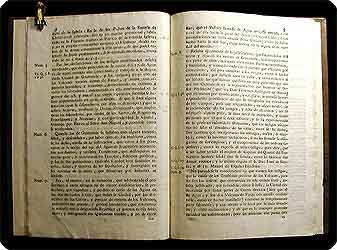 Single-click any image where the hand appears on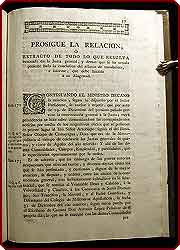
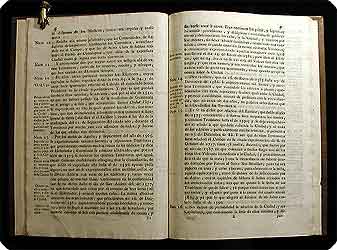
This document is one of the very few printed in the temporary capital of Mixco, a press having been salvaged from the ruins in the former capital. Thus, Mixco was the second city/town to have a press in Central America, and then, for only a short time—appoximately two years.
In addition to being important for its contents and in the realm of printing history, the González Bustillo report is uncommon: We trace only half a dozen copies in U.S. libraries.
• Medina, Guatemala, 384; Palau 105113; Sabin 27811. Modern full calf, very plain style. Without the final leaf with one erratum on it.
 Hayden's
Survey: Thomas
on
Hayden's
Survey: Thomas
on Grasshoppers
& Locusts
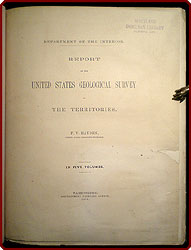
Hayden, Ferdinand Vandeveer, and Cyrus Thomas. Report
of the United States Geological Survey of the territories: Synopsis of the Acrididae of North America.
Washington: Government Printing Office, 1873. Folio (31.5 cm, 12.4"). x, 24, 262 pp.; 1 plt.
Grasshoppers
& Locusts
Hayden, Ferdinand Vandeveer, and Cyrus Thomas. Report
of the United States Geological Survey of the territories: Synopsis of the Acrididae of North America.
Washington: Government Printing Office, 1873. Folio (31.5 cm, 12.4"). x, 24, 262 pp.; 1 plt.
 Click the interior images for enlargements.
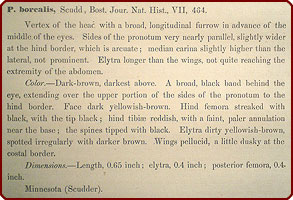
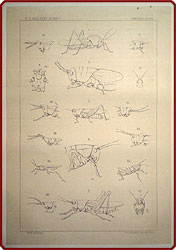
 Thomas's monograph describes earwigs, cockroaches, devils-horses, walking-sticks,
grasshoppers (this category including locusts), and crickets, and is illustrated
with a few in-text wood engravings in addition to the lithographed plate (done
by W.H. Holmes) showing 17 different U.S. insects.  This copy is uncut and unopened.
• Schmeckebier, Catalogue & Index of the Publications of the Hayden, King, Powell, & Wheeler Surveys, 21. Period-style quarter tan cloth with light blue paper–covered boards, spine with printed paper label. Title-page institutionally rubber-stamped; title-page and half-title with outer margins repaired. Page edges untrimmed, signatures unopened. Spots of staining to outer margins of a few leaves. In fact a nice copy. (25282)

 Fossil Flora — 65 PlatesHayden, Ferdinand Vandeveer. Report of the United States Geological Survey of the territories. Washington: Government Printing Office, 1878. 4to (30.4 cm,
11.9"). xv, [3], 366 pp.; 65 plts.
Fossil Flora — 65 PlatesHayden, Ferdinand Vandeveer. Report of the United States Geological Survey of the territories. Washington: Government Printing Office, 1878. 4to (30.4 cm,
11.9"). xv, [3], 366 pp.; 65 plts. 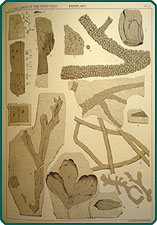
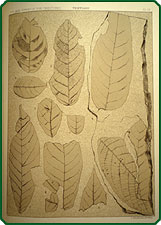
• Publisher’s cloth, covers framed in blind, spine with gilt-stamped title; front cover with discoloration to upper edge and small bump to outer edge, cloth rubbed along edges and joints, spine scuffed. Front pastedown institutionally rubber-stamped. Pages and plates clean, and the large volume quite solid.
 Missionary Travel to
 the Arctic — An Account of LaplandHögström, Pehr. M. Petr. Höchströms Missionarii und Pastoris in Galliwarn Beschreibung von dem unter Schwedischer Crone gehörigen Lappland, in sich fassend einen kurtzen Ünterricht sowohl von des Landes Beschaffenheit überhaupt, als aüch von dem Züstande der Einwöhner, ihrer Haushaltung, Sitten, Manieren, Lebensart, Lastern ünd Aberglaüben .... Stockholm & Leipzig : Beij Johann Friedrich Lochner, 1748. 8vo (17.7 cm, 7"). Engr. t.-p. (double-page), 328 pp.; 1 fold. map, 1 fold. plt.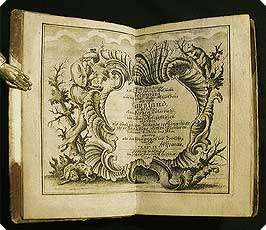
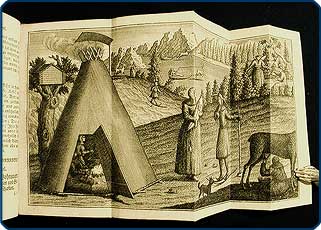
Printed in black-letter, the volume is illustrated with an oversized, folding map of Lapland and a folding plate of Laplanders at work and at play, in addition to the double-page engraved title.
Scarce: Searches of OCLC and RLIN show only two U.S. locations.
Provenance: Front pastedown with bookplate of a 19th-century collector; front fly-leaf with inked ownership inscription dated 1770; title-page with early inscription of J.H. Gronau.
• Not in Howgego, Encyclopedia of Exploration. Contemporary half calf over paper-covered sides, spine with gilt-stamped leather title-label and gilt-stamped decorations in compartments; leather worn, paper discolored, one spine compartment with dark adhesion now chipping. All edges marbled. First text page with inked numeral in lower margin. Free endpapers excised, with offsetting from turn-ins to edges of front and back fly-leaves; back fly-leaf with corners torn away. Engraved title-page, map, and plate browned.
 UncommonJuvenile
Reader
Hughs, Mary. Useful little stories. Boston: Phillips &
Sampson, [1841]. 12mo (11.5 cm, 4.5"). [2], 72 pp.; illus.
UncommonJuvenile
Reader
Hughs, Mary. Useful little stories. Boston: Phillips &
Sampson, [1841]. 12mo (11.5 cm, 4.5"). [2], 72 pp.; illus.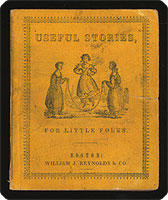
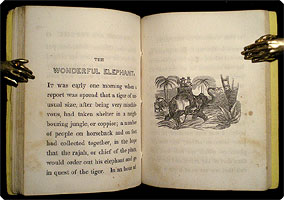 Click the images for enlargements.
 The tales, many of which feature interesting animals, are illustrated with six full-page wood engravings and two vignettes. The title-page vignette is signed Butler.
Uncommon: OCLC and NUC Pre-1956 locate only three U.S. holdings of this printing.
• Not in Sternick, 19th Century Children's Series Books. Publisher's printed bright yellow paper wrappers; dust-soiled, front wrapper with tear from outer margin extending into image but not spoiling it, joints starting from foot. Light foxing. (25344)
An Englishwoman's Translation ofThis German Landmark Humboldt, Alexander von. Cosmos: A sketch of a physical description of the universe. London: Henry G. Bohn, 1849–58. 8vo (18.8 cm, 7.4"). 5 vols. I: Frontis., xvii, [1], ix, [1], 369, [3], 18, 40 (adv.) pp. II: xxi, 370–742, 16 pp. III: [6], 289, [1], 8, 32 (adv.)
pp. IV: xv, [1], 291–601, [1], 7, [1], 32 (adv.) pp. V: viii, 500 pp.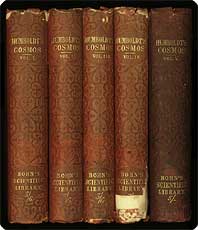
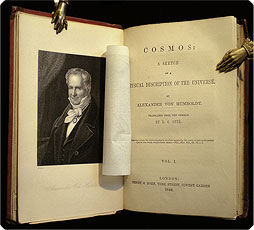 Click the interior image for an enlargement. Elise C. Otté (with assistance from Benjamin Horatio Paul and William Sweetland Dallas for vols. 4 and 5, respectively) and first published in 1845 through 1848, with this edition being part of the “Bohn's Scientific
Library” series. The work was written by German naturalist, explorer, and diplomat Friedrich Wilhelm Heinrich Alexander Freiherr von Humboldt, famed for his scientific observations of Latin America as well as for the present, groundbreaking overview of natural science. Humboldt's exploits and writings served as an inspiration for countless other scientists (including Charles Darwin), and his encyclopedic approach to describing our world as a whole, in terms of all of its natural phenomena, helped launch science's ongoing search for the unifying principles of the universe.
Click the interior image for an enlargement. Elise C. Otté (with assistance from Benjamin Horatio Paul and William Sweetland Dallas for vols. 4 and 5, respectively) and first published in 1845 through 1848, with this edition being part of the “Bohn's Scientific
Library” series. The work was written by German naturalist, explorer, and diplomat Friedrich Wilhelm Heinrich Alexander Freiherr von Humboldt, famed for his scientific observations of Latin America as well as for the present, groundbreaking overview of natural science. Humboldt's exploits and writings served as an inspiration for countless other scientists (including Charles Darwin), and his encyclopedic approach to describing our world as a whole, in terms of all of its natural phenomena, helped launch science's ongoing search for the unifying principles of the universe.
This translation caused a bit of controversy: Tipped in at the front of vol. I is a printed rebuttal by Bohn of accusations made by the publisher of a rival translation by Mrs. Sabine, regarding the accuracy of Otté's work — which Bohn defends, of course.
• NSTC 2H36378; Sparrow, Milestones of Science, 106 (first ed.). Publisher's embossed red cloth, spine with gilt-stamped title and series identification; spines sunned with heads and feet pulled (in one instance chipped), corners bumped, cloth with spots of minor discoloration; vol. V with binding darkened overall and cloth starting at heads of joints. Married set: Vols. I–IV each with institutional bookplate on front pastedown; vol. V from another set, with a different bookplate. Vols. I–IV institutionally rubber-stamped on front free endpapers and title-pages. Many signatures unopened in vols. I–IV; sewing starting to loosen in vol. V. (23913)
 For more SETS, click here.

One of ThoseWonderfully AMBITIOUS!18th-Century “Sketches”Kames,
Henry Home, Lord. Sketches
of the history of man. Edinburgh: W. Creech, W. Strahan, & T. Cadell,
1774. 4to (27.5 cm, 10.9"). 2 vols. I: xii, 519, [1 (blank)] pp. II: [4], 507,
[1 (blank)] pp. 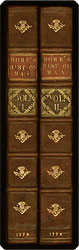
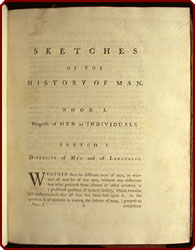
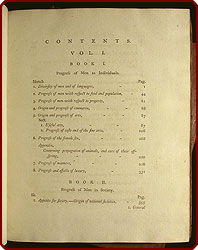 Click the images for enlargements.
 Provenance: Front pastedown with bookplate “De la bibliotheque de F. Freudenreich.”
• ESTC T48434; Alston, III, 308; Goldsmiths’-Kress 11089; Sabin 32702. Contemporary speckled calf, neatly rebacked preserving original gilt-stamped leather title and volume labels, spines with gilt-stamped thistle decorations; edges and corners rubbed, sides showing small scrapes and discolorations. Residue on pastedowns from sometime removal of bookplates. Pages age-toned, with occasional small spots, and offsetting from binding to in margins of first and last few leaves. All edges speckled.
For more SETS, click here.
One
Year's Worth ofWell-Spent Half Hours
Knight, Charles. Half-hours with the best authors.
[London: Charles Knight, 1847–48]. 8vo (22.8 cm, 9"). 4 vols. in 2. I: Frontis., engr. t.-p., [2],
312 pp., frontis., engr. t.-p., [2], 312 pp. II: Frontis., engr. t.-p., [iii]–iv, 312 pp., frontis., engr. t.-p., [iii]–iv, 316 pp.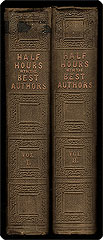
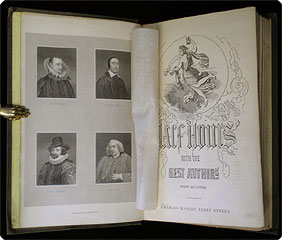 Click the images for enlargements.
 52 weekly issues meant to be consumed in half-hour portions, with each weekly number containing seven half-hours. (Indices and quarterly title-pages are bound in here.)
Knight, who was devoted to books and to literature from the time he was a small child, was a much-admired printer and publisher, as well as an author, reformer, and would-be educator: Many of his publishing endeavors were aimed at improving and enlightening the working class.
• NSTC 2K7731. On Knight, see: Oxford Dictionary of National Biography online. On binding cloth, see: Krupp, Bookcloth, style Wav3. Publisher's textured brown cloth, covers blind-stamped with muse motif and title, spines with gilt-stamped title and blind-stamped decorations; lightly worn overall with some fading, vol. II spine head with traces of a strip of cloth tape. Ex–social club library: 19th-century bookplate, call number on endpaper, pressure-stamp on title-page, no other markings. Paper slightly embrittled (more so in second volume), with a few short edge tears. Externally ordinary; internally worthwhile. (26860)
American Primer — American Woodcuts M'Carty's American primer. Being a selection of words the most easy of pronunciation. Philadelphia: M'Carty & Davis (stereotyped by J. Howe), (copyright 1828). 12mo (14.3 cm, 5.6"). 36 pp.; illus.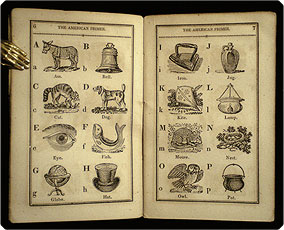
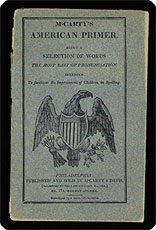 12 half-page wood engravings of animals and birds done by Gilbert.
• Shoemaker 33941; Rosenbach, Early American Children's Books, 714. Publisher's printed light blue paper wrappers, split and chipped along spine, otherwise crisp and clean. Pages with light age-toning and offsetting. (24569)

The First CHILEAN Naturalist Molina, Giovanni Ignazio. Saggio sulla storia naturale del Chili. Bologna: Stamperia di S. Tommaso d'Aquino, 1782. 8vo (20 cm, 7.9"). 367, [1] pp. (map lacking).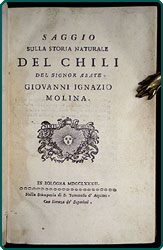
 Click the images for enlargements.
 • Brunet, III, 1811; DeBacker-Sommervogel, V, 1165; Graesse, IV, 568; Leclerc, Bibliotheca Americana, 1958; Palau 174558; Sabin 49888. Contemporary quarter mottled sheep and speckled paper–covered sides, spine with gilt-stamped leather title-label and gilt-tooled compartment bands; spine leather chipped/cracked with spots of insect damage, corners abraded, and sides/edges otherwise lightly rubbed. Some leaves browned; scattered light stains. Lacking the map, text complete. (26248)
First U.S. Edition: Icelandic Travel Book
Nicoll, James. An historical and descriptive account of Iceland, Greenland, and the Faroe Islands. New York: Harper & Brothers, 1841. 12mo (15.7 cm, 6.2"). Add. engr. t.-p., 360 pp.; 2 fold. maps, 1 plt. (incl. in pagination).
 Click the images for enlargements.
 Binding: Publisher's olive-brown vermiform cloth of Krupp's style Mis1, spine with gilt-stamped series and individual title.
• Sabin 32058. On binding: Krupp, Bookcloth in England and America, 1823--50, Mis1. Binding as above, head of spine chipped, front joint with small spot of insect damage. Ex–social club library: 19th-century bookplate and small call-number ticket on front pastedown, title-page pressure-stamped, no other markings. First map creased, outer edge slightly tattered. Pages age-toned. A nice copy. (26418)
Get
Cured or
Get CleanYOU
Choose: “Druggs”
or Soap [A FAVORITE BOOK HERE]
Pomet, Pierre. A compleat history of druggs, written in French by Monsieur Pomet ... To which is added, what is further observable on the same subject, from Mess. Lemery and Tournefort ... Illustrated with above four hundred copper cutts ... Done into English from the originals. London: Pr. for R. & J. Bonwicke, and R. Wilkin; John Walthoe & Tho. Ward,, 1725. 4to (22.5 cm; 9"). xii, 419, [1] pp., [4] ff.; 86 plts.
[A FAVORITE BOOK HERE]
Pomet, Pierre. A compleat history of druggs, written in French by Monsieur Pomet ... To which is added, what is further observable on the same subject, from Mess. Lemery and Tournefort ... Illustrated with above four hundred copper cutts ... Done into English from the originals. London: Pr. for R. & J. Bonwicke, and R. Wilkin; John Walthoe & Tho. Ward,, 1725. 4to (22.5 cm; 9"). xii, 419, [1] pp., [4] ff.; 86 plts.


 86 etched plates, mostly with four
specimens per plate; but there are also full-page images of a silk factory, a fishery, and of “negro's [sic] making Roucou.” Other plates are of unicorns, whales, rhinos, elephants.
86 etched plates, mostly with four
specimens per plate; but there are also full-page images of a silk factory, a fishery, and of “negro's [sic] making Roucou.” Other plates are of unicorns, whales, rhinos, elephants. 
 Americana content is noteworthy, with discussion of cacao, chocolate, “guinea pepper,” “long American pepper,” tobacco, and so on. Two surprising sections are devoted to glass manufacture and achieving color in glass, and soap making.
• Wellcome Catalogue, IV, 412; Graesse, Trésor de Livres rares, V, 398; Alden & Landis 725/158; not in Sabin; ESTC T111989; Pritzel 7258n; Junersforgg & Hasenkamp, Coffee, 1177– 1179. Recent full calf antique-style with gilt concentric panels on covers and gilt corner devices on same; round spine with raised bands, each accented by gilt rules. Some plates closely trimmed at foremargin. A very pleasing copy. (21774)
 A
PRB&M “FEATURED BOOK” —
A
PRB&M “FEATURED BOOK” —
If
You Look
Like a Swine
. . . Porta,
Giambattista della. Della fisionomia dell'huomo.... Venetia: Presso
Christoforo Tomasino, 1644. 4to (23 cm, 9"). a6 A–Z8
Aa–Nn8; [6] ff., 570 (i.e., 572) pp., [2] ff.; illus.
Look
Like a Swine
. . . Porta,
Giambattista della. Della fisionomia dell'huomo.... Venetia: Presso
Christoforo Tomasino, 1644. 4to (23 cm, 9"). a6 A–Z8
Aa–Nn8; [6] ff., 570 (i.e., 572) pp., [2] ff.; illus. 

 "Porta's
system . . . leads him constantly to conclusions of analogies between plants,
animals and men. Similar humours are found in various apparently unrelated
organisms. Plants and animals that correspond in shape are interrelated. A
leaf formed like a stag horn shares the character of the deer. The horse is
a noble animal, therefore it is a sign of nobility to walk erect with the
head held high. Men who resemble a donkey are like that animal: timid, stupid,
nervous. He who looks like an ostrich is akin to it in character: he is timid,
elegant, vicious, stolid. A man who reminds us of a swine is a swine, eating
greedily and having all the other characteristics, such as rudeness, irascibility,
lack of discipline, sordidness, lack of intelligence [and] modesty. In a similar
way, men who look like ravens are impudent; those who resemble oxen are stubborn,
lazy, irascible; men who have lips shaped like those of a lion are hearty,
magnanimous, courageous; others who make us think of a ram are timid, malicious
and humble. When practising medicine, Porta had many occasions to observe
his patients, and to study their character and complexion; the results of
this studious inquiry are laid down in his book." (Seligmann)
"Porta's
system . . . leads him constantly to conclusions of analogies between plants,
animals and men. Similar humours are found in various apparently unrelated
organisms. Plants and animals that correspond in shape are interrelated. A
leaf formed like a stag horn shares the character of the deer. The horse is
a noble animal, therefore it is a sign of nobility to walk erect with the
head held high. Men who resemble a donkey are like that animal: timid, stupid,
nervous. He who looks like an ostrich is akin to it in character: he is timid,
elegant, vicious, stolid. A man who reminds us of a swine is a swine, eating
greedily and having all the other characteristics, such as rudeness, irascibility,
lack of discipline, sordidness, lack of intelligence [and] modesty. In a similar
way, men who look like ravens are impudent; those who resemble oxen are stubborn,
lazy, irascible; men who have lips shaped like those of a lion are hearty,
magnanimous, courageous; others who make us think of a ram are timid, malicious
and humble. When practising medicine, Porta had many occasions to observe
his patients, and to study their character and complexion; the results of
this studious inquiry are laid down in his book." (Seligmann)
 This
work was written in Latin and first published in 1586 under the title De
humana physiognomia. It saw 19 editions before 1701, and has been translated
into Italian (1598; translation by Salvatore Scarano), German (1651), French
(1655), and English (1817). This
tenth Italian edition is replete with a large number of intriguing (and humorous)
woodcuts. The first is a portrait of Porta, and, while some
of the rest show anatomical figures, the vast majority contrast the shapes
of faces and bodies of animals and men. The title-page vignette is of Aesculapius,
the Greco-Roman god of healing.
This
work was written in Latin and first published in 1586 under the title De
humana physiognomia. It saw 19 editions before 1701, and has been translated
into Italian (1598; translation by Salvatore Scarano), German (1651), French
(1655), and English (1817). This
tenth Italian edition is replete with a large number of intriguing (and humorous)
woodcuts. The first is a portrait of Porta, and, while some
of the rest show anatomical figures, the vast majority contrast the shapes
of faces and bodies of animals and men. The title-page vignette is of Aesculapius,
the Greco-Roman god of healing.
Appended to Della fisionomia humana are the Fisionomia naturale of Giovanni Ingegneri († 1600), the Physionomia of Polemon (ca. a.d. 88 – a.d. 145) in an Italian translation, Porta’s Della celeste fisionomia (a repudiation of astrology), and two short related treatises by Livius Agrippa and Luigi Settala (1552–1633). Della celeste fisionomia has a number of interesting woodcuts showing pagan gods and constellations.
• Seligmann, The History of Magic, 319. On physiognomy,
see: Thorndike, History of Magic and Experimental Science, VII, 448
& following. On Porta, see: Webster’s New Biographical Dictionary
811. Vellum over paste boards, soiled and cockled with a little chipping and
front joint opening. Ex-library: paper labels on spine and rubber-stamps,
including one on title-page. Pages cockled with traces of soiling on top edges;
a few edges bumped.  Plates
in very clear, strong impressions.
Plates
in very clear, strong impressions.
The
Cabinet Cyclopaedia:
SILK
Porter, George Richardson, & Dionysius Lardner, eds. A treatise on the origin, progressive improvement, and present state of the silk manufacture. Philadelphia: Carey & Lea, 1832. 12mo (18.7 cm, 7.4"). 276 pp.; illus.
 Click the images for enlargements.
 • Goldsmiths'-Kress 27353.19; this vol. not in American Imprints. Publisher's quarter red cloth and tan paper–covered sides, spine with printed paper label; binding lightly worn and faded, with paper chipped, spots of soiling, head of spine chipped and band of cloth tape extending across it. Ex–social club library: 19th-century bookplate, call number on endpaper, pressure-stamp on title-page. No other markings. Uncut copy; pages generally clean. (26262)
The FIRST English-LanguageHistory of Java Raffles, Thomas Stamford, Sir. The history of Java ... second edition. London: John Murray, 1830. 8vo (21.6 cm, 8.5"). 2 vols. I: xlviii, 536 pp.; 1 fold. table. II: iv, 332, clxxix, [1] pp.

 Click the images for enlargements.
 The editor's advertisement, type-signed by Sophia Raffles (Sir Thomas's second wife), notes that the plates from the first edition and some additional plates were published in “a separate quarto volume, detached entirely from the present work” (p. xi). This did not actually appear until 1844 and so is not present here.
• Brunet, IV, 1088; Graesse, VI, 17; Lowndes 2037. On Raffles, see: Oxford Dictionary of National Biography online. Contemporary calf, covers framed in blind triple fillets with gilt-stamped corner fleurons, spines with gilt-stamped leather title and volume labels and with gilt-stamped and blind-tooled compartment decorations; board edges with blind roll. Binding rubbed at joints/edges and with small scuffs, portions of boards variously stained/sunned; still quite attractive. Ex–social club library: 19th-century bookplate and inked call number on each front pastedown, title-pages pressure- and lightly rubber-stamped; no other markings. Fore-edge of vol. I shows signs of old water exposure, without actual waterstaining to pages themselves save in a few cases where upper or outer margins are touched; pages clean. A pleasant old pair of books. (26379)
 Early German Study of Japan — In English Rein, Johannes Justus. Japan: Travels and researches undertaken at the cost of the Prussian government. New York: A.C. Armstrong & Son, 1884. 8vo (25.8 cm, 10.25"). x, [2], 534 pp.; 13 plts., 5 maps (2 col. fold.).

 Click the images for enlargements.
 The present volume isillustrated with a total of 18 plates: eight steel engravings, five mounted phototypes (by Strumper & Co. of Hamburg), and five maps (including two very large folding maps printed in color), as well as several in-text engravings.
• Publisher's brown cloth, front cover stamped in red, white, and gilt with images of Japanese lanterns, back cover with publisher's stylized monogram in red, spine with gilt-stamped title and additional lantern image; rubbed, front cover with small dent to edge and cloth partially split at joint, spine with paper shelving label and cloth torn at head/foot (especially the latter at rear joint). Ex–social club library: call number on front fly-leaf, rubber-stamp on title-page and three other pages, no other markings. Large folding map of Japan with small tear from one edge. A few leaves uncut. Pages and plates clean. A significant work in a still-attractive copy, priced to reflect condition. (26861)
The Wonder ofBIRDS Rennie, James. Natural history of birds. Their architecture, habits, and faculties. New York: Harper & Brothers, 1840. 12mo. 308 pp., illus.

 Click the images for enlargements. “With numerous [in-text wood] engravings” — definitely, charming.
• See: Wood 553; Freeman 3166. Publisher's tan cloth printed with publishing information on front cover and ads for various Harper Library series on the back. Strip of cloth tape at top of spine and slightly onto the covers; ex–social club library, with 19th-century bookplate, call number on endpaper, pressure-stamp on title-page, no other markings. A nice, clean little book. (26731)
Raising & Studying “Fairy Creatures” Robertson-Miller, Ellen. Butterfly and moth book. New York: Charles Scribner's Sons, 1912. 8vo. Frontis., xviii, [2], 249, [1] pp.; illus.

 Click the interior images for enlargements.
 “Personal” this is, both in construction and in style; it is written in accessible language and with wonder given full rein. But it is real science. (Robertson-Miller published in agricultural and other scientific journals.)
Binding: Publisher's sage green cloth, front cover and spine stamped in olive, black, and pale green.
• Bound as above with lower edge of front cover darkened, corners and spine extremities lightly rubbed. Front hinge slightly tender. Pages clean. (22214)
 TO Part III
. . . TO Part III
. . . |