 RELIGION
RELIGION
RELIGION
 A Restoration Movement Leader on
 Believers' Baptism
  Campbell, Alexander. Christian baptism: Antecedents and consequents. Bethany, VA: Alexander Campbell, 1851. 12mo (18.1 cm, 7.15"). 444 pp.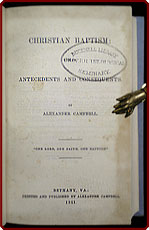
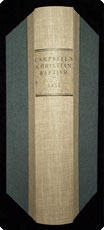
• Norona & Shetler, West Virginia, 236. Not in Sabin. Period-style quarter tan cloth and light blue paper–covered sides, spine with printed paper label. Title-page institutionally rubber- and pressure-stamped, dedication with inked annotations along inner and lower margins, one (blank) page rubber-stamped, last index page pressure-stamped. Light staining to margins of first and last few pages (from a previous binding), otherwise clean. (25839)


 Canisius' Catechism of the
 Youngest Children Canisius, Petrus, Saint. Institutiones christianae pietatis. Seu parvus catechismus catholicorum. Coloniae : Apud Maternum Cholinum, 1571. 12mo (13.5 cm; 5.25"). [16] ff., 51, [1] pp., [36] ff.
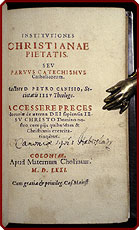
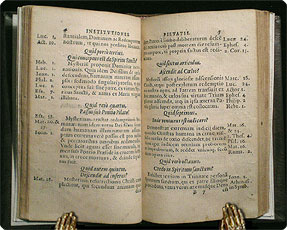
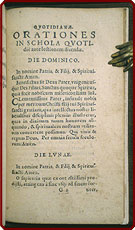
 Click the interior images for enlargements.
 Offered here is an early printing of the version for the youngest students. The title-page and calendar are printed in red and black, and a few headlines in the early section are also in red.
Uncommon. OCLC locates only this now deaccessioned copy in the U.S., and one copy in Europe. Index Aureliensis fails to list this edition at all.
• Not in Index Aurel.; not in Adams. Recent ebony-brown calf old style: Round spine with raised bands, accented in gilt and with blind-tooled devices in compartments; single blind rules extending onto covers from each band to terminate in trefoils, and covers framed in blind double fillets. Author's name and date of printing in gilt on spine. Early underscoring and some minimal marginalia in red ink in a 16th-century hand; ownership note of same era on title-page. Some age-spotting and other light discoloration, not serious.  For an early children's book, a very, very nice copy. (24855)

 Stolen
Letters!
Damage
Control! —
The Reformation
Capito, Wolfgang [a.k.a., Wolfgang Köpfel]. Der
nüwen zeytu[n]g vnd heymlichen wunderbarlichen offenbarung so D. Hans Fabri jungst vfftriben
vnd Wolffgang Capitons brieff gefälschet hat bericht vnd erklerung. Strassburg: No
publisher/printer, 1526. Small 4to. [32] ff.
Stolen
Letters!
Damage
Control! —
The Reformation
Capito, Wolfgang [a.k.a., Wolfgang Köpfel]. Der
nüwen zeytu[n]g vnd heymlichen wunderbarlichen offenbarung so D. Hans Fabri jungst vfftriben
vnd Wolffgang Capitons brieff gefälschet hat bericht vnd erklerung. Strassburg: No
publisher/printer, 1526. Small 4to. [32] ff.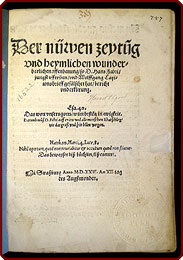
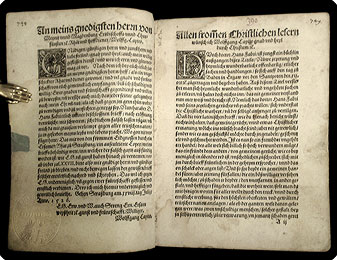
 Click the images for enlargements.
 In his capacity as a leader of the early Reformation he was present at several important “conferences” (the second Zürich and that at Marburg). He coauthored, with Martin Bucer, the Confessio Tetrapolitana.
Capito's archenemy was a Dominican named Hans Faber (a.k.a. Johannes Faber), the vicar general of the bishop of Constance, who at every turn sought to undermine Capito and his relations with authorities and other Reformers, Zwingli in particular. Der nüwen zeytu[n]g is Capito's rebuttal of Faber's Newe Zeittung vnd heimliche wunderbarliche Offenbarung etlicher sache[n] vnd handlungen so sich vff dem tag der zw Baden, in which Faber published distorted versions of letters his agents had stolen that were addressed to Zwingli by Capito and relate to the disputation at Baden in 1526, which Zwingli had decided not to attend.
Schrodt and Vogelstein summarize: “Capito's defense in this tract suggests that he was not altogether comfortable with the language he had used, intended as it was for the eyes of a friend and spiritual comrade in arms. By presenting his original text passage by passage together with Faber's published German version of the same, Capito shows that it given the most offensive turn through the opponent's manner of translation.”
This proffers a large, interesting woodcut device on the verso of its last leaf and two small but nice woodcut initials in text.
Provenance: Ownership signature on title-page of Howard Osgood, noted late 19th- and early 20th-century collector and scholar; old circular pressure-stamp on same page of a seminary (properly released).
WorldCat finds no copies in North America and COPAC finds none in Great Britain.
• Panzer, II, 3051; Kuczynski 381; Index Aurel.; 131.648; VD16 C828; Schrodt & Vogelstein 28–29. In later plain wrappers; title-page torn with small loss of blank foremargin, repaired. Two different sequences of manuscript pagination, one in red, indicating the opusculum was bound at least twice in different sammelbands. Provenance indications as above, and a five-digit number in ink in the inner corner of the title-page; dust-soiling and old staining. (25953)
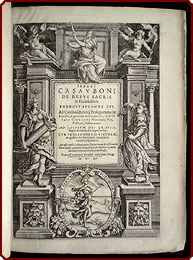
Protestant Refutation of Baronius Casaubon, Isaac. Isaaci Casauboni De rebus sacris & ecclesiasticis exercitationes XVI ... Acceßit versio Latina earum sententiarum & dictionum Gracarum, quarum interpretatio ab authore in prima editione certo consilio fuit praetermissa. Francofurti: Curantib. Ruland. typis Ioan. Bring, 1615. 4to (24.7 cm, 9.75"). [72], 552, [24] pp.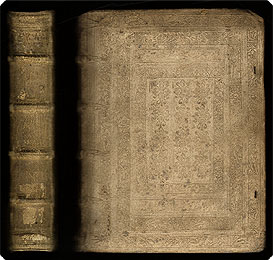
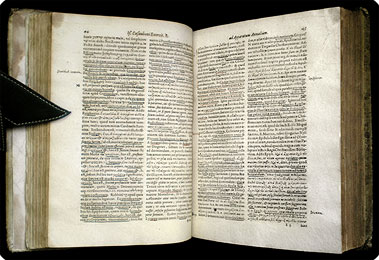
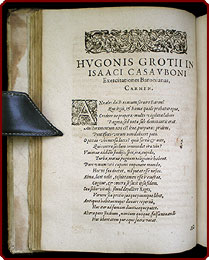 Click the images for enlargements.
 The title-page appears within a very fine copper-engraved architectural and allegorical frame. This copy bears interesting evidence of early readership, with inked marginalia in a very neat hand and underlining in both black and red.
Binding: Contemporary alum-tawed pigskin, covers elaborately tooled and embossed in blind with resulting concentric compartments (one roll being pictorial representations of the virtues).
• Brunet 21364; VD17 12:116615R. Binding with some portions darkenedor rubbed, spine leather with numerous small cracks, clasps now absent; front hinge (inside) repaired, and binding strong. Title-page and first dedication page each with reasonably unobtrusive institutional pressure-stamp. Pages age-toned, with annotations as above.  A solid, engaging copy. (26927)
The Year in Four Vols. & Beautiful Bindings Catholic Church. Liturgy & ritual. Breviaries. Breviarium romanum ex decreto sacrosancti Concilii tridentini restitutum S. Pii V. pontificis maximi iussu editum, Clementis VIII. ac Urbani VIII. auctoritate recognitum, cum officiis sanctorum novissimis usque ad SS. D.N. Pium VI, pro recitantium commoditate diligenter dispositis. [Romae]: A. Galler , 1781. 8vo (18 cm, 7.1"). 4 vols. I: [20], 632, cclxxxviii, 19, [1] pp.; illus. II: [18], 646, ccliv, 21, [1] pp.; 1 plt. III: [54], 566, cclxxvi, 26 pp.; 1 plt. IV: [20], 608, cclxx, 15, [1] pp.; illus.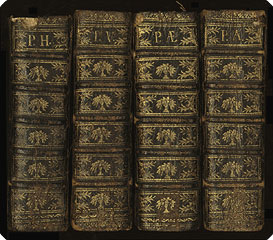
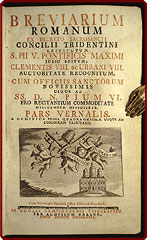
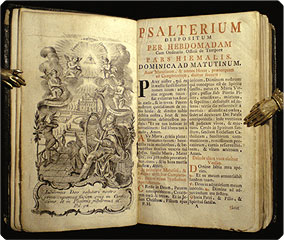 Click the images for enlargements.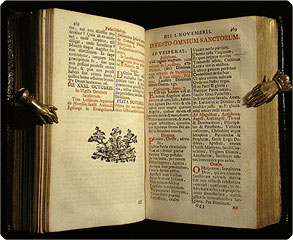
• Not in Weale & Bohatta. Bindings as above, edges and extremities rubbed, spine leather with tiny cracks, one spine head chipped, one joint starting. Ex-library with bookplates, rubber-stamp on lower edges of pages of the closed volumes. One volume with text block separating from spine and sewing loosening; this with the most leather rubbed away and the darkest instances of the usually-light waterstaining and spots of foxing seen occasionally throughout. Endpapers bear early inked ownership inscriptions and annotations. An elegant quartet. (12406)
 For more SETS, click here.
The Armenian Rite Englished & IllustratedCatholic Church. Armenian Rite. The Armenian liturgy translated into English. Venice: Pr. at the Armenian Monastery of St. Lazarus, 1862. 8vo (22 cm, 8.6"). 70, [2 (blank)] pp.; 8 plts.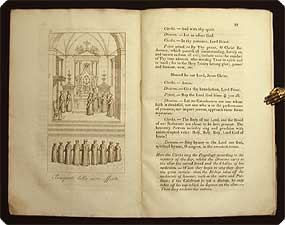
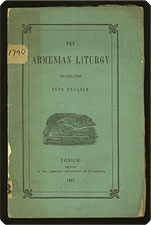
• Publisher’s printed paper wrappers, detached and darkened, front wrapper with tear from inner margin, paper split and chipped along spine, front wrapper with paper shelving label. Title-page with institutional stamp (no other markings). A few plates with very light spots of foxing. Very interesting!

 Ojibway
— OTTAWACatholic
Church. Catechism. Ojibway. A short compendium of the Catechism for the Indians, with the approbation of the Rt. Rev. Frederic Baraga, Bishop of Saut Sainte Marie, 1864. Rev. N. L. Sifferath, Missionary of the Ottawa and Otchipwe Indians. Buffalo, N.Y.: C. Wieckmann, (Aurora Printing House.), 1869. 12mo (18.3 cm, 7.2"). 62, 2 pp.
Ojibway
— OTTAWACatholic
Church. Catechism. Ojibway. A short compendium of the Catechism for the Indians, with the approbation of the Rt. Rev. Frederic Baraga, Bishop of Saut Sainte Marie, 1864. Rev. N. L. Sifferath, Missionary of the Ottawa and Otchipwe Indians. Buffalo, N.Y.: C. Wieckmann, (Aurora Printing House.), 1869. 12mo (18.3 cm, 7.2"). 62, 2 pp.
 Click either image above for an enlargement.
• Sabin 80996; Pilling, Algonquian, 462; Pilling, Proof-sheets, 3601a. Not in Banks; not in Evans. Original buckram, showing minor water damage; upper page margins waterstained, obviously to very lightly. Title-page with library stamps and some rough old pen-markings; first two leaves a bit torn at binding.
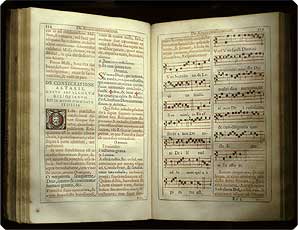
Moretus Pontificale — Handsome Folio Catholic Church. Liturgy and ritual. Pontifical. Pontificale Romanum Clementis VIII. Pont. Max. iussu restitutum atque editum. Nunc primùm Typis Plantinianis emendatiùs recusum. Antverpiae: Ex officina Plantiniana, apud Balthasarem Moretum, & viduam Ioannis Moreti, & Io. Meursium, 1627.
Folio (34 cm, 13.4"). [4] ff., 512 pp., [2] ff.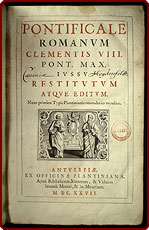
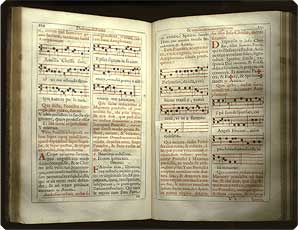
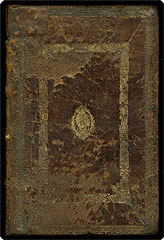 Click any interior image for enlargement.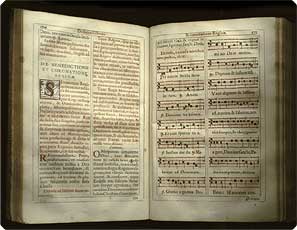
The Pope Lays It Down Here Catholic Church. Pope (1590–1591: Gregory XIV). Declaration de n.s. pere le pape Gregoire XIIII. Sur les lettres qui luy ont esté escrites par la noblesse qui suit le Navarrois. Paris: Robert Nivelle & Rolin Thierry, 1591. 8vo (15.9 cm, 6.25"). 14, [2] pp.
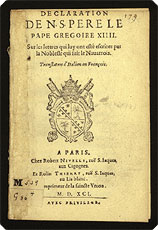 Click the image for an enlargement.
 This little pamphlet appears to be a scarce variant; OCLC finds no holdings, and the title is not listed by Lindsay & Neu.
• Not in Lindsay & Neu, French Political Pamphlets 1547–1648. Disbound. Title-page with paper shelving label, institutional pressure-stamp, and residue from previous nonce binding along inner margin; four other pages also pressure-stamped. Additional inked pagination in upper outer corners, in an early hand. (24463)
 YES:
Your Majesty May Tax the Clergy
Catholic Church. Pope, 1724–30 (Benedictus XIII). [drop
title] A tergo. Charissimo in Christo filio nostro Philippo, Hispaniarum Regi
Catholico. Intus. Benedictus Papa XIII. [Matritii, 1728]. Folio (28.3 cm, 11.375").
4 ff.
YES:
Your Majesty May Tax the Clergy
Catholic Church. Pope, 1724–30 (Benedictus XIII). [drop
title] A tergo. Charissimo in Christo filio nostro Philippo, Hispaniarum Regi
Catholico. Intus. Benedictus Papa XIII. [Matritii, 1728]. Folio (28.3 cm, 11.375").
4 ff. 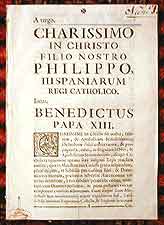
This copy is notarized, i.e., authenticated, sealed, and signed, "In Madrid, a true copy, Manuel St. Martin, Apostolic notary." No copies were found on OCLC or RLIN, or in NUC Pre-1956.
• Not in Palau. On Benedict XIII, see New Catholic Encyclopedia, II, 276-77. Removed from a nonce volume. Paper generally clean and crisp with but a few spots of soiling; closed tear from bottom margin into the last two lines of text, without loss of letters. Inked paraph on lower inner corners, and inked notation on upper outer corner of first page.
For
the CATHOLICA “aisle” —
Lives of theFathers with PORTRAITS Cave, William. Apostolici: Or, the history of the lives, acts, death, and martyrdoms of those who were contemporary with, or immediately succeeded the Apostles...the third edition corrected. London: Pr. by B.W. for Richard Chiswell, 1687. Folio (32 cm, 12.6"). Add. engr. t.-p., [34], xxxii, 335, [1] pp.; illus.
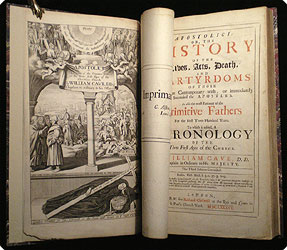
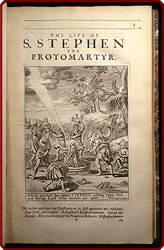 Click the interior images for enlargements.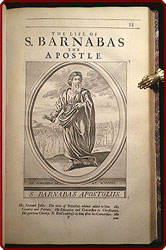
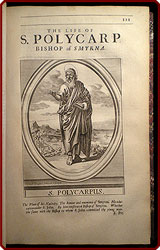 23 total of these in-text engravings, most signed by Burghers.
Burghers (1653–1727) was born in Amsterdam, worked initially at Utrecht, and fled to England after the capture of Utrecht by the French in 1672; he settled in Oxford in 1673. There he worked under David Loggan and succeeded him as engraver to the University.
The volume closes with “A Chronological Table of the Three First Ages of the Christian Church,” which has a separate title-page dated 1686, but is paginated continuously with the preceding work.
Cave, a Church of England clergyman whose scholarly interests were primarily patristic, also wrote Primitive Christianity, or, The Religion of the Ancient Christians in the First Ages of the Gospel as well as Scriptorum ecclesiasticorum historia literaria; the DNB notes that his works “follow the tradition of Christian bio-bibliography that in late antiquity and into the medieval period had such a long and rich history.”
• ESTC R26585; Wing (rev.) C1592; Lowndes 395; Allibone 356–57. On Cave, see: Oxford Dictionary of National Biography online. Recent quarter calf with marbled paper–covered sides, leather edges tooled in blind, spine with gilt-stamped author and title labels and gilt-stamped decorations between raised bands. Half-title with inked ownership inscription in upper outer corner. (24886)
Cecil & Flavel'sGift for Mourners Cecil, Richard. A friendly visit to the house of mourning. New York: American Tract Society (pr. by D. Fanshaw), [1832–46?]. 16mo (10.8 cm, 4.25"). Frontis., 45, [1] pp. [with] Flavel, John. A gift for mourners. New York: American Tract Society (pr. by D. Fanshaw). 16mo. 79, [1] pp.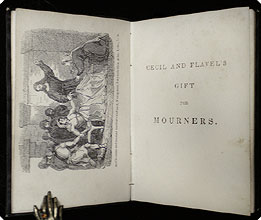
 Click the images for enlargements.
 Binding: Publisher's blind-stamped black moiré cloth of Krupp's style Moi1, front cover with gilt-stamped title within gilt-stamped floral frame. All edges gilt.
• Binding: Krupp, Bookcloth in England and America, 1823--50, p. 39. Binding as above, corners and spine extremities rubbed, back cover with a few small spots; gilt bright. Front free endpaper with early pencilled inscription as above, front fly-leaf with pencilled ownership inscription. Some pages foxed. A pretty “Gift.” (26650)

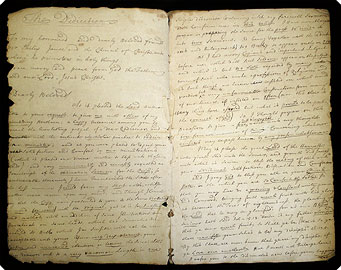
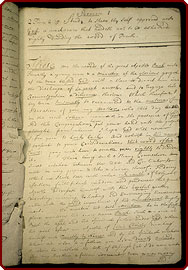
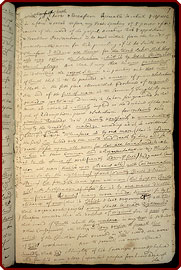
“On the Welch Tract on [the] Pee Dee River” 1743 Chanler, Isaac. Manuscript: “The Qualifications of a Gospel Minister for, and Duty in studying rightly to divide [sic] the Word of Truth; and the Duty of those who do partake of the Benefit of his Labours, towards him fully, plainly & impartialy [sic] represented in Two Sermons on 2 Tim: 2.15. Preached at the ordination of the Revd mr. Philip James at the Welch Tract on Pee Dee River in South Carolina April 4. 1743. With some Illustrations & Enlargements.” [South Carolina: 1743]. Folio (31.5 cm; 12.4"). [20] ff.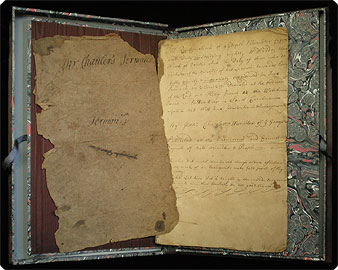
 Click the images for enlargements.
 Although the title-page of this manuscript proclaims, “Published at the Unanimous and Earnest Request of Both Minister and People,” this work was never published in the sense of having been printed, or if it was printed, no copy survives, nor has any evidence of its publication.
 This manuscript is apparently the only surviving evidence, and very substantial it is, of an unpublished work by this pioneer minister.
The second sermon mentioned on the title-page was on Galatians 6:6 and is not present here; it may well have never been copied out and sewn to the end of this manuscript. In any case the second sermon is apparently long-lost.
Provenance: Ex-Crozer Theological Seminary.
• Written in a clear hand with numerous corrections. Unbound, on laid paper of the 1740s; now age-toned and a bit brittle, with some fold tears. Edges of paper chipped with some small pieces missing, occasionally costing a letter (only). Now safely housed in a Mylar sleeve within a marbled paper–covered chemise within a red cloth clamshell box. (26309)

Wisdom,
Censored —
Post-PURCHASE?!Charron, Pierre. De la sagesse. Paris: Jean-François Bastien, 1783. 8vo (20 cm, 7.9"). Frontis., xviii, 768 pp.; 1 plt. (damaged/censored).
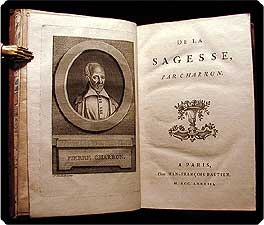
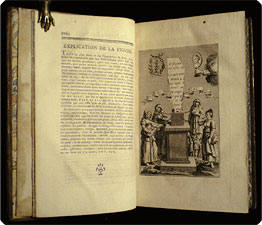 Click the interior images for enlargements. This
particular copy seems to have incurred someone’s personal wrath, as the
plate illustrating the allegory of Wisdom has had its central (nude) female
figure excised. The much more staid frontispiece
portrait of the author, done by Pruneau, is undamaged.
Click the interior images for enlargements. This
particular copy seems to have incurred someone’s personal wrath, as the
plate illustrating the allegory of Wisdom has had its central (nude) female
figure excised. The much more staid frontispiece
portrait of the author, done by Pruneau, is undamaged.
• Contemporary mottled calf framed in triple gilt fillets, spine gilt extra, all page edges marbled; binding with expectable acid-pitting and minor cracking of the leather over the spine and joints. One (and only one) signature foxed, leaves otherwise clean. A handsome book, defaced in a way that is depressing but also interesting.

 American
Conscience — 1771
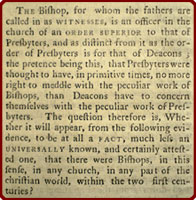
Chauncy, Charles. A compleat view of episcopacy, as exhibited from the fathers of the Christian church until the close of the second century.... Boston: Pr. by Daniel Kneeland, 1771. 8vo. x, 474 pp., [2] ff.
American
Conscience — 1771
Chauncy, Charles. A compleat view of episcopacy, as exhibited from the fathers of the Christian church until the close of the second century.... Boston: Pr. by Daniel Kneeland, 1771. 8vo. x, 474 pp., [2] ff.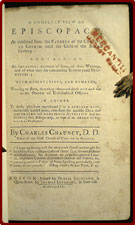
 Click any image where the hand appears on
 “All Men in Adam Die, inChrist Revive .
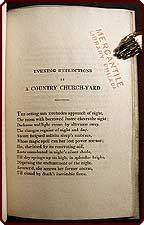
. .”(Christian Verse). Evening reflections in a country churchyard. London: John Bohn & Edw. Jeffery and Sons (pr. by C. Richards), 1827. 8vo (16.2 cm, 6.4"). 27, [1] pp.
“All Men in Adam Die, inChrist Revive .
. .”(Christian Verse). Evening reflections in a country churchyard. London: John Bohn & Edw. Jeffery and Sons (pr. by C. Richards), 1827. 8vo (16.2 cm, 6.4"). 27, [1] pp.
one copy, in the U.S. at the New York Public.
Single-click the far-lefthand image, where the hand appears on• Not in NSTC. Recent wrappers. Title-page and a few others stamped by a now-defunct institution. Portion torn away from upper margin of front fly-leaf, perhaps to remove an inscription.
For
LITERATURE, click here.
The
FIRST Complete
Church of
England Liturgy
inGREEK
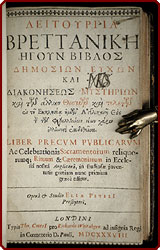
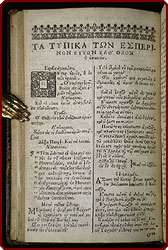
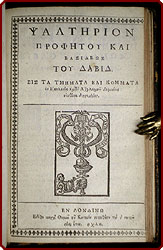
Church of England. Book of Common Prayer. Greek. [in Greek, romanized as ] Leitourgia Brettanikē ēgoun Biblos dēmosiōn euchōn kai diakonēseōs mystēriōn kai tōn allōn thesmōn kai teletōn en tē Ekklēsia hēmōn Anglikanē eis t[ēn] tōn philhellēnōn neōn charin hellēnisti ekdotheisa. Liber precum publicarum ac celebrationis sacramentorum reliquorumq[ue]; rituum & caeremoniarum in Ecclesiâ nostrâ Anglicanâ, in studiosae juventutis gratiam nunc primùm graecè editus. Operâ & studio Eliae PetilI presbyteri. Londini: Typis Tho. Cotes pro Richardo Whitakero, 1638. 8vo (16.1 cm, 6.5"). [262] pp. (lacking prelim. blank f.). [π1A4α4(-α1) β4γ4 ¶4¶¶4¶¶¶1 B–N4 A–04 P2].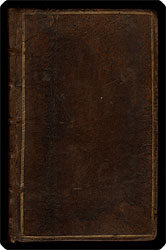
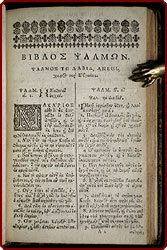 Click the images for enlargements.
 The main title-page is printed in red and black; the separate title-page for the Psalter has a neat woodcut printer's vignette and blazons (in Greek type) Psalterion prophetou kai basileos tou Dabid. The elegant Greek type is set in double columns, with some nicely laid in typographic ornaments and decorated capitals. The signing is erratic, but the collation of this example matches most recorded descriptions: Leaf α1, apparently a cancel in a few copies but lacking in most reported examples and not present here, was a supplemental title-page giving Biblos dēmosiōn euchōn, kai leitourgēseōs mystēriōn; Griffiths calls for only one preliminary leaf, as is found here, with the other leaf in the gathering being a blank. Leaf 1C2 is a cancel.
Provenance: Front pastedown with armorial bookplate of Twistleton Fiennes, with that family's motto: “Fortem posce animum”; front free endpaper rubber-stamped “Birch” and front fly-leaf inked “Tho.s Birch e Coll. Herts. Oxon.” (apparently neither the historian nor the marine painter); title-page with inked monogram (obscure).
• ESTC S108726; STC (rev. ed.) 16432 & 2353; Griffiths, Bibliography of the Book of Common Prayer, (Other Languages) 45/2. Psalter: Darlow & Moule 4683. See: Oxford Guide to the Book of Common Prayer 57. Contemporary speckled calf, covers framed in gilt double fillets, rebacked with speckled calf quite plainly (without labels but with gilt-dotted raised bands); corners rubbed, original leather showing expectable acid-pitting. One preliminary blank (only) lacking; title-pages trimmed closely at outer edge, affecting typographical border and (on main page) one letter of publication information. Ownership marks as above. Pages lightly age-toned, otherwise clean; tiny spot of worming in lower inner margin, not affecting text. A handsome and evocative little book. (26373)
Restoration Binding — Painted Fore-Edge Church of England. Book of Common Prayer. The book of common prayer and administration of the sacraments, and other rites and ceremonies of the church, according to the use of the Church of England. Together with the Psalter or Psalms of David, pointed as they are to be sung or said in churches. London: John Bill, Thomas Newcomb, & Henry Hills, 1680. 12mo (14.7 cm, 5.75"). [432] pp. (lacking A1, blank or licence). [with] Bible. English. Authorized (i.e., “King James Version”). 1679. The Holy Bible, containing the Old Testament and the New ... appointed to be read in churches. London: John Bill, Thomas Newcomb, & Henry Hills, 1679. 12mo. [870] pp. [and with] Bible. O.T. Psalms. English. Sternhold & Hopkins. 1679. The whole book of Psalms, collected into English metre, by Thomas Sternbold, John Hopkins, and others. London: Pr. for the Company of Stationers, 1679. 12mo. [72] pp. 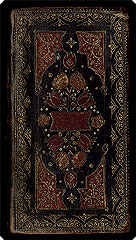
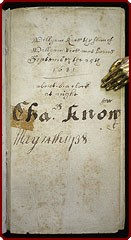
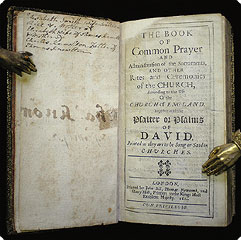 Click the images for enlargements.
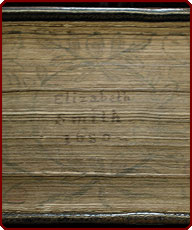
 Provenance: Fore-edge painted with “Elizabeth Smith, 1680"; front fly-leaf with inscription recording the birth of William Rice in 1681 and with inscription of Charles Knowlton, dated 1738; fly-leaf verso with early inked genealogy describing the Smith-Rice-Knowlton descent.
Binding: Elaborate Restoration binding: black morocco framed in gilt semi-circle and strawberry rolls surrounding a broken panel design of red-inlaid scalloped corners decorated with floral-dotted volutes, containing a bouquet of tulips and other flowers with red and citron morocco inlays; the upper- and lowermost tulips each with a smaller gilt-stamped flower and leaf tool inside, spaces filled with small flowers and dots. Spine gilt extra using cover rolls and additional floral decorations, with two decorated compartments of red morocco; board edges and turn-ins with gilt rolls. The tools used do not appear to be an exact match to any binder represented in Bennett, Nixon, or Maggs: Bookbinding in the British Isles, although the tulip with superimposed small flower is reminiscent of the binder Nixon identifies as the Small Carnation Binder. All edges gilt. Fore-edge painted with name as above, surrounded by hand-painted floral decorations.
• BCP: Wing (rev. ed.) B3659B. Not in ESTC; not in Griffiths (see 1680/5 for a very close example). Bible: ESTC R215858; Wing (rev. ed.) B2308A; Herbert 758. Psalms: Not in ESTC, not in Wing. Binding as above, front joint cracked (sewing holding) with corners/edges rubbed; spine leather with small cracks and head chipped, small area darkened. BCP lacking A1, either a blank or a licence and much more likely an initial blank; title-page repaired at one corner. Elsewhere, one leaf with tear from outer margin, extending across one column without loss; page edges with occasional small smudges from fore-edge decorations; some faint spotting and foxing. Now housed in a café au lait morocco slipcase mistakenly giving 1630 as year of publication, based on misleading print impression on title-page. A good and interesting book apart from its extraordinary binding, charming fore-edge treatment, and multi-generational provenance. (25925)
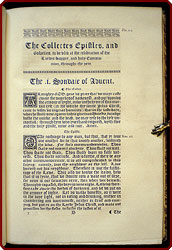
A Black-Letter
17th-Century Folio
BCP
Church
of England. Book
of Common Prayer.
The book of common prayer, and administration of the sacraments, and other rites
and ceremonies of the church, according to the use of the Church of England,
together with the psalter or psalms of David, pointed as they are to be sung
or said in churches [as below].... London: Charles Bill, Henry Hills,
& Thomas Newcomb, 1687. Folio (31.7 cm, 12.5"). Add. engr. t.-p., [231]
ff. (S1 bound in out of order, T6 lacking, Tt2-4 (blank) lacking, H2 of Psalms
signed H3). [with] Bible.
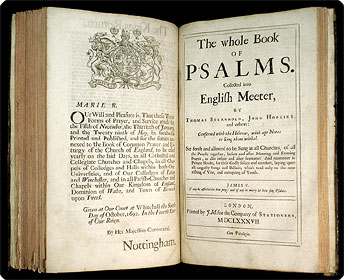
O.T. Psalms. English. Sternhold & Hopkins. The whole book of psalms.
Collected into English meeter ... conferred with the Hebrew, with apt notes
to sing them withal. London: Pr. by J.M. for the Company of Stationers, 1687.
Folio. [64] ff.
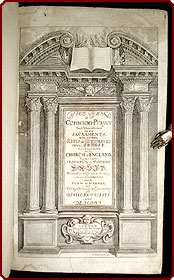
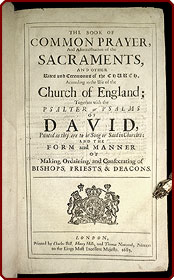 Click the images for enlargements.
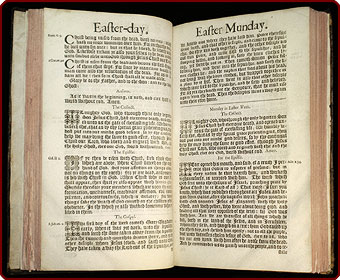
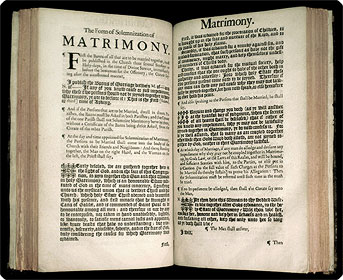
 black-letter
Anglican prayer book, with an additional engraved architectural title-page
done by P. Williamson (giving a date of 1686), and a Kalendar printed in red
and black. The Psalter has a separate title-page (dated 1686) but continuous
registration with the BCP; the accompanying Psalms has separate title-page and
registration, and features music. The type is handsome throughout, and generally
is notably LARGE.
black-letter
Anglican prayer book, with an additional engraved architectural title-page
done by P. Williamson (giving a date of 1686), and a Kalendar printed in red
and black. The Psalter has a separate title-page (dated 1686) but continuous
registration with the BCP; the accompanying Psalms has separate title-page and
registration, and features music. The type is handsome throughout, and generally
is notably LARGE.
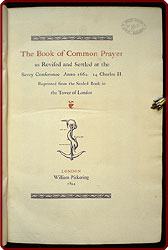
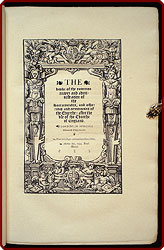
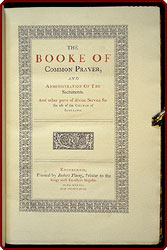
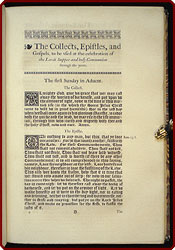
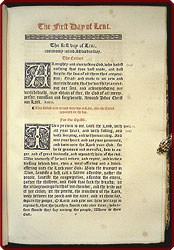
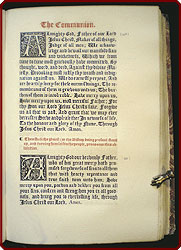
Pickering & Whittingham'sSEVEN BCPs Church of England. Book of Common Prayer. [Seven editions of the Book of Common Prayer, 1549–1844 ]. London: William Pickering (pr. by Whittingham), 1844. Folio (35.8 cm, 14"). 7 vols. I: [264] ff. II: [314] ff. III: [134] ff. IV: [130] ff. V: [142] ff. VI: [140] ff. VII: [154] ff.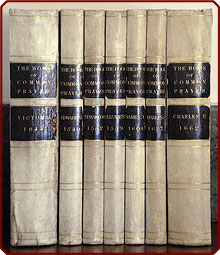
 Click the images for enlargements.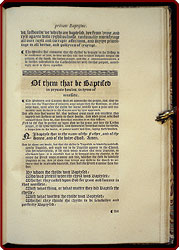
Provenance: Elegant old lozenge-shaped ink-stamp on title-pages: “John Brymer Heir-Loom.”
 For more SETS, click here.
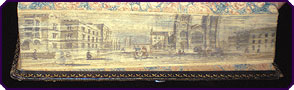
 A Double Fore-Edge Painting onTreasured & TreasurableChurch
of England. Liturgies. Book of common prayer. Book of common prayer, and administration of the sacraments, and other rites and ceremonies of the Church, according to the use of the Church of England: Together with the
Psalter or Psalms of David, pointed as they are to be sung or said in churches. Oxford: Clarendon Press, 1791. 8vo (25.5 cm, 10"). [196] ff. [bound with] Bible. O.T. Psalms. English. Sternhold and Hopkins. The whole book of psalms, collected into English metre. Oxford: Clarendon Press, 1793. 8vo (25.5 cm, 10"). [60] ff.
A Double Fore-Edge Painting onTreasured & TreasurableChurch
of England. Liturgies. Book of common prayer. Book of common prayer, and administration of the sacraments, and other rites and ceremonies of the Church, according to the use of the Church of England: Together with the
Psalter or Psalms of David, pointed as they are to be sung or said in churches. Oxford: Clarendon Press, 1791. 8vo (25.5 cm, 10"). [196] ff. [bound with] Bible. O.T. Psalms. English. Sternhold and Hopkins. The whole book of psalms, collected into English metre. Oxford: Clarendon Press, 1793. 8vo (25.5 cm, 10"). [60] ff.

striking double fore-edge painting depicting (in one direction) the medieval Abbey Church of St. Albans in Hertfordshire, with a horse-drawn carriage in the foreground, and in the other direction the western facade of Westminster Abbey, with passing pedestrians.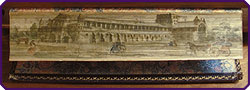
 Single-click any image where the hand appears on
Provenance: The front fly-leaf bears an inked inscription reading “From this Book our 4 Dear Children were Babtized [sic] by the Rev. S. Good, Rector of St. Anns Blk. Friars, And afterwards Christened by their Dear Uncle the Rev. Charles Brown, Rector of Whitestone, near Exeter, Devon.” The children's baptismal dates range from 1806 through 1814.
• ESTC T93069; Griffiths, Bibliography of the Book of Common Prayer, 1791/7. Binding as above, leather slightly worn over joints and extremities. Front fly-leaf with collector's small bookplate, reverse with inscription as above, title-page with owner's name and date (1806) inked in upper margin. Pages clean.
Beautifully
Printed &
with aCharming
Fore-Edge Painting
Church
of England. Liturgies. Book
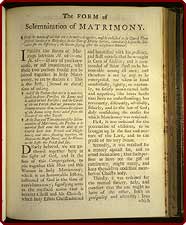
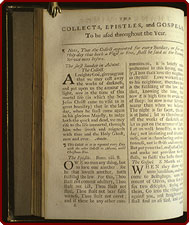
of common prayer. Book of common prayer, and administration of the sacraments, and other rites and ceremonies of the Church, according to the use of the Church of England: Together with the Psalter, or Psalms of David, pointed as they are to be sung or said in churches. And the form or manner of making, ordaining, and consecrating of bishops, priests, and deacons. London: Thomas Baskett (assigns of Robert Baskett), 1758. 4to (27.5 cm, 10.9"). [232] ff. [bound with] Bible. O.T. Psalms. English. Sternhold and Hopkins. The whole book of psalms; collected into English metre. London: J. Bettenham & H. Woodfall, 1751. 4to. 56 pp.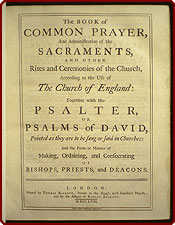
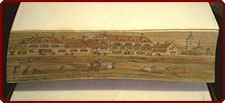 Click any image where the hand appears on
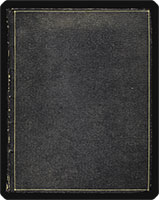
 Binding: Contemporary straight-grain dark blue morocco now tending to olive, covers framed with a gilt single fillet; round spine with raised bands, blind roll on each band, and each band defined by gilt rules above and below it. Spine with compartments stamped in blind, gilt-stamped title, and gilt-stamped decorations at head and foot; place and date of publication in gilt at base of spine. All edges gilt; fore-edge painting as above.
• ESTC T081415; Griffiths, Bibliography of the Book of Common Prayer, 1758/1. Binding as above, corners a bit rubbed and joints somewhat more so, with upper and outer cover edges showing some fading. Front pastedown with small shelving number slip and small bookplate of a private collector. Pages very slightly age-toned, otherwise clean save for minor bleed to some outer margins from the fore-edge painting. Beautiful.
What to Wear, the Duty of Schoole-Masters, Divorce Sentences, & More Church of England. Constitutions and canons. 1603. English. Constitutions and canons ecclesiasticall treated upon by the Bishop of London, president of the convocation for the province of Canterbury, and the rest of the bishops and clergy of the said province: And agreed upon with
the Kings Majesties licence in their synod begun at London, anno Dom. 1603, and in the year of the reign of our soveraigne Lord James, by the grace of God, King of England, France, and Ireland the first, and of Scotland the 37. And now published for the due observation of them, by His Majesties authority under the Great Seal of England. London: Pr. by John Norton, for Joyce Norton, and Richard Whitaker, 1633. Small 4to. [60] ff.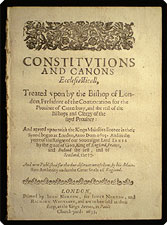
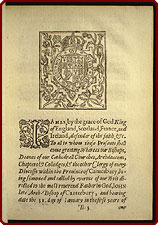
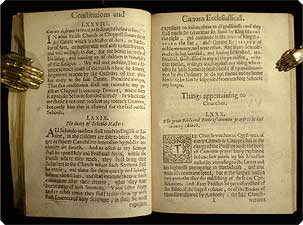 Click the images for enlargements.
 The Constitutions and Canons Ecclesiastical was an assemblage of rulings given equal force with the canon law, although the rulings themselves were not based on canon law.
• STC (rev. ed.) 10076; ESTC S101555. Removed from a nonce volume. A very nice, clean copy with an array of marginal markings — Xs, asterisks, “vid.,” and the odd hand-with-pointing-finger. (21226)
McMurrin Copy — Mormon Provenance Church of Latter-day Saints. The book of Mormon: An account written by the hand of Mormon, upon plates taken from the plates of Nephi ... fifth electrotype edition. Liverpool: George Teasdale, 1889. 12mo (17.2 cm, 6.75"). xii, 623 pp.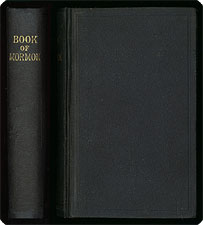
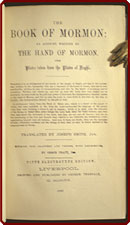 Click the interior image above for an enlargement.
 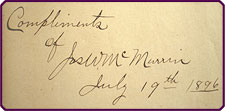 Provenance: Front free endpaper with inked gift inscription reading “Compliments of Jos. W. McMurrin / July 19th 1896.” Joseph William McMurrin (1858–1932), a Mormon missionary and general authority, served as one of the seven presidents of the First Quorum of Seventy.
• Crawley 688 (for 1852 stereotyped ed.); Flake & Draper 626; Sabin 83067. Publisher's textured blue cloth, framed in blind, spine with gilt-stamped title; binding unobtrusively rebacked, showing virtually no wear. Hinges (inside) reinforced. Front free endpaper with inscription as above. (20999)
The Augsburg Confession — 51 DocumentsThe First Much Annotated Chytraeus, David. Histoire de la confession d'Auxpourg, contenante les principauls traittez & ordonnances, faittes pour la religion, quand l'electeur Iehan, duc de Saxe auec les citez & autres princes protestants presenterent leur confession de foy (icy inserée) a l'Empereur Charles V. os estats generauls de l'empire, tenus a Auxpourg, 1530. Anvers: Chez Arnould Coninx, 1582. 4to (24.3 cm, 9.55"). [8], 835, [5] pp.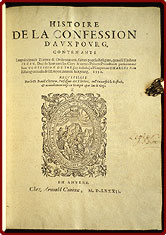
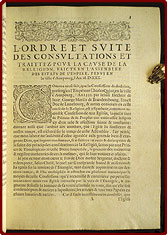
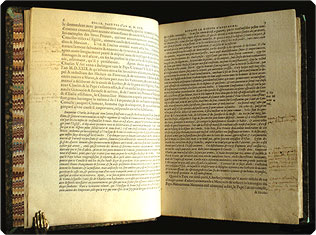 Click the interior images for enlargements.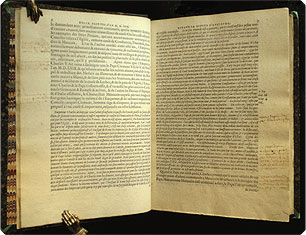
Rare. OCLC lists only four U.S. holdings and one deaccessioned copy (the present example).
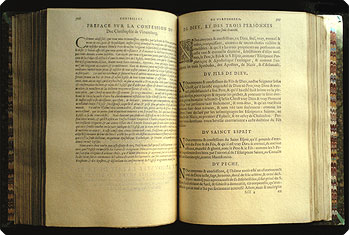
• Brunet 22420; Graesse, II, 154. Not in Adams. 19th-century quarter olive morocco with marbled paper–covered sides, spine with gilt-stamped author/title; edges and extremities rubbed. Top edge gilt. Front pastedown with bookplate as above; title-page and first text page each with early inked ownership inscription. Four leaves with small repaired tears from outer margins and three likewise from upper margins, not touching text in any case. Extensive early inked marginalia in first document, scattered examples elsewhere. (23536)
Conduct of Life duringthe Reformation Chytraeus, David. Regulae Vitae. Virtutum descriptiones methodecae, in Academia Rostochiana propositae, & recens recognitae. Vitebergae: Excudebat Iohannes Crato, 1557. Small 8vo (16 cm; 6.25"). [128] ff.
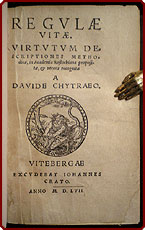
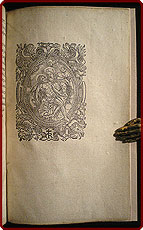 The final leaf with the beautiful Crato printer's device is present.
Chytraeus (1530–1600) was a German Lutheran theologian and historian and one of the authors of the Formula of Concord (1577), an authoritative Lutheran statement of faith. All of the first three editions of his Regulae Vitae (1555, 1556, 1557) are rare in U.S. libraries; only three copies of the 1555 are reported, two of the second, and one of the third, with a second copy of that last having been deaccessioned in 2006.
• VD16 C2736; Index Aurel. 136.817. Recent ebony-brown calf old style; round spine with raised bands accented in gilt and blind-tooled devices in compartments; single blind rules extending onto covers from each band to terminate in trefoils, and covers framed in blind double fillets and with a blind-tooled dentelle roll. Title, place of publication, and date in gilt on spine. Old repair to lower corner of title-page and that leaf reinforced at gutter; internally very good. (25096)
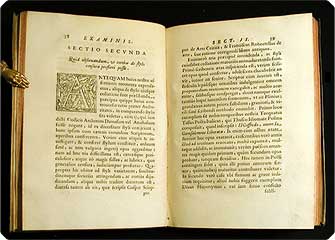
Lives of Popes & Popely LettersCiampini, Giovanni Giustino. Examen libri pontificalis, sive vitarum romanorum pontificum; quae sub nomine Anastasij bibliothecarij circumferuntur.... Romae: Komarek, 1688. 4to. a–b4 A–P4 2A–2P4[8] ff., 120, 119, [1] pp. [also bound in, the same author's] Parergon ad examen libri pontificalis,sive, epistola Pii II. ad Carolum VII. regem Franciae ab haereticis deprauata, & à Launoiana calumnia vindicata.... Romae: Joannis Jacobi Komarek, 1688. 4to. π4 A–E4; 39 pp.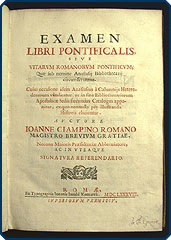
 Click the interior images for enlargements.
 Both works are printed in roman type with large woodcut initials featuring cherubs and each has its title-page printed in black and red. The Examen is divided into two parts, each with its own collation and pagination, with the second part being “Sanctae romanae ecclesiae bibliothecariorum catalogus, iuxta chronologicum ordinem. . . .”
Evidence of readership. In the first part of the Examen an early reader has underlined in sepia ink passages or phrases s/he found significant but added no marginalia.
• Contemporary vellum. Bookplate removed from front pastedown. Very good copies of both titles.
Huguenot
Horrors —Translated
forEnglish
Readers,
1686[Claude,
Jean]. [Account of the persecutions and oppressions of the Protestants
in France. London: J. Norris, 1686]. 4to (19.5 cm, 7.6"). A–G4
(-A1); 56 pp. (lacking title-page).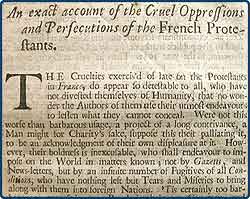
• Wing (rev.) C4589. Removed sometime from a nonce volume and now contained in a cloth-covered clamshell case with gilt-stamped leather spine label. Lacks the title-page; otherwise complete, with small loss of paper (not nearing text) at inner lower corners and one leaf with “chip” (only) of lower outer corner torn away (this perhaps in fact a paper flaw, and, again, far from type). One page with early monogram inked in upper outer corner; last page with neat stamp marking institutional deaccession (ex-Folger Shakespeare Library).
False Imprint Claude, Jean. Les plaintes des Protestans, cruellement opprimez dans le royaume de France. Cologne: Chez Pierre Marteau, 1686. 12mo (13.7 cm, 5.4"). [2], 192 pp.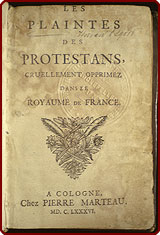
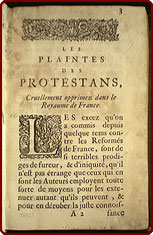
 Click the interior images for enlargements.
 Provenance: Howard Osgood.
• Brunet, IV, 683. Contemporary calf, spine elegantly gilt extra, board edges with gilt rolls; leather acid-pitted, edges and extremities a bit rubbed. Title-page with small inked owner's name and institutional pressure-stamp. Damp-spotting to first and last few pages; some leaves starting to separate, many with lower outer corners crumpled. Intermittent underlining and marks of emphasis in red pencil throughout. (20861)
Peter Martyr MeetsSt. Clement of Alexandria Clement, of Alexandria, Saint. Clementis Alexandrini, viri longe doctissimi, qui Panteni quidem martyris fuit discipulus, praeceptor verò Origenis, omnia, quae quidem extant opera, à paucis iam annis inventa, [et] nunc denuò accuratiùs excusa Gentiano Herueto Aureliano interprete ... [with another, as below]. Basileae: Per Thomam Guarinum, 1566. Folio (33.5 cm; 13.125"). 364 pp., [8] ff. [also bound in] Vermigli, Pietro Martire. In selectissimam D. Pauli priorem ad Corinthios Epistolam. Tiguri: apud C. Froschouerum, 1567. Folio (33.5 cm; 13.125"). [6], 242, [17] ff. (lacks final blank). 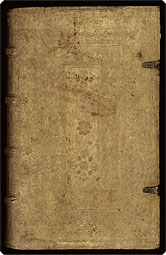
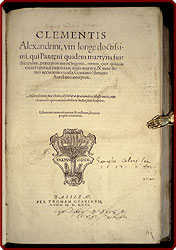
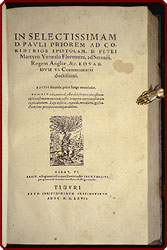
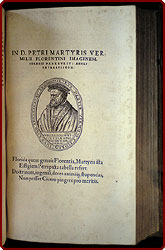 Click the images for enlargements.
 The second work is Peter Martyr's commentaries on Corinthians, here in the second edition. It has a full-page woodcut portrait of him on the recto of leaf aa6. The printer's woodcut device is on the title-page and there are numerous woodcut initials. The sidenotes are printed in italic while the text proper is in roman.
Peter Martyr (8 September 1499 – 12 November 1562), was an Italian theologian who began his religious life as an Augustinian friar, converted to the Protestant cause, was closely associated on the continent with Ochino, Bucer, and some prominent Lutherans, and, while in England where he held the Regius Chair of Divinity at Oxford, was an intimate of Thomas Cranmer and Bishop Jewel.
Both works are uncommon in these editions in the U.S.: We locate four copies of the first title and two of the Vermigli, but one copy of each title has been deaccessioned, meaning current holdings are three and one only.
Binding: Contemporary alum-tawed pig over wooden boards with bevelled edges and metal and leather clasps; one clasp perished. Leather tooled elaborately in blind using a variety of rolls and fillets, including one roll incorporating the date 1546, a medallion of David and his harp, and another medallion depicting John the Baptist with the words below the image, “Ecce Agnus Dei.”
• Clement: VD16 C4070; Index Aurel. 104.903; Adams C2106. Vermigli: VD16 B5054; Adams M788. Bound as above. Ex-library with bookplate on front pastedown, small blind pressure- (not perf-.) stamp on title-page and remnant of charge pocket at rear; six-digit number stamped in lower margin of one leaf. Early inked ownership indicia on title-page and old private ownership stamp on front free endpaper; a little old marginalia and underlining. A very little foxing and the odd spot only. Excellent copies of both works in a handsome contemporary binding. (24827)
L'essence du Tao — Systèmes Nya'ya et Vais'echi'ka Colebrooke, Henry Thomas, & Guillaume Pauthier. Essais sur la philosophie des Hindous, par T.-M. Colebrooke ... Traduits de l'Anglais et augmentés de textes Sanskrits et de notes nombreuses. Par G. Pauthier. Paris: Firmin Didot, 1833. 8vo. vii, [1], 20, 115 pp.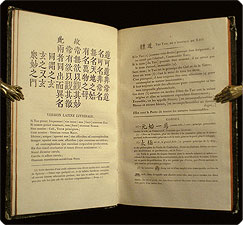
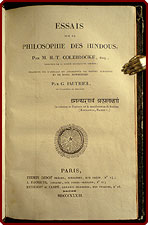 Click the images for enlargements.
 • 19th-century German boards, with black mottled paper, spine with inked paper title label; edges and small areas of covers rubbed and abraded, boards exposed on corners, spine chipped at head. All edges stained red. Ex-library with 19th-century bookplate on front pastedown, call number in black on spine and in pencil on verso of title-page, paper shelf label (with call number blacked out) on lower left corner of front cover, and four-digit number in ink on p. [iii]. No stamps and, withal, Very Good. (19255)
A
“Discourse” Still
Much Read — 18th-Century,
Newburyport
CopyColes, Elisha. A practical discourse of God’s sovereignty. With other material points derived thence.... Newburyport [MA]: Edmund M. Blunt, 1798. 8vo (20.5 cm, 8.2"). 372 pp.
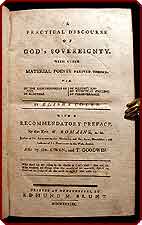 • Second American edition, following a Philadelphia printing in 1796, of this popular religious treatise; the Practical Discourse went through numerous editions due to its success among dissenters. Calvinistic in its tendencies, the work discusses the Doctrines of Election, Redemption, and Effectual Calling (a distinction of Coles’s creation, separating the concept from calling “which is outward only, and prevails not,” p. 225), among other topics.
Single-click the image, for an enlargement. • ESTC W24802; Evans 33532. Contemporary mottled sheep, spine with gilt-stamped leather title-label; binding abraded with leather cracking over the spine, spine label lettering rubbed. Pages age-toned, with some spots of foxing.

“Ignorance
is the Foundation
of Atheism,Collins, Anthony. A discourse of free-thinking, occasion'd by the rise and growth of a sect call'd Free-thinkers. London: 1713. 8vo (19.8 cm, 7.8"). 178, iii–vi pp. 
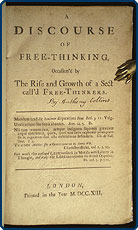 a landmark work of
rationalistic religion. Opinions continue to vary, even in modern criticism, regarding whether Collins's work promoted deism or atheism; he himself claimed that increased independent critical thinking was responsible for the decline in belief in witchcraft.
Click the interior image for an enlargement.
a landmark work of
rationalistic religion. Opinions continue to vary, even in modern criticism, regarding whether Collins's work promoted deism or atheism; he himself claimed that increased independent critical thinking was responsible for the decline in belief in witchcraft.
Click the interior image for an enlargement. This copy has the two preliminary leaves bound in at the back (mispaginated as vi as seen in most copies) , but it is lacking the final advertisement leaf. The catchword on p. 7 is “allow'd.”
• ESTC T31966; Allibone 411–12. Recent marbled paper–covered boards, front cover with gilt-stamped leather title-label. Title-page with author's name inked in an early hand and with very elegant institutional pressure-stamp; title-page verso with shadows of pencilled numerals, first text page with inked numeral in lower margin. Final advertisement leaf lacking. Light offsetting and faint spotting (mostly confined to margins), pages otherwise clean. (20740)
 We are presently cataloguing a good manyRESPONSES to Collins —
For
Liberty &
Determinism
— First, YouDefine
the Terms[Collins,
Anthony]. A philosophical inquiry concerning human liberty. The second
edition corrected. London: R. Robinson, 1717. 8vo (18.8 cm, 7.375"). [1] f., vi
pp., [1] f., 118 pp. 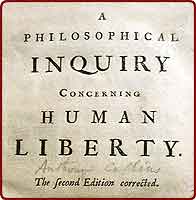
• ESTC T134533. On Anthony Collins, see: The Dictionary of National Biography, XI, 363–64. In recent blue-green wrappers; ex-library with stamps, including a very, very faint one on title-page. Uncut; traces of soiling in top margins, and occasional light ink-stains elsewhere.
The First SentenceDoesn't Actually Sound “FRIENDLY” . . . Comber, Thomas. Friendly and seasonable advice to the Roman Catholicks of England. The third edition enlarg'd: with an addition of the most convincing instances and authorities; and the testimony of their own authors for the same. By a charitable hand. London: Henry Brome, 1677. 12mo (14.8 cm, 5.8"). [24], 152, [4] pp.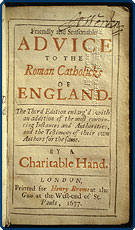
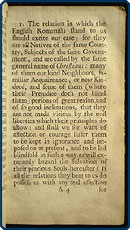
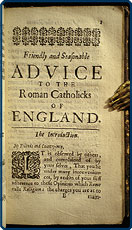
Uncommon. OCLC and ESTC report only seven holdings of this edition, including the present, properly deaccessioned copy.
• Wing (rev.) C5468; ESTC R1768; Allibone 417. On Comber, see: Oxford Dictionary of National Biography online. Contemporary mottled sheep, sometime rebacked and spine with blind-tooled floral decorations; binding worn and scuffed overall, joints starting from foot, corners and spine extremities rubbed, spine with inked call number. Front free endpaper (separated) and two pages with private collector's pressure-stamp, back pastedown with institutional rubber-stamp; the odd library pencilling. Imprimatur leaf with ownership inscription dated 1850 and with early inked inscription. Pages age-toned. (24340)
Who's Happier? [drop title] A conference between a king and a Christian, recommended by the late Mr. S. Medley of Liverpool. London: Pr. by W. Day, 17, Goswell Street, for L.I. Higham, No. 6, Chiswell Street, n.d. (ca. 1840). 12mo. 4 pp. 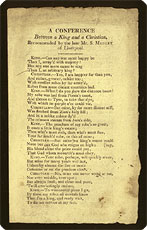 Click the image for an enlargement.
 • Uncut. Folded as issued; never sewn. Soiling around margins. Good ++ copy. (8527)
For more CHAPBOOKS, click here.
Saints
ofSIENNA
[Conti, Sebastiano &
Giambattista Ferrari]. Fasti senenses. [Senis: Per Academiam Intronatorum,
1660]. Folio (35.5 cm, 14"). *4 (-*1) **4 A–Z4
Aa–Mm4 1 (=*1). [1 (blank)], [7] ff., 279, [1] pp., [1 (errata)]
f.; frontis., 2 plts. 
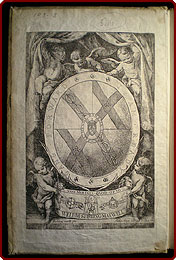
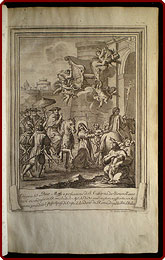
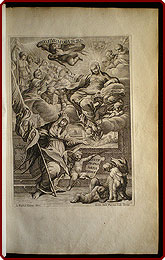 Click the interior images for enlargements.
 The detailed engraved frontispiece, by “Gio. Batta Sintes” after “Nicolo Gadim,” shows St. Catherine leading Pope Gregory XI back into Rome after
his decision to leave Avignon. There are also two finely engraved plates by Guillaume Vallet. The first, after Raphael Vanni, shows the B.V.M. looking down with favor on an allegorical figure of Siena. The other, after Carlo Maratta, shows (under the title of this work) a woman watering the tree of the arts from which cherubs gather fruit. This is the first of two editions, a second having appeared in 1669. It is handsomely printed in a large roman type with a few woodcut historiated initials and a tailpiece, and it is rare.We find only two copies reported.
Provenance: Huge (27.8 x 18.3 cm, 11" x 7.25") armorial bookplate of “William Stirling Maxwell” on the front pastedown; his arms also appearing as a supra-libros stamped in blind on the front cover, and his monogram similarly stamped on the rear cover.
• DeBacker-Sommervogel, II, 1390–91 & III, 678 (imprint and authorship information found here). Vellum with two forms of supra-libros as above, rebacked in leather toned to approximate vellum with gilt-stamped maroon leather title-label and gilt-dotted raised bands; boards slightly sprung, edges rubbed, vellum lightly soiled around edges. Pencilled notations on recto of front pastedown, and further notation, in ink and denoting authorship, on verso of front free endpaper. Pages lightly cockled; occasional foxing and soiling; all edges speckled red. (4203)
Folio — First Edition Covel, John. Some account of the present Greek Church, with reflections on their present doctrine and discipline; particularly in the Eucharist, and the rest of their seven pretended sacraments, compared with Jac. Goar's notes upon the Greek ritual. Cambridge: Cornelius Crownfield, 1722. Folio (37 cm, 14.5"). [5] ff., lx, [4], 400 pp., [5] ff.; 4 plts.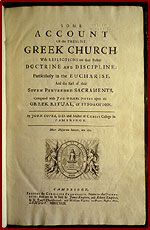
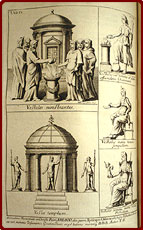
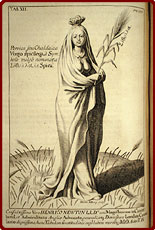
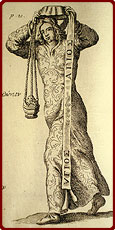
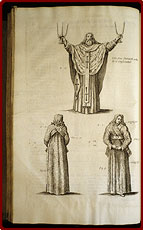 Click the interior image for an enlargement.
 • ESTC T112737. Cambridge-style contemporary shee, rebacked in a very obvious but not unattractive way; red leather spine label and gilt compartment devices. Front joint (exterior) cracked and board definitely loosening. Ex-library with bookplates on front pastedown, pressure-stamp on title-page, and pencil notation on verso of same. A clean, crisp copy in a binding needing a bit of attention. (22635)
A Woman Dead —
Yet “Living”Cox, Samuel Hanson. The dead are the living. A sermon preached on Lord's day afternoon, October 1, 1843, on occasion of the funeral of Mrs. Mary L., the wife of the Rev. Ward Stafford, A.M.[,] of this city. New-York: John F. Trow & Co., Printers, 1843. 8vo. 30 pp., [1 (blank)] f. 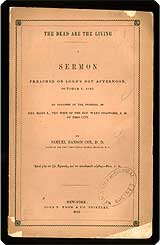
• Good. Ex-historical society copy (rubber-stamps, "New Jersey Historical Society," on front cover and title-page). Pencil marks to front cover. Some chipping to front cover and first page. (290)
“Yesterday
Morning We QuittedSchaffhausen
. . . ”Coxe, William. Sketches of the natural, civil, and political state of Swisserland; in a series of letters to William Melmoth ... second edition. London: J. Dodsley, 1780. 8vo (23.5 cm, 9.25"). viii, 474, [2] pp.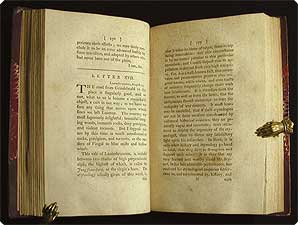
 a
bit of discussion of Protestant vs. Catholic religious observances alongside
the descriptions of natural beauties. The author was a historian who served
as tutor to the sons of the Duke of Marlborough and the Earl of Pembroke, as
well as travelling companion to Lord Herbert, Lord Brome, and various other
noblemen; he published several works recounting his tours through Poland, Russia,
Sweden, Denmark, and Switzerland.
Click the images for enlargements.
a
bit of discussion of Protestant vs. Catholic religious observances alongside
the descriptions of natural beauties. The author was a historian who served
as tutor to the sons of the Duke of Marlborough and the Earl of Pembroke, as
well as travelling companion to Lord Herbert, Lord Brome, and various other
noblemen; he published several works recounting his tours through Poland, Russia,
Sweden, Denmark, and Switzerland.
Click the images for enlargements.

 ForHome
Use in Schleswig-Holstein
[Cramer, Johann Andreas], ed. Allgemeines
Gesangbuch, auf königlichen allergnädigsten Befehl zum öffentlichen
und haüslichen Gebrauche in den Gemeinen des Herzogthums Schleswig....
Altona: Eckhardt, 1781. 8vo (17.3 cm, 6.875"). [10] ff., 1008 pp., [14] ff.
[bound with] [Evangelisch-Lutherische Landeskirche Schleswig-Holsteins].
Liturgy and ritual. Biblisches und Geistreiches Gebet-Buch.... Altona:
Burmester, [after 1766]. 8vo. 96 pp. [bound with] [Evangelisch-Lutherische
Landeskirche Schleswig-Holsteins]. Liturgy and ritual. Die Collecten,
Episteln und Evangelia auf alle Sonn- und Fest-Tage durchs ganze Jahr. Nebst
beygefügter Historie vom Leiden und Sterben Jesu Christi.... Altona: Burmester,
[1781]. 96 pp.
ForHome
Use in Schleswig-Holstein
[Cramer, Johann Andreas], ed. Allgemeines
Gesangbuch, auf königlichen allergnädigsten Befehl zum öffentlichen
und haüslichen Gebrauche in den Gemeinen des Herzogthums Schleswig....
Altona: Eckhardt, 1781. 8vo (17.3 cm, 6.875"). [10] ff., 1008 pp., [14] ff.
[bound with] [Evangelisch-Lutherische Landeskirche Schleswig-Holsteins].
Liturgy and ritual. Biblisches und Geistreiches Gebet-Buch.... Altona:
Burmester, [after 1766]. 8vo. 96 pp. [bound with] [Evangelisch-Lutherische
Landeskirche Schleswig-Holsteins]. Liturgy and ritual. Die Collecten,
Episteln und Evangelia auf alle Sonn- und Fest-Tage durchs ganze Jahr. Nebst
beygefügter Historie vom Leiden und Sterben Jesu Christi.... Altona: Burmester,
[1781]. 96 pp. 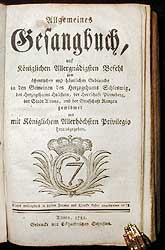
Edited by Johann Andreas Cramer (1723–88), a poet, hymnographer, and theologian at the Christian Albrecht's University of Kiel, the hymnal's text is printed in fraktur, with a title-page vignette showing the royal cipher of Christian VII of Denmark and with a few woodcut tailpieces, one handsomely showing the royal arms of Denmark, including Schleswig and Holstein.
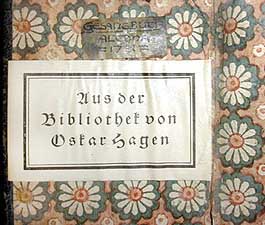
Provenance: Bookplate: "Aus der Bibliothek von Oskar Hagen;" Ink inscription opposite the title-page, noting the volume's donation in honor of Thura Niemann, d. 1870.
• Contemporary black sheep; covers modestly decorated in blind with a ruled
border, tiny roundels at corners, and strokes resembling stitching at spine.
Worn with a little leather lost at spine and corners; front joint opening.
All edges gilt and gauffered; wallpaper style endpapers. A shaken volume:
Some quires coming loose and some page corners bumped with loss of gilding.
Pages shaved, just touching running heads in some places; all pages lightly
age-toned but otherwise clean, save small light stain to title-page and
darker one to p. 319 of first work. Pressed leaf laid in.
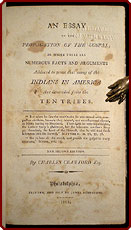
Christianity Abroad, at Home, & among the (Jewish?) Native Americans Crawford, Charles. An essay on the propagation of the Gospel; in which there are numerous facts and arguments adduced to prove that many of the Indians in America are descended from the Ten Tribes ... the second edition. Philadelphia: James Humphreys, 1801. 12mo (18.3 cm, 7.2"). [1] f., 154 pp., [1] f. [with] Woodward, William Wallace. Increase of piety, or revival of religion in the United States of America; containing several interesting letters not before published. Together with three remarkable dreams, in succession, as related by a female in the Northern Liberties of Philadelphia to several Christian friends, and handed to the press by a respectable minister of the gospel. Philadelphia: W.W. Woodward, 1802. 12mo. [1] f., 114 pp.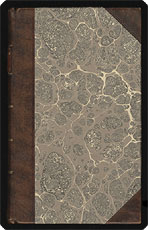
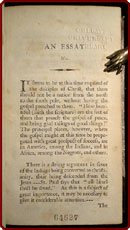 Click the interior images for enlargements.
 The second item here is the first edition of Woodward's collection of revival-themed letters to and from various clergymen, closing with an account of Mrs. Rebecca Ashburn's mysterious dreams. In these dreams a minister unknown to Mrs. Ashburn attempted to save her soul; she later identified her would-be converter as one Dr. William Rogers. This work is very uncommon in print form. OCLC and NUC Pre-1956 find only five U.S. institutional holdings of this Philadelphia printing, although it is widely held in microform.
• Essay: Sabin 17433; Shaw & Shoemaker 370; Rosenbach, American Jewish Bibliography, 123; Singerman, Judaica Americana, 0136. Increase: Shaw & Shoemaker 2587; Sabin 105172. Period-style half mottled calf and marbled paper–covered sides, spine preserving original gilt-stamped leather title-label. Title-page and first text page institutionally pressure-stamped. Pages lightly age-toned, somewhat more so in second work; one leaf with tear from outer margin extending into text. (25209)
An “Oriental” Embassy — IllustratedCrawfurd, John. Journal of an embassy from the governor-general of India to the courts of Siam and Cochin China; exhibiting a view of the actual state of those kingdoms ... second edition. London: Henry Colburn & Richard Bentley, 1830. 8vo (23 cm, 9"). 2 vols. I: Fold. frontis., vii, [1], 475, [1] pp.; 3 fold. plts., 8 plts., illus. II: [2], v, [1], 459, [1] pp.; 4 fold. plts., 7 plts., 1 fold. chart.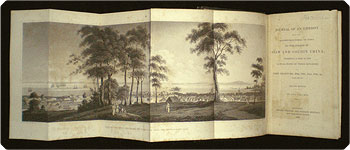 Single-click any image where the hand appears on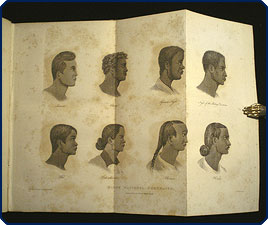
• NSTC 2C42639; Goldsmiths’-Kress 26080; not in Maggs, Bibl. Asiatica. On Crawfurd, see: Dictionary of National Biography. Publisher’s dark green cloth, blind-stamped, spines with gilt-stamped title; spines very slightly sunned and showing faint traces of now-absent paper labels, cloth lightly rubbed at corners and spine extremities. Hinges cracked (inside). Front pastedowns rubber-stamped (no other institutional markings). Title-pages with pencilled owner’s name in upper margins; contents pages with inked owner’s name dated 1865. Frontispiece, plates, and a few pages in proximity to plates lightly to moderately foxed; one plate in vol. II torn from inner margin, tear not touching image. Absorbing reading, evocative images.
Letters
of OBSCURE MEN —
Their Authors &
EVERYBODY ElseCrotus Rubeanus, Johannes, & Ulrich von Hutten. Duo volumina epistolarum obscurorum virorum, ad Dominum M. Ortuinum Gratium, Attico lepôre referta, denuò excusa, & à mendis repurgata. Francoforti ad Moenum: [Apud Ioannem Spies, impensis Sigismundi Feyerabenij], 1581. 8vo (16 cm, 6.25"). [179] ff. (lacking appendix: 16 ff.).

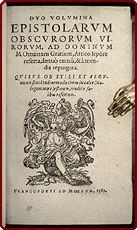
Click the images for enlargements. This example is lacking the appendix (entitled Conciliabvlvm theologistarvm adversvs Germaniae, & bonarum literarum studiosos), and thus is without the colophon providing printer and bookseller information. The title-page bears the printer's device of Feyerabend: Fame and her trumpets.
Uncommon: OCLC and NUC Pre-1956 locate only seven copies of this edition in U.S. libraries, one having been deaccessioned.
• VD16 E1729. This ed. not in Adams or Brunet. Period-style calf, covers framed in blind rolls, spine with gilt-stamped title/date and gilt- and blind-accented raised bands (blind tooling extended onto boards, terminating in decorative fleurons); spine compartments decorated in gilt and blind. Appendix (16 ff.) lacking; letters complete and the handsomely printed text all clean. (25643)
Classic
Concordance by“Alexander
the Corrector”Cruden,
Alexander. A complete concordance to the Holy Scriptures of the
Old and New Testaments: Or, a dictionary and alphabetical index to the Bible....
Philadelphia: Kimber, Conrad, & Co., 1806. 4to (30.3 cm, 11.9"). Frontis.,
[8], 1012 pp.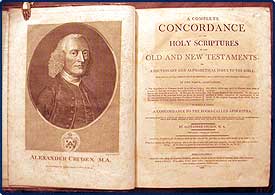
Cruden, bookseller to Queen Caroline, dedicated his initial publication of his concordance to her. Unfortunately, she died two weeks later, and profits from the sale of the volume did not meet the author’s expectations; Cruden’s disappointment (and bouts of eccentric behavior) regardless, the DNB stresses that “his biblical labours have justly made his name a household word among the English-speaking peoples.”
The
frontispiece portrait of the author was engraved by William Kneass.
• Shaw & Shoemaker 10233. On Cruden, see: The Dictionary of National Biography, V, 249–51. Contemporary sheep, spine with gilt-stamped leather title label; worn and abraded, leather cracking over spine. Front pastedown and free endpaper (partially separated) with stray pencil marks. Varying degrees of offsetting and spotting. One piece of dried plant material laid in. (5706)
Syriac & English — Greek & LatinCureton, William. Spicilegium syriacum: Containing remains of Bardesan, Meliton, Ambrose and Mara bar Serapion. London: Rivingtons, 1855. 8vo (26.2 cm,
10.3"). [4], iii, [1], xv, [1], 102, [54] pp.
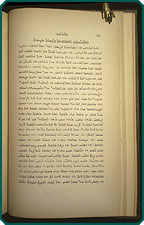 Single-click any image for an enlargement.
• NSTC 2C47117. Publisher’s cloth, covers blind-stamped, spine embossed and with gilt-stamped title; front cover detached, cloth chipped at spine extremities and rubbed at edges. Front pastedown with institutional bookplate, front free endpaper and title-page rubber-stamped, front free endpaper with inked ownership inscription dated 1870. Early inked marginalia to one page.
Including
a Full-Text
Printing ofThe
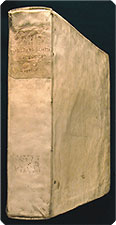
Augsburg ConfessionCyprian, Ernst Salomon. Historia der Augspurgischen confession, auf gnädigsten Befehl des Durchlauchtigsten Fürsten und Herrn, herrn Friedrichs des Andern, hertzogens zu Sachsen-Gotha aus dem original-acten beschrieben. Gotha: J.A. Reyher, 1730. 4to. 24, 227, 224 p.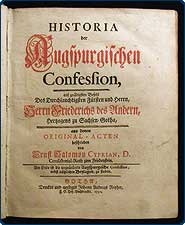
 Click
the title-page image for an enlargement.
Click
the title-page image for an enlargement. The main title-page is printed in black and red, the text in black letter (i.e., gothic, fraktur) and the footnotes in roman.
• Contemporary vellum over paste boards; later paper spine label with hand lettering; small area of lower spine with black spots. Vellum loosening at the turn-ins. Board edges soiled. Few stray stains in some margins. Private bookplate.
 TO
Part V TO
Part V |