
 16TH-CENTURY BOOKS
[ENCOMPASSING THE REFORMATIONS]
16TH-CENTURY BOOKS
 German
 RENAISSANCE Caesar — Lushly Illustrated
 Caesar, Julius. Julius der erst römisch Keiser von seinem Leben und Krieg, erstmals uss dem Latein in Tütsch gebracht vnd mit andrer Ordnung der Capittel und uil zusetz nüw getruckt. [Strassburg: Durch Joannem Grüninger, vff sant Adolffs des heiligen Bischoffss, 1508]. Folio (31 cm; 11.5"). A6 Aa8 B6 C4 D–N6 O4 P–Z6 Zz6; [148] ff., illus.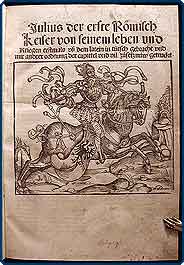
 All images of this book enlarge, via single-click.
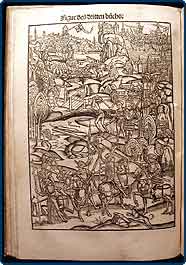
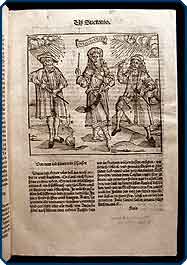
This handsome and  SCARCE book is famous for its woodcut illustrations: It has one quarter-page, four half-page, one three-quarter page, and
  eleven full-page woodcuts. These include battle scenes, the assassination, camp life, etc., all of the figures being dressed anachronistically in Renaissance garb.
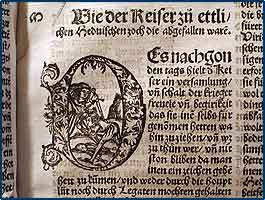
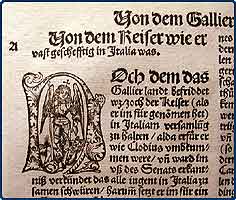 The text is printed in large gothic in double-column format.
 Of the first edition we find only two copies in the U.S. (Harvard and Stanford), and of the second we trace three (Brown, Duke, and Trinity College), all being incomplete except the Brown copy.
• Index Aurel. 128.654; Schmidt, Repertoire bibliographique Strasbourgeois, no. 91, p. 40–41; Schweiger, II, 51; not in Adams (who only lists much later editions in German). Recased in an 18th-century vellum-over-boards binding. Sophisticated copy in all likelihood, with several leaves apparently supplied from a different copy, those leaves being either slightly smaller than the others or more heavily sized. Occasional light waterstains in from a very few margins; two leaves with old scribbling in ink in margins; minor worming in lower margin of last six leaves.  A very nice copy of a very scarce book that is clearly difficult to find complete, incomplete, or sophisticated.
 Life & Letters — A German Neo-Latin Poet Camerarius, Joachim. Narratio de H. Eobano Hesso, comprehendens mentionem de compluribus illius aetatis doctis & eruditis uiris, composita à Ioachimo Camerario Pabebergensi. Epistolae Eobani Hessi ad Camerarium & alios quosdam, familiari in genere .... Norimbergae: Ioanne Montano & Ulrico Neubero, 1553. 8vo (16.3 cm, 6.4"). A–Z8a–b8 (O4 bound in after O5); [200] ff. [bound with] Hessus, Helius Eobanus. Libellus alter, epistolas complectens Eobani et aliorum quorundam doctissimorum virorum, necnon versus varii generis atque argumenti.... Lipsiae: Ex officina Papae, 1557. 8vo. A–K8 (-A8); [79] ff. (last leaf of preface/errata lacking). [and the same author’s]. [Tertius libellus epistolar. Eobani et aliorum.] [colophon:] Lipsiae: M. Ernesti Voegelini Constantiensis, 1561. 8vo. A–T8 (-A1, -T8 [final blank]); [150] ff. (title-page and final blank lacking).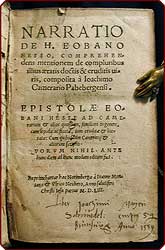
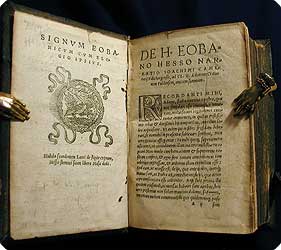 Click the images for enlargements.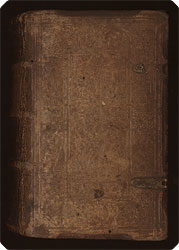
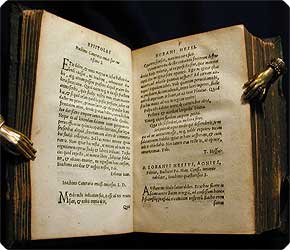
• Narratio: Adams C436; Brunet, II, 1009; VD16 C480 / VD16 C408. Libellus: Brunet, II, 1009; VD 16 C409; not in Adams. Tertius libellus: Brunet, II, 1009; VD16 C410. Binding as above, spine with later hand-inked paper label; binding much darkened and somewhat rubbed, one clasp intact and the other lacking. First title-page with ownership inscription dated 1559 inked in lower margin; Libellus alter lacking last leaf of preface (with errata on reverse) and Tertius libellus epistolar lacking title-page. Some corners dog-eared; two leaves with outer corners torn away, without loss to text. Early inked underlining and lining through of text, with a few marginalia, mostly in Narratio and occasionally in other two works. Last few leaves of final work with light waterstaining to lower outer corners.

 Canisius' Catechism of theYoungest Children Canisius, Petrus, Saint. Institutiones christianae pietatis. Seu parvus catechismus catholicorum. Coloniae : Apud Maternum Cholinum, 1571. 12mo (13.5 cm; 5.25"). [16] ff., 51, [1] pp., [36] ff.
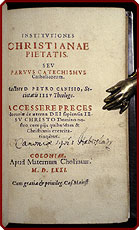
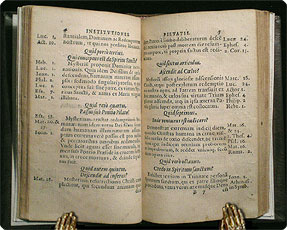
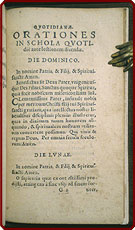 Click the interior images for enlargements.
 Offered here is an early printing of the version for the youngest students. The title-page and calendar are printed in red and black, and a few headlines in the early section are also in red.
Uncommon. OCLC locates only this now deaccessioned copy in the U.S., and one copy in Europe. Index Aureliensis fails to list this edition at all.
• Not in Index Aurel.; not in Adams. Recent ebony-brown calf old style: Round spine with raised bands, accented in gilt and with blind-tooled devices in compartments; single blind rules extending onto covers from each band to terminate in trefoils, and covers framed in blind double fillets. Author's name and date of printing in gilt on spine. Early underscoring and some minimal marginalia in red ink in a 16th-century hand; ownership note of same era on title-page. Some age-spotting and other light discoloration, not serious. For an early children's book, a very, very nice copy. (24855)

 Stolen
Letters!
Damage
Control! —
The Reformation
Capito, Wolfgang [a.k.a., Wolfgang Köpfel]. Der
nüwen zeytu[n]g vnd heymlichen wunderbarlichen offenbarung so D. Hans Fabri jungst vfftriben
vnd Wolffgang Capitons brieff gefälschet hat bericht vnd erklerung. Strassburg: No
publisher/printer, 1526. Small 4to. [32] ff.
Stolen
Letters!
Damage
Control! —
The Reformation
Capito, Wolfgang [a.k.a., Wolfgang Köpfel]. Der
nüwen zeytu[n]g vnd heymlichen wunderbarlichen offenbarung so D. Hans Fabri jungst vfftriben
vnd Wolffgang Capitons brieff gefälschet hat bericht vnd erklerung. Strassburg: No
publisher/printer, 1526. Small 4to. [32] ff.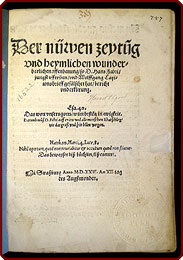
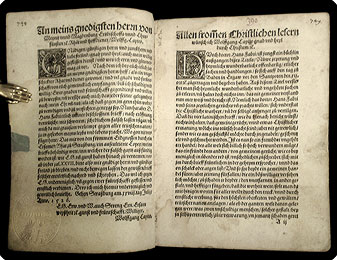
 Click the images for enlargements.
 In his capacity as a leader of the early Reformation he was present at several important “conferences” (the second Zürich and that at Marburg). He coauthored, with Martin Bucer, the Confessio Tetrapolitana.
Capito's archenemy was a Dominican named Hans Faber (a.k.a. Johannes Faber), the vicar general of the bishop of Constance, who at every turn sought to undermine Capito and his relations with authorities and other Reformers, Zwingli in particular. Der nüwen zeytu[n]g is Capito's rebuttal of Faber's Newe Zeittung vnd heimliche wunderbarliche Offenbarung etlicher sache[n] vnd handlungen so sich vff dem tag der zw Baden, in which Faber published distorted versions of letters his agents had stolen that were addressed to Zwingli by Capito and relate to the disputation at Baden in 1526, which Zwingli had decided not to attend.
Schrodt and Vogelstein summarize: “Capito's defense in this tract suggests that he was not altogether comfortable with the language he had used, intended as it was for the eyes of a friend and spiritual comrade in arms. By presenting his original text passage by passage together with Faber's published German version of the same, Capito shows that it given the most offensive turn through the opponent's manner of translation.”
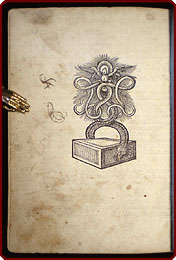
This proffers a large, interesting woodcut device on the verso of its last leaf and two small but nice woodcut initials in text.
Provenance: Ownership signature on title-page of Howard Osgood, noted late 19th- and early 20th-century collector and scholar; old circular pressure-stamp on same page of a seminary (properly released).
WorldCat finds no copies in North America and COPAC finds none in Great Britain.
• Panzer, II, 3051; Kuczynski 381; Index Aurel.; 131.648; VD16 C828; Schrodt & Vogelstein 28–29. In later plain wrappers; title-page torn with small loss of blank foremargin, repaired. Two different sequences of manuscript pagination, one in red, indicating the opusculum was bound at least twice in different sammelbands. Provenance indications as above, and a five-digit number in ink in the inner corner of the title-page; dust-soiling and old staining. (25953)
The Pope Lays It Down Here Catholic Church. Pope (1590–1591: Gregory XIV). Declaration de n.s. pere le pape Gregoire XIIII. Sur les lettres qui luy ont esté escrites par la noblesse qui suit le Navarrois. Paris: Robert Nivelle & Rolin Thierry, 1591. 8vo (15.9 cm, 6.25"). 14, [2] pp.
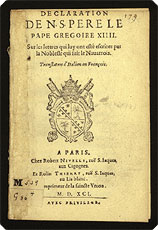 Click the image for an enlargement.
 This little pamphlet appears to be a scarce variant; OCLC finds no holdings, and the title is not listed by Lindsay & Neu.
• Not in Lindsay & Neu, French Political Pamphlets 1547–1648. Disbound. Title-page with paper shelving label, institutional pressure-stamp, and residue from previous nonce binding along inner margin; four other pages also pressure-stamped. Additional inked pagination in upper outer corners, in an early hand. (24463)

Criminal
Priests Going to Trial
Catholic
Church. Rota. Spain. Document signed, in Spanish,
on paper. Valladolid: 3 December 1585. Folio (29 cm, 11.5"). [2] pp.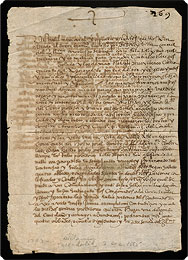
Click the image for an enlargement.Signed by three Rota judges.
• Written in a standard ecclesiastical notarial hand, in iron gall ink. Bleed-through on both sides of leaf, not affecting legibility; no “iron-gall lacing” of the ink. (26981)

ImportantEarly Christian Hebrew Grammar Chevalier, Antoine-Rodolphe. Rudimenta Hebraicae linguae, accurata methodo & breuitate conscripta. Eor undem rudimentorum praxis, quae viuae vocis loco esse possit. Vitebergae: Iohan. Cratonem, [colophon: 1574]. 4to (20 cm, 7.9"). [16], 331, [1 (blank)] pp.
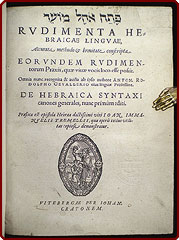
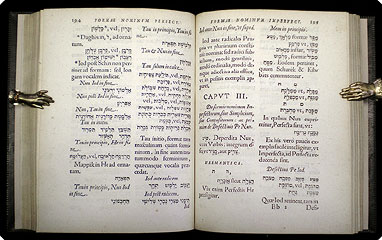 Click the images for enlargements.
 Uncommon: OCLC and NUC Pre-1956 locate only two U.S. holdings of this edition, one since deaccessioned.
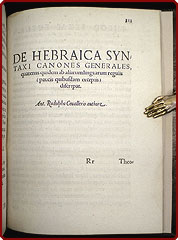
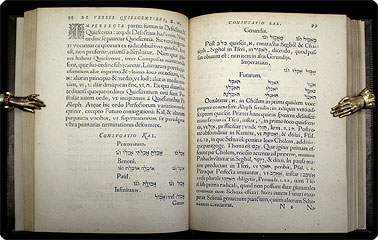
 A nice copy. (25649)
The Augsburg Confession — 51 Documents The First Much Annotated Chytraeus, David. Histoire de la confession d'Auxpourg, contenante les principauls traittez & ordonnances, faittes pour la religion, quand l'electeur Iehan, duc de Saxe auec les citez & autres princes protestants presenterent leur confession de foy (icy inserée) a l'Empereur Charles V. os estats generauls de l'empire, tenus a Auxpourg, 1530. Anvers: Chez Arnould Coninx, 1582. 4to (24.3 cm, 9.55"). [8], 835, [5] pp.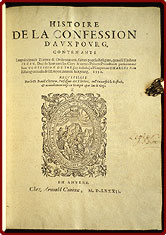
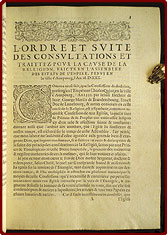
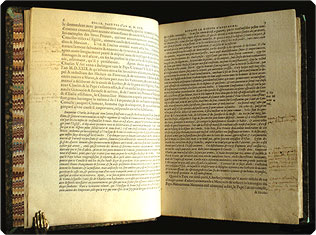 Click the interior images for enlargements.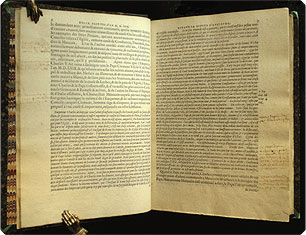
Rare. OCLC lists only four U.S. holdings and one deaccessioned copy (the present example).
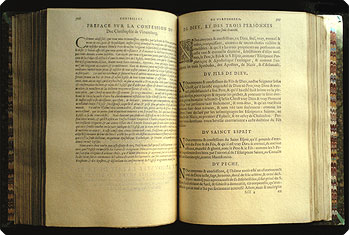
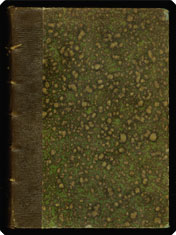
• Brunet 22420; Graesse, II, 154. Not in Adams. 19th-century quarter olive morocco with marbled paper–covered sides, spine with gilt-stamped author/title; edges and extremities rubbed. Top edge gilt. Front pastedown with bookplate as above; title-page and first text page each with early inked ownership inscription. Four leaves with small repaired tears from outer margins and three likewise from upper margins, not touching text in any case. Extensive early inked marginalia in first document, scattered examples elsewhere. (23536)
Conduct of Life duringthe Reformation Chytraeus, David. Regulae Vitae. Virtutum descriptiones methodecae, in Academia Rostochiana propositae, & recens recognitae. Vitebergae: Excudebat Iohannes Crato, 1557. Small 8vo (16 cm; 6.25"). [128] ff.
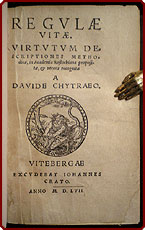
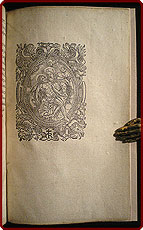 The final leaf with the beautiful Crato printer's device is present.
Chytraeus (1530–1600) was a German Lutheran theologian and historian and one of the authors of the Formula of Concord (1577), an authoritative Lutheran statement of faith. All of the first three editions of his Regulae Vitae (1555, 1556, 1557) are rare in U.S. libraries; only three copies of the 1555 are reported, two of the second, and one of the third, with a second copy of that last having been deaccessioned in 2006.
• VD16 C2736; Index Aurel. 136.817. Recent ebony-brown calf old style; round spine with raised bands accented in gilt and blind-tooled devices in compartments; single blind rules extending onto covers from each band to terminate in trefoils, and covers framed in blind double fillets and with a blind-tooled dentelle roll. Title, place of publication, and date in gilt on spine. Old repair to lower corner of title-page and that leaf reinforced at gutter; internally very good. (25096)
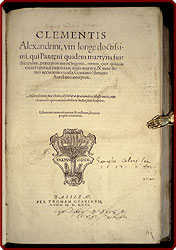
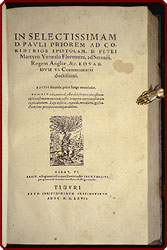
Peter Martyr MeetsSt. Clement of Alexandria Clement, of Alexandria, Saint. Clementis Alexandrini, viri longe doctissimi, qui Panteni quidem martyris fuit discipulus, praeceptor verò Origenis, omnia, quae quidem extant opera, à paucis iam annis inventa, [et] nunc denuò accuratiùs excusa Gentiano Herueto Aureliano interprete ... [with another, as below]. Basileae: Per Thomam Guarinum, 1566. Folio (33.5 cm; 13.125"). 364 pp., [8] ff. [also bound in] Vermigli, Pietro Martire. In selectissimam D. Pauli priorem ad Corinthios Epistolam. Tiguri: apud C. Froschouerum, 1567. Folio (33.5 cm; 13.125"). [6], 242, [17] ff. (lacks final blank). 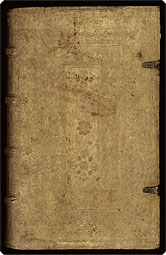
 Click the images for enlargements.
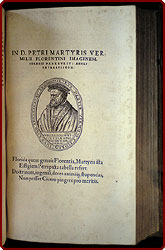
 The second work is Peter Martyr's commentaries on Corinthians, here in the second edition. It has a full-page woodcut portrait of him on the recto of leaf aa6. The printer's woodcut device is on the title-page and there are numerous woodcut initials. The sidenotes are printed in italic while the text proper is in roman.
Peter Martyr (8 September 1499 – 12 November 1562), was an Italian theologian who began his religious life as an Augustinian friar, converted to the Protestant cause, was closely associated on the continent with Ochino, Bucer, and some prominent Lutherans, and, while in England where he held the Regius Chair of Divinity at Oxford, was an intimate of Thomas Cranmer and Bishop Jewel.
Both works are uncommon in these editions in the U.S.: We locate four copies of the first title and two of the Vermigli, but one copy of each title has been deaccessioned, meaning current holdings are three and one only.
Binding: Contemporary alum-tawed pig over wooden boards with bevelled edges and metal and leather clasps; one clasp perished. Leather tooled elaborately in blind using a variety of rolls and fillets, including one roll incorporating the date 1546, a medallion of David and his harp, and another medallion depicting John the Baptist with the words below the image, “Ecce Agnus Dei.”
• Clement: VD16 C4070; Index Aurel. 104.903; Adams C2106. Vermigli: VD16 B5054; Adams M788. Bound as above. Ex-library with bookplate on front pastedown, small blind pressure- (not perf-.) stamp on title-page and remnant of charge pocket at rear; six-digit number stamped in lower margin of one leaf. Early inked ownership indicia on title-page and old private ownership stamp on front free endpaper; a little old marginalia and underlining. A very little foxing and the odd spot only. Excellent copies of both works in a handsome contemporary binding. (24827)
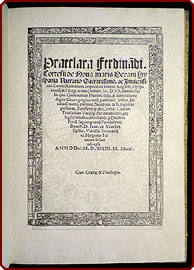
Cortés' Second Letter: The Conquest of Mexico Cortés, Hernando, & Peter Martyr. Praeclara Ferndinandi Cortesii De Nova Maris Oceani Hyspania Narratio. [colophon: Impressa in Nurimberga: per Fridericum Peypus], 1524. Folio (30.3 cm; 11.875" ). [4], 49, 12 leaves.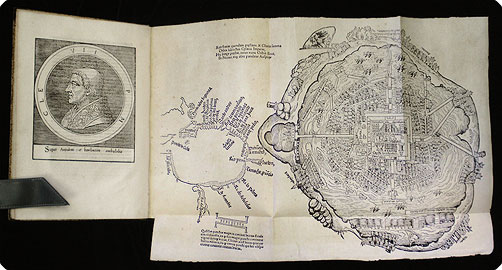 Click the images for enlargements.
  Cortés was the first conqueror since Julius Caesar to write a description of his conquests.
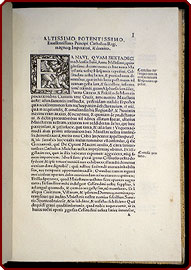
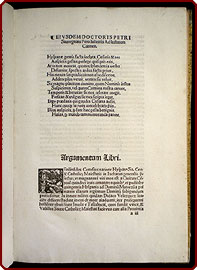
 It is here that Cortés provides a definitive name for the country, calling it “New Spain of the Ocean Sea.” This letter is also important for making reference to Cortés's “lost” first letter, supposedly composed at Vera Cruz on 10 July 1520. Whether that letter was actually lost or was suppressed by the Council of the Indies is unknown, though there is little doubt it once existed.
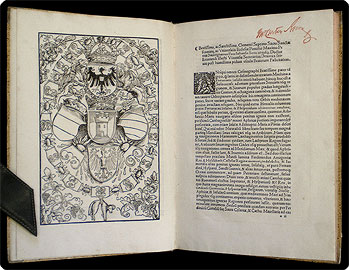
 It is the text of this “second” letter, THE FIRST SURVIVING ONE, that was the first major announcement to the world of the discovery of major civilizations in the New World — and, as such, is a work of surpassing importance.
This copy bears the full-page woodcut portrait of Pope Clement VII on the verso of the fourth preliminary leaf, which is not found with all copies. Additionally, the title-page bears an interesting 14-piece composite woodcut border and the verso of that page has a stunning full-page woodcut of the coat of arms of Charles V, the Holy Roman emperor, to whom the letter is addressed. The coat of arms is surrounded by the collar of the Order of the Golden Fleece. The text is printed in roman with side- and shouldernotes; the lay-out is elegant and there is one large, handsome woodcut initial.
As usual, the letter is here bound with Peter Martyr's De Rebus, et insulis noviter repertis, which provides an account of the recently discovered islands of the West Indies and their inhabitants. It is often considered a substitute for the lost Cortés letter.
One of the most important early descriptions of Mexico and of the first encounter of the West with the Aztec civilization, this is a work of bedrock importance to the New World. No complete copy has appeared for sale since 1985.
• Alden & Landis, European Americana, 524/5; Sabin 16947; Harrisse, BAV, 125. Sanz 933–34; Medina, BHA, 70; Church 53; Burden 5; JCB, German Americana, 524/4; Streeter Sale 190. 18th-century half vellum and sprinkled paper over boards, gilt red leather label. Map supplied in expert facsimile; blank leaf H8 lacking. Bookplate of John Carter Brown (Library) on front pastedown, with deaccession stamp. Occasional very minor soiling in the text, else very good — a copy clean and even crisp. (26808)
ELIZABETH Must Have Loved HisThinking on Monarchy Crompton, Richard, ed. L'authoritie et iurisdiction des
courts de la maieste de la Roygne: nouelment collect & compose, per R. Crompton del milieu Temple esquire. Apprentice del ley. Londini: Caroli Yetsweirti, 1594. 4to. [4], 232 ff.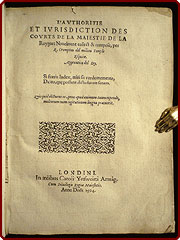
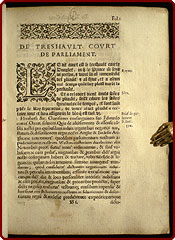
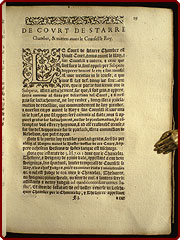 Single-click any image where the hand appears on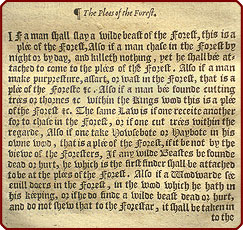
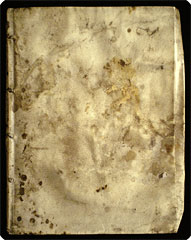
Written in Law French with some Latin, and with extended passages entirely in English in the section on “forrest” law; printed in black letter.
Provenance: Contemporary inked signatures to fly-leaf of Henry Wynn/Wine (Middle Temple?).
• ESTC S109077; STC (2nd ed.) 6050; Lowndes, I, 558. Contemporary limp vellum with remnants of ties. Pinhole or small worming throughout to top margins, touching a few letters in headings; light waterstaining to margins/corners of first/last leaves; one preliminary with just a very little bug-spotting. Paper flaws in margins of ff. 45, 164, and 172; last leaf a little tattered. Overall, very good. (21344)
Letters
of OBSCURE MEN —
Their Authors &
EVERYBODY ElseCrotus Rubeanus, Johannes, & Ulrich von Hutten. Duo volumina epistolarum obscurorum virorum, ad Dominum M. Ortuinum Gratium, Attico lepôre referta, denuò excusa, & à mendis repurgata. Francoforti ad Moenum: [Apud Ioannem Spies, impensis Sigismundi Feyerabenij], 1581. 8vo (16 cm, 6.25"). [179] ff. (lacking appendix: 16 ff.).

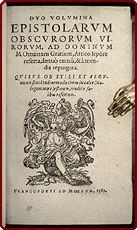
Click the images for enlargements. This example is lacking the appendix (entitled Conciliabvlvm theologistarvm adversvs Germaniae, & bonarum literarum studiosos), and thus is without the colophon providing printer and bookseller information. The title-page bears the printer's device of Feyerabend: Fame and her trumpets.
Uncommon: OCLC and NUC Pre-1956 locate only seven copies of this edition in U.S. libraries, one having been deaccessioned.
• VD16 E1729. This ed. not in Adams or Brunet. Period-style calf, covers framed in blind rolls, spine with gilt-stamped title/date and gilt- and blind-accented raised bands (blind tooling extended onto boards, terminating in decorative fleurons); spine compartments decorated in gilt and blind. Appendix (16 ff.) lacking; letters complete and the handsomely printed text all clean. (25643)

 Rare
Variant — “WE”
Binding Detail —
Sunderland
Copy
Diodorus Siculus. Diodorus Siculus. [Operum lib. vi. priores, Latine Poggio interprete.] [Paris]: [pr. by Jean Marchant for] Jean Petit, [ca. 1507]. 4to. a–v8.4x6y4; 123, [6] ff. [bound with] Justinus, Marcus Junianus. Justini historia ex Trogo Pompeio quattor & triginta epithomatis collecta; acc. Lucius Florus et Sextus Rufus. [Paris]: De Marnef, [ca. 1507]. 4to. A8B4C6a–y8.4z6&4; [18], 140 ff.
Rare
Variant — “WE”
Binding Detail —
Sunderland
Copy
Diodorus Siculus. Diodorus Siculus. [Operum lib. vi. priores, Latine Poggio interprete.] [Paris]: [pr. by Jean Marchant for] Jean Petit, [ca. 1507]. 4to. a–v8.4x6y4; 123, [6] ff. [bound with] Justinus, Marcus Junianus. Justini historia ex Trogo Pompeio quattor & triginta epithomatis collecta; acc. Lucius Florus et Sextus Rufus. [Paris]: De Marnef, [ca. 1507]. 4to. A8B4C6a–y8.4z6&4; [18], 140 ff.

Diodorus's work is here accompanied by Justinus’s abridged version of Trogus Pompeius’s history. Both books feature striking capitals and title-page devices. The typography of the first book is Jean Marchant’s, done for Jean Petit whose lion-and-leopard device is prominently displayed. The second book’s device shows initials of two of the three de Marnef brothers (E and G) beneath a pelican in her piety. This second book collates exactly like the Jean Petit edition of Justinus, printed sometime after December of 1507, and appears to differ from it solely in its title-page, probably reset only for insertion of the de Marnef device.
While one copy of Diodorus bound with Petit’s Justinus was found at Harvard, no record of the apparently extremely scarce de Marnef variant could be located.
Provenance: Charles Spencer, Third Earl of Sunderland, lot 3934 in the Sunderland Library sale (1882).
• Diodorus: Moreau 1508:64; not in Schweiger. Justinus: not in Moreau, not in Schweiger. On Diodorus, see: Oxford Companion to Classical Literature, 146. 17th-century English calf, panelled, with gilt fleurons and elaborate front and back gilt floral center motifs, each worked with a minute WE. (You need a magnifying glass, but this is THERE.) Overall, showing wear with
some leather chipped from spine, covers abraded, and joints starting. Pages mostly clean, with slight staining to inner margins from binding supports. Gilt cover lozenges still bright and the whole safe to be worked with.
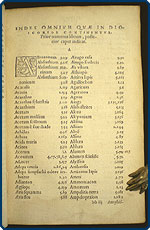
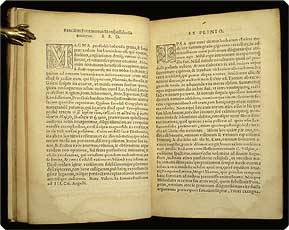
Materia Medica — Ancient Knowledge Dioscorides Pedanius, of Anazarbos. Dioscoridis libri octo Graece et Latine. Castigationes in eosdem libros. Parisiis: Apud Petrum Haultinum (colophon: Excudebat Benedictus Prevost), 1549. 8vo (16.7 cm, 6.5"). [20], 392 ff. 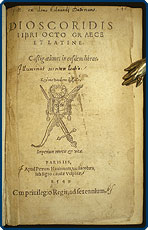
 Click the interior images for enlargements.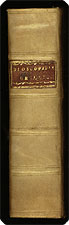
The work was edited by Jacques Goupyl, and is laid out with the Latin translation by Jean Ruel in side-by-side columns with the Greek text.
Provenance: Early title-page inscription, “F.M. ex dono Eduardi Davenant.”
• Adams D656; Durling 1135; Index aureliensis 154.341; Pritzel 2295. 18th-century speckled calf (front cover) and sheep (back cover) rebacked with lighter-colored sheep preserving original gilt-stamped leather title-label; boards scuffed and worn. Title-page with inked inscription as above (and in same hand, “Illuminat mentem Lectio.” First two leaves creased; first and last few leaves with light to moderate waterstaining. A very few marginalia in a tiny, neat, early inked hand. (20639)
Eck
on the Blood Libel
Eck, Johann. Ains Juden büechlins verlegung darin ain
Christ, gantzer Christenhait zu schmach, will es geschehe den Juden unrecht in bezichtigung der
Christen Kinder Mordt. Gedruckt zü Ingoldstat: durch Alexander Weissenhorn, 1541. 4to (19.5
cm; 7.75"). [96] ff.
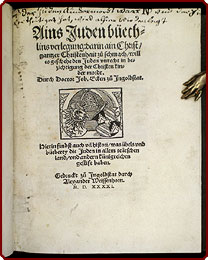
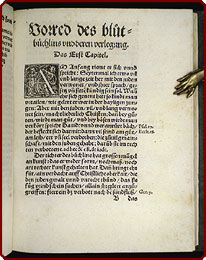 Click the images for enlargements.
 The text is printed in gothic with side- and shouldernotes, and the title-page has a woodcut of the arms of the Bishop of Trent.
WorldCat
locates only three copies in the U.S. and COPAC only three in the U.K.
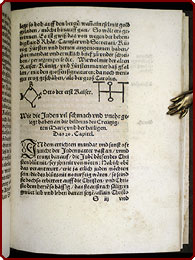
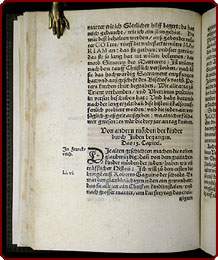
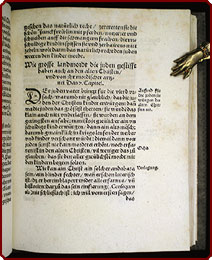
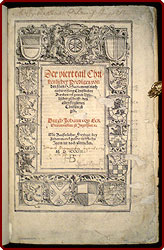
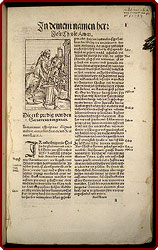
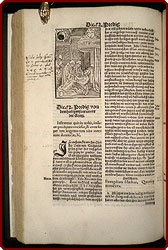
AnArch-Opponent of LUTHER'S Eck, Johann. Der viert tail Christenlicher Predigen von den siben H. Sacramente[n] nach aussweysung Christlicher Kirchen vn grund Byblischer gschrifft den alten frummen Christen zu gut, durch Johann von Eck. [colophon: Augspurg: getruckt durch Alexander weyssenhorn, in verlegung D. Iohan Ecken zu Ingelstat], 1534. Folio (31.5 cm; 12.25"). [6], 158, [1] ff. (lacks final blank).
 Click the images for enlargements.
 Present here are 76 sermons, being vol. 4 of Eck's Christliche Auslegung der Evangelien. The volumes were all issued separately over the course of several years, by different publishers, and all are treated as stand-alone productions by VD16 and all bibliographies as well as library catalogues.
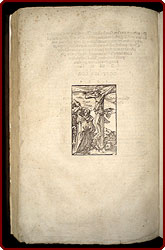
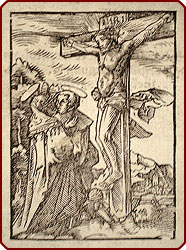
Provenance: Ownership signature of Joannes Bintengerber (1579); unidentified 16th- or early 17th-century ownership mark in ink on top edge of volume (resembling a brand mark); Howard Osgood (late 19th-, early 20th-century collector and Baptist minister and teacher); later in collection of Colgate Rochester Crozer Divinity School (deaccessioned, with their old circular pressure-stamp partially discernable on title-page).
Evidence of readership: Scattered marginalia (e.g. 68r, 96v, 97r, 120r, 137r, 140v, 155v), usually short but not always.
Rare: Via OCLC and NUC Pre-1956 we trace only 4 copies in U.S. libraries.
• VD16 E288. Full modern calf old style: Round spine with raised bands, accented with gilt rules; red leather title label; rules in blind extending onto covers from each band to terminate in trefoils with blind double fillets beyond. Title-leaf with repairs to foremargin and to small losses in five places at or within the borders; same instances affect four places in the text on the verso. Foremargins of some other early and late leaves a little tattered and irregular, with some repair; endpapers soiled and one other leaf soiled in outer margin; leaf A6 repaired in inner margin. Pin-hole type worming, not serious, in the text at times; waterstain in inner margin of some leaves; outer corners, especially upper ones, bumped/creased in first part. Ownership inscriptions and marginalia as noted. Despite flaws that must be recounted, a sound and handsome book. (25415)
WillEck & Zwingli Square Off? Eck, Johannes. Ein Sentbrieue an ein frum Eidgnoszschafft betreffendt die ketzerische disputation Frantz Kolben des aussgeloffen m[ue]nchs vnnd B. Hallers des verlognen predicanten zü Bern. Ein annderer brieue an Vlrich Zwingli. Der drit brieue an Cunrat Rotenacker zu Vlm. [Ingolstadt: Georg and Peter Apian, 1528]. Small 4to (20 cm; 7.75"). [4] ff.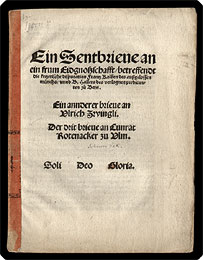 Click the image for an enlargement.
 Schrodt and Vogelstein offer a different summary: “The letters refer to an invitation sent to Eck by Zwingli, Haller and Kolbe, all of them evangelical preachers, to participate in a religious disputation scheduled to take place in Bern. The first letter, addressed to the confederation, explains courteously enough that he, Eck, does not intend to follow the call of the three proven heretics individually, a call not issued by the civic authorities. Not that he is afraid of their arguments; but he insists on an authoritative invitation and presence.
The other letters are framed in very aggressive and personally offensive language but carry the same message. Eck challenges the evangelical disputants to appear with him before any of the Catholic potentates, spiritual or secular, or any of the great (Catholic) universities, and he would shatter their heretical arguments.”
This pamphlet is type-signed, “Johan. Eck. inquisitor.”
WorldCat locatesonly one copy in North America and one in Great Britain; COPAC locates an additional one in Britain.
• VD16 E422; Kuczynski 650; Hohenemser 3352; Pegg, Swiss Libraries, 1496; Schrodt & Vogelstein 64. Removed from a nonce volume. Spine with a reinforcing strip of 19th-century German scrap paper. Title lightly dust-soiled and evidence of old erased pencilling. A clean, good copy. (25964)
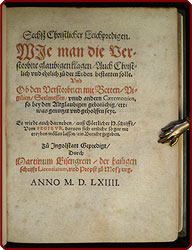
Two Works of theCatholic Reformation Eisengrein, Martin. Sechsz Christlicher Leichpredigen. Wie man die Verstorbne glaubigen klagen, Auch Christlich vnd ehrlich zu der Erden bestatten solle. Vnd Ob den Verstorbnen mit Betten, Vigilien, Seelmessen, vnnd andern Caeremonien, ... geholfen seye. Es wirdt auch ... Vom Fegfevr ... ein Bericht gegeben [with another, as below]. [colophon: Gedruckt zu Ingolstat: Durch Alexander und Samuel Weissenhorn gebruder], 1564. [with the same author's] Ein Christliche predig Was vom Heilthumb, so im Papstum[m], in so grossen ehren, zühalten sey. Vnd Ob ain frommer Christ mit güttem gewissen, züdisem oder jänem Heiligen walfarten gehen künde. Zü Jngolstatt in der Pfarrkirchen bey S. Mauritz gepredigt, Durch Martinum Eisengrein, der heiligen Schrifft Licentiatum vnd Probst zü Moßpurg. Gedruckt zu Ingolstatt: Durch Alexander und Samuel Weissenhorn, 1564. 4to (20.5 cm; 8.25"). XL ff. 4to (20.5 cm; 8.25"). [8], XC ff.
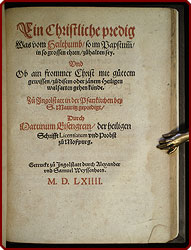 Click the images for enlargements.
 The present two works of preachings are scarce in the U.S., with only two institutions reporting ownership of Sechsz Christlicher Leichpredigen (one copy now deaccessioned) and only one reporting ownership of Ein Christliche predig (that copy also deaccessioned). The Sechsz Christlicher Leichpredigen ends with a two and a half pagepoem by the Dutch humanist and poet Hannard Gamerius, Eisengrein’s colleague at Ingolstadt, where Gamerius taught Greek.
Each work has its title-page printed in red and black; the printing throughout is neat and typical.
• Sechsz: VD16 E817; Index Aurel. 159.363. Ein: VD16 E789; Index Aurel. 159.362. Full dark modern calf old style, with simple blind double fillets bordering covers and a chain rule as vertical accent towards spine; spine without labels and with gilt-touched raised bands accented by blind rules extending onto covers to terminate in trefoils. Text unmarked; light overall age-toning. (26143)
 He
Survived “La Noche
Triste”
& Much, Much
MoreTHE
CONQUEROR'S REWARD
He
Survived “La Noche
Triste”
& Much, Much
MoreTHE
CONQUEROR'S REWARD
 Felipe
II, King of Spain.
Illuminated Document Signed (on his behalf by his sister/regent, “La Princesa”).
In Spanish, on vellum. Valladolid,17
March 1559. Folio (58 x 54.5 cm; 23" x 21.5"; h x
w), 1 leaf.
Felipe
II, King of Spain.
Illuminated Document Signed (on his behalf by his sister/regent, “La Princesa”).
In Spanish, on vellum. Valladolid,17
March 1559. Folio (58 x 54.5 cm; 23" x 21.5"; h x
w), 1 leaf.  |
|
|
|
|
|
|
|
|
|
|
|
|
|
|
|
 |
|
||||||||||||||
 |
 |
 |
 |
 |
 |
 |
|
||||||||
 |
|
||||||||||||||
 |
|
||||||||||||||
 |
 |
|
|||||||||||||
 |
 |
|
|||||||||||||
 |
 |
|
|||||||||||||
 |
 |
|
|||||||||||||
 |
|
||||||||||||||
 |
 |
 |
 |
|
|||||||||||
 |
 |
 |
 |
|
|||||||||||
 |
|
||||||||||||||
 |
 |
|
|||||||||||||
 |
 |
|
|||||||||||||
 |
|
||||||||||||||
 |
 |
|
|||||||||||||
 |
 |
|
|||||||||||||
 |
|
||||||||||||||
 |
|
||||||||||||||
 |
|
||||||||||||||
 Move
your mouse over the document above, and click,
Move
your mouse over the document above, and click,
to select and view details.
 Villanueva
was among the small but grand “army” that marched into Tenochtitlán
in the Spring of 1520 and in July of the same year were to flee the
western world's largest city fighting for their lives, on the “Noche
Triste.” He survived the hell and slaughter of the causeways and later
returned with the greatly augmented force that destroyed the Aztec capital
and its empire. Still later he was with Cortés in the exploration
and conquest of Pánuco and following that with Nuño de
Guzmán in the exploration and conquest of Zacatecas and Jalisco.
He and his brother Fernando (also a member of the Saucedo contingent)
jointly received an encomienda (Quechula) and settled in Puebla
de los Angeles where Pedro served as a regidor on the town
council in the 1540s and 1550s.
Villanueva
was among the small but grand “army” that marched into Tenochtitlán
in the Spring of 1520 and in July of the same year were to flee the
western world's largest city fighting for their lives, on the “Noche
Triste.” He survived the hell and slaughter of the causeways and later
returned with the greatly augmented force that destroyed the Aztec capital
and its empire. Still later he was with Cortés in the exploration
and conquest of Pánuco and following that with Nuño de
Guzmán in the exploration and conquest of Zacatecas and Jalisco.
He and his brother Fernando (also a member of the Saucedo contingent)
jointly received an encomienda (Quechula) and settled in Puebla
de los Angeles where Pedro served as a regidor on the town
council in the 1540s and 1550s.

 The
text of the grant of arms is elegantly indited in a standard court
semi-round gothic in sepia ink and is enclosed on the left, right, and top
sides by an illuminated and historiated sash-like border. In the upper
left and right corners are miniatures of Justice and Knowledge in sylvan settings.
Running between those two along the top of the document is a decorative panel
incorporating flowers, fruits, mythic animals, and cherubs. Below this,
the king's name is accomplished in large letters of gold on a field of red
accented with gold, and the “D” of his honorific “Don”
is given special treatment. This is elaborated in an ornate, almost
baroque style that comes close to obfuscating the fact of its being a majuscule
“d”: Wrought in gold, the letter at first appears to be
merely a “frame” for the royal coat of arms that fills its center.
The king's arms are accomplished in gold, white, black, red, and blue; the
whole being laid on a blue field with white accents.
The
text of the grant of arms is elegantly indited in a standard court
semi-round gothic in sepia ink and is enclosed on the left, right, and top
sides by an illuminated and historiated sash-like border. In the upper
left and right corners are miniatures of Justice and Knowledge in sylvan settings.
Running between those two along the top of the document is a decorative panel
incorporating flowers, fruits, mythic animals, and cherubs. Below this,
the king's name is accomplished in large letters of gold on a field of red
accented with gold, and the “D” of his honorific “Don”
is given special treatment. This is elaborated in an ornate, almost
baroque style that comes close to obfuscating the fact of its being a majuscule
“d”: Wrought in gold, the letter at first appears to be
merely a “frame” for the royal coat of arms that fills its center.
The king's arms are accomplished in gold, white, black, red, and blue; the
whole being laid on a blue field with white accents.

The panels running down the left and right
sides of the document are accomplished in red, gold, green, pink, white, red,
blue, and brown, many in several shades. The decoration includes birds
of several varieties including a fine owl, animals including a watchful rabbit,
strawberries and other fruits, and flowers, ribbons, grotesques, and butterflies.

The document is signed in the king's name by Juana (Joanna Habsburg) de Austria,“princesa de Portugal.” Married to Prince Juan of Portugal, young Juana (b. 1537) was the regent of the Spanish crown from 1554 until her brother Philip's return to Spain in September of 1559. She had just lost her husband to death and borne his posthumous son, both in January, 1554, when she left Portugal and her child in the Spring of that year to assume the regency throne in Valladolid.

In
format and content this document differs dramatically from the cartas executorias
de hidalguía that most collectors are familiar with. Here we have a  single
large sheet of vellum handsomely engrossed, artfully
illuminated, and exquisitely decorated with a composite border containing
miniatures. This is not a bound volume of copies of documents created
for storage in the family archive.
single
large sheet of vellum handsomely engrossed, artfully
illuminated, and exquisitely decorated with a composite border containing
miniatures. This is not a bound volume of copies of documents created
for storage in the family archive.  This was created for display
in a prominent place of honor; and it is a magnificent display item.
This is not a grant of nobility nor a confirmation of it based on something
that some vague ancestor did; rather it is a grant of a coat of arms to a
man who himself performed significant military and other service for the Crown
and whom the Crown wishes to honor both publicly and privately. Only
a few hundred of Cortés's men survived the Noche Triste, the
reentry into and destruction of Mexico City, and the subsequent conquests
in Panuco and elsewhere. The number of grants such as this to actual
members of Cortés's original “army” were few.
This was created for display
in a prominent place of honor; and it is a magnificent display item.
This is not a grant of nobility nor a confirmation of it based on something
that some vague ancestor did; rather it is a grant of a coat of arms to a
man who himself performed significant military and other service for the Crown
and whom the Crown wishes to honor both publicly and privately. Only
a few hundred of Cortés's men survived the Noche Triste, the
reentry into and destruction of Mexico City, and the subsequent conquests
in Panuco and elsewhere. The number of grants such as this to actual
members of Cortés's original “army” were few.
 And surviving grants to those
actual participants in the Conquest are extremely rare, even more so in commerce.
This
is the only royal grant of a coat of arms to an actual member of Cortés's
“army” that we have seen that has ever appeared in the marketplace.
Via published auction records and our extensive archive of dealer catalogues,
we trace no instance before this one of the offering for sale of a grant of
arms to a Conqueror of Mexico. Yes, there are examples in various libraries
and museums in Mexico and Spain, and probably in the U.S., but such examples
seem to have entered their institutional resting places via donation from
descendants of Conquerors, not via purchase.
And surviving grants to those
actual participants in the Conquest are extremely rare, even more so in commerce.
This
is the only royal grant of a coat of arms to an actual member of Cortés's
“army” that we have seen that has ever appeared in the marketplace.
Via published auction records and our extensive archive of dealer catalogues,
we trace no instance before this one of the offering for sale of a grant of
arms to a Conqueror of Mexico. Yes, there are examples in various libraries
and museums in Mexico and Spain, and probably in the U.S., but such examples
seem to have entered their institutional resting places via donation from
descendants of Conquerors, not via purchase.

Provenance: It
is awesome to realize that this is no mere retained secretarial copy of Felipe's
grant of arms to Pedro de Villanueva. This gorgeous document not only
records the king's rewards to one of Cortés's men, but was that Conqueror's
personal property. It is the copy of the decree sent to him expressly,
by the Crown!

• On Villanueva, see: Icaza, Diccionario autobiográfico
de conquistadores y pobladores de la Nueva España, I, 88–89;
Thomas, Who's Who of the Conquistadors, 146; Himmerich y Valencia,
The Encomenderos of New Spain, 1521–1555, 262; Díaz
del Castillo, Verdadera historia de la conquista de la Nueva España,
chap. LIII. On Juana de Austria, see: the work of Dr. Kelli Ringhofer.
Overall in very good condition. Some fold tears, some minor rubbing
of small areas of images, stains as visible in our illustrations. The
wax seal and its silk cords no longer present. Text
clear, not faded, and colors strong.
 To review the pictures of
this document more systematically than
To review the pictures of
this document more systematically than
An Attempt at Peace during the Wars of the Huguenots Henry III, King of France (1551–89). Edictum Henrici regis Galliæ de pace, nuper a typographo regio Lutetiæ editum cum priuilegio regis, è Gallico in Latinum sermonem fideliter conuersum. Inscriptio hæc suit: Edictum regis ad compositionem tumultuum huius regni pertinens. [Paris: Frédéric Morel], 1576. 4to (19.5 cm; 7.75"). [1] f., 38 pp.
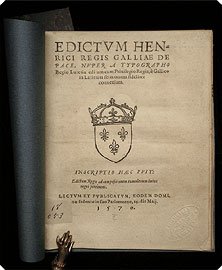
Click the image for an enlargement. WorldCat locates only three copies in North America.
• Lindsay & Neu 884; VD16 F2427. In modern wrappers. Small 19th-century library label on title-page. Pressure-stamp on title- and three other leaves; strip of heavy paper adhered to inner margin of last leaf. (3190)

 TO Part
III .
. . TO Part
III .
. . |