
 GREEK & LATIN
~ CLASSICS
GREEK & LATIN
~ CLASSICS
“The Most Perfect Specimen” — Yep, Strawberry-Hill!
GREEK & LATIN
~ CLASSICS
GREEK & LATIN
~ CLASSICS
“The Most Perfect Specimen” — Yep, Strawberry-Hill!
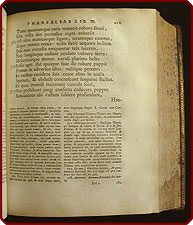
 Lucanus, M Annaeus. Pharsalia cum notis Hugonis Grotii, et Richardi Bentleii. Strawberry-Hill [Twickenham]: [Strawberry Hill Press], 1760. 4to. [2] ff., 525, [1 (blank) pp., without the “Ad Lectorem” leaf.
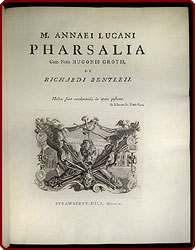
 Click the images for enlargements.
  This edition consisted of only 500 copies.
Horace Walpole (1717–97), the 4th earl of Orford, is best remembered as the author of the Gothic novel The Castle of Otranto. Among bibliophiles he is also remembered for his private press, variously known as the Officina Arbutana or the Strawberry Hill Press. Walpole's almost fantastic wealth allowed him the connoisseur's luxury of this noble enterprise, which he operated in the arena of the rebirth of fine printing in Great Britain that was being carried on by the Foulis brothers, Baskerville, and others.
Binding: Contemporary sprinkled calf with a single gilt rule framing covers, rebacked and original spine reapplied; spine with raised bands, each compartment elegantly filled with tooling and each band itself gilt-accented; complementary gilt-tooled bands at top and bottom of spine; the epitome of “gilt extra” without being gaudy. Red leather spine label lettered and ruled in gilt (“LUCAN STRAWBERRY HILL”); gilt roll on board edges and on turn-ins; marbled endpapers.
Provenance: Bookplates of Charles James Packe (British, late-19th century) and H.M. Brower (American, early- to mid-20th century).
• Hazen (1973 ed.), Bibliography of the Strawberry Hill Press, 7; Dibdin (4th ed.), Introduction to . . . Greek and Latin Classics, II, 187; ESTC T11286; Schweiger, II,565. Bound as above, corners rubbed and expertly, even beautifully, rebacked; lacks the “Ad Lectorem” leaf (only). Good paper, wide margins, only the occasional instance of offsetting or soil.  A very good copy. (25974)

 An Early
 ENGLISH TranslationLucanus,
Marcus Annaeus [Lucan]. Lvcans Pharsalia: Or the civill warres of Rome,
betweene Pompey the great, and Ivlivs Cæsar. The whole tenne bookes, Englished
by Thomas May...the second edition, corrected, and the annotations inlarged by
the author. London: Thomas Iones (pr. by Aug. Mathews), 1631. 8vo (14.5 cm,
5.75"). π1a8A–S8T2; engr.
frontis., [146] ff. [with] May, Thomas. A continvation of the subiect of Lucan’s historicall poem
till the death of Ivlivs Cæser the 2d edition corrected and amended. London:
James Boler, 1633. 8vo. A–K8(-K8); [79 of 80] ff.
ENGLISH TranslationLucanus,
Marcus Annaeus [Lucan]. Lvcans Pharsalia: Or the civill warres of Rome,
betweene Pompey the great, and Ivlivs Cæsar. The whole tenne bookes, Englished
by Thomas May...the second edition, corrected, and the annotations inlarged by
the author. London: Thomas Iones (pr. by Aug. Mathews), 1631. 8vo (14.5 cm,
5.75"). π1a8A–S8T2; engr.
frontis., [146] ff. [with] May, Thomas. A continvation of the subiect of Lucan’s historicall poem
till the death of Ivlivs Cæser the 2d edition corrected and amended. London:
James Boler, 1633. 8vo. A–K8(-K8); [79 of 80] ff.
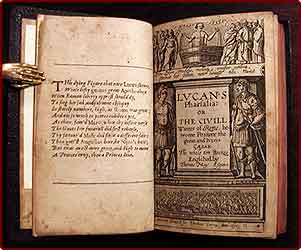
The editio princeps of the Pharsalia was printed in Rome by Sweynheym and Pannartz in 1469; Christopher Marlowe published the first English translation of any part of the Pharsalia, his rendition of the first book, in 1600, with a 1614 effort by Sir Arthur Gorges being the only other such to precede May’s standard-setting 1626 English version of books one through three.
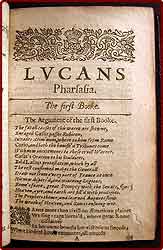 In the present volume, this great epic poem in May’s translation is
accompanied by its translator’s English rendition of his own sequel,
originally written in Latin verse. This Continuation advances the
action through Cleopatra’s seduction of Caesar (May depicts the Egyptian
queen with “snowie necke” and “golden tresses”), the
death of Cato, and various additional battles before arriving at Caesar’s
death. At the time, May’s work was thought highly enough of that Charles
I allowed the Continuation’s dedication to bear his name.
In the present volume, this great epic poem in May’s translation is
accompanied by its translator’s English rendition of his own sequel,
originally written in Latin verse. This Continuation advances the
action through Cleopatra’s seduction of Caesar (May depicts the Egyptian
queen with “snowie necke” and “golden tresses”), the
death of Cato, and various additional battles before arriving at Caesar’s
death. At the time, May’s work was thought highly enough of that Charles
I allowed the Continuation’s dedication to bear his name.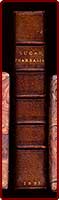
• Pharsalia: STC 16888; Schweiger, II, 567; ESTC
S108868. Continuation: STC 17712; ESTC S108892. 20th-century
black morocco in imitation of early, severe style, with raised bands from
which blind-tooling extends onto covers; spine with gilt-stamped title and
date, and turn-ins elaborately tooled in blind. Moderately worn, spine faded
not unattractively, and leather rubbed over joints. Front pastedown with bookplate,
inked date of 1986; front free endpaper with inked gift inscription dated
1944. T1-2 trimmed differently and possibly surviving from another copy;
A3 of the continuation also possibly supplied. Occasional instances of very
minor staining; mostly clean. Pleasant
on shelf and in hand.


 AGAIN Lucan English’dLucanus, Marcus. Lucan’s Pharsalia: Or the civill warres of Rome, betweene Pompey the great, and Iulius Caesar. London: Pr. by A.M. for Will. Sheares, 1635. 8vo (14.7 cm, 5.8"). π1a8A–S8T2; [310] pp. [with] May, Thomas. A continuation of the subiect of Lucan’s historicall poem till the death of Iulius Caeser. London: James Boler, 1633. 8vo. 2A–2K8; [160] pp.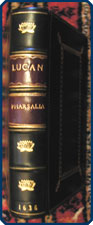
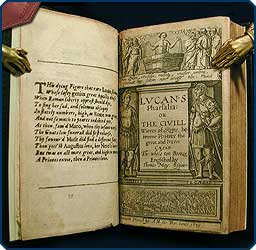
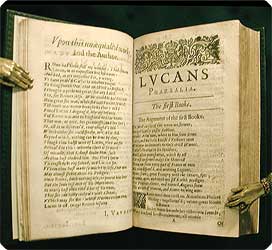 Click the interior images for enlargements.
 • ESTC S108867; STC (2nd ed.) 16889. Continuation: ESTC S108892; STC (2nd ed.) 17712. Both: Lowndes, III, 1408. Period-style calf by Grace (signed “GB” on lower back turn-in), framed and panelled in gilt rolls, spine with gilt-stamped leather title and author labels and gilt-stamped decorations in compartments. Outer and lower edges of the engraved title-page of second work shaved, touching design. Light waterstaining to upper portions of approx. 25 ff. of Continuation; small area of worming to lower inner margins of a few leaves, touching the occasional catchword but not main text.
“A Valuable Edition” —
per DibdinLucanus, Marcus Annaeus. Pharsalia, cum commentario Petri Burmanni. Leidae: Apud Conradum Wishoff, Danielem Goetval, & Georg. Jacob. Wishoff, 1740. 4to (25 cm, 9.75"). [52], 735, [1 (blank)], [160 (index)] pp.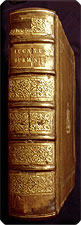
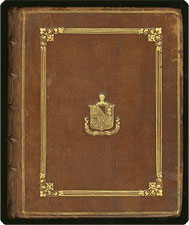
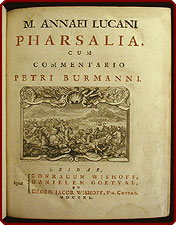
 Click the interior images for enlargements.
 Binding / Provenance: Contemporary calf, framed in gilt triple fillets and panelled in gilt quadruple fillets with gilt-stamped corner fleurons and gilt-stamped central coat of arms of the Wilder family, with the motto “Virtuti moenia cedant.”
• Schweiger, II, 565; Dibdin, II, 186–87. Binding as above, rebacked making use of most of the original spine, spine with gilt-stamped compartments and gilt-stamped leather title-label; edges worn and rubbed, portions of original spine leather cracked and chipped. Front pastedown with small abraded area; front fly-leaf with inked inscriptions dated 1834 and 1938. Some leaves with faint waterstaining in upper margins and lower outer corners.  Attractive.

 Lucan
BearingPlates
after GravelotLucanus,
Marcus Annaeus. La pharsale..... Paris: Chez Merlin, 1766. 2 vols.
I: 8vo (19.5 cm, 7.75"). Frontis., [1] f., lxxix, [1 (blank)] 304 pp., [1 (errata)]
f.; 5 plates. II: 8vo (19.5 cm, 7.75"). [1] f., 315, [1] pp., [2] ff.; 5 plts.
Lucan
BearingPlates
after GravelotLucanus,
Marcus Annaeus. La pharsale..... Paris: Chez Merlin, 1766. 2 vols.
I: 8vo (19.5 cm, 7.75"). Frontis., [1] f., lxxix, [1 (blank)] 304 pp., [1 (errata)]
f.; 5 plates. II: 8vo (19.5 cm, 7.75"). [1] f., 315, [1] pp., [2] ff.; 5 plts.
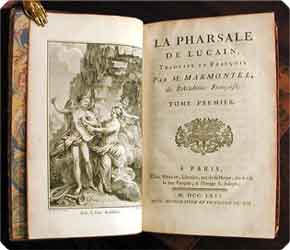
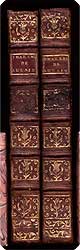 Binding:
Contemporary treed calf, spine gilt extra with badge of a
thistle in compartments; red leather labels. Marbled endpapers. All edges
red.
Binding:
Contemporary treed calf, spine gilt extra with badge of a
thistle in compartments; red leather labels. Marbled endpapers. All edges
red.
Provenance: Small booklabel of William Salloch on rear pastedown.
• Schweiger, Handbuch der classischen Bibliographie, II, 568. Cohen & DeRicci, Livres à gravure du XVIII siècle, 662. Not in Ray, The Art of the French Illustrated Book 1700–1914. Binding as above, gilt somewhat dimmed; some chipping of leather to corners and spine tips, and endpapers rubbed. Internally generally clean, with some browning from turn-ins and a few spots of soiling. Bookplate on front pastedowns.
 For more SETS, click here.
A
Simple & Workman-likeBipontine EditionLucanus,
Marcus Annaeus[Lucan]. Pharsalia ejusdem ad Calpurnium Pisonem Poemation
praemittitur notitia literaria studiis Societatis Bipontinae. Editio accurata.
Biponti: Ex typographia Societatis, 1783. 8vo (19.3 cm, 7.625"). [1] f., xxxii,
300 pp.
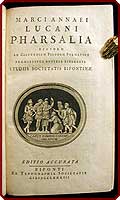 • This unassuming, rather “homey” octavo edition of 1783 was printed in Zweibrücken at the ducal printing office, noted for printing a number of fine editions of the classics. In addition to the usual preliminaries and the advertised notitia literaria, a very useful list and discussion of the editions of Lucan printed up to that point is also included in this, the first Bipontine edition of that author. The volume’s one ornament is a striking engraved vignette on the title-page that shows the head of Pompey being offered to Caesar.
• Schweiger, Handbuch der classischen Bibliographie, II, 565; Dibdin (4th ed.), An Introduction to . . . Greek and Latin Classics, I, 188. Brown paper over light boards, spine with now-illegible paper label; stained and faded, corners bumped. A little foxing and soiling on endpapers and half-title; otherwise internally clean. Bookplate with inked date on front pastedown. All edges heavily speckled red.

Lucan for the First Republic
Lucanus, Marcus Annaeus. La pharsale de Lucain.... Paris: De l’imprimerie de Crapelet, 1796. 2 vols. I: 8vo (20.5 cm, 8"). [2] ff., l, 376 pp.; 5 plts. II: 8vo (20.5 cm, 8"). [2] ff., 409, [1 (blank)] pp.; 5 plts.
First Republic
Lucanus, Marcus Annaeus. La pharsale de Lucain.... Paris: De l’imprimerie de Crapelet, 1796. 2 vols. I: 8vo (20.5 cm, 8"). [2] ff., l, 376 pp.; 5 plts. II: 8vo (20.5 cm, 8"). [2] ff., 409, [1 (blank)] pp.; 5 plts. 
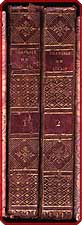
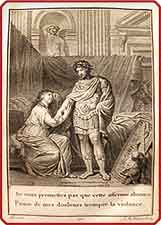
Binding: Contemporary treed calf, spines gilt extra with red labels and covers gilt-framed; gilt edges and gilt inner dentelles. Marbled endpapers in a French shell pattern. All edges gilt.
Provenance: Small booklabel of William Salloch on rear pastedown.
• Schweiger, Handbuch der classischen Bibliographie, II, 568. Cohen & DeRicci, Livres à gravure du XVIII siècle, 662. Not in Ray, The Art of the French Illustrated Book 1700–1914. Leather on spines and edges of covers dry and chipped; joints open, but sewing holding. Some closed tears to endpapers and front free endpaper of vol. I partially detached; paper generally clean with occasional spots of light browning or foxing. Bookplate on front pastedowns.  Plates clean and charming.
For more SETS, click here. For
more LUCAN, click here.
Parasites
in Apotheosis
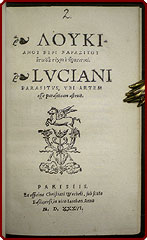
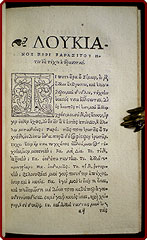
Lucianus, Samosatensis. [three lines in Greek characters
transliterated as] Loukianou Peri Parasitou, etoi hoti techne he parasitike, [then in roman
characters] Luciani parasitus, ubi artem ese parasiticam astruit. Parisiis: Ex officina Christiani
Wecheli, 1536. Small 8vo. [20] ff.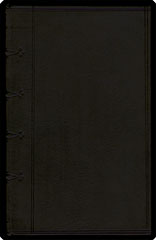
 Click the interior images for enlargements.
 Text entirely in elegant Greek and with but one woodcut initial. The printer's device of a Pegasus is on the title-page.
Rare: We find no copy in WorldCat or COPAC. Moreau locates one copy in the Anglo world, at the Morgan Library.
• Moreau, V, 228. Full dark modern calf old style, absolutely plain without labels; spine with raised bands accented with blind rules extending onto covers to terminate in trefoils, and simple blind double fillets to covers. One old numeral inked to title-page; text unmarked with paper clean and even bright, throughout. (25728)
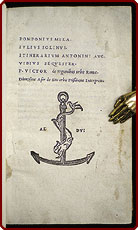
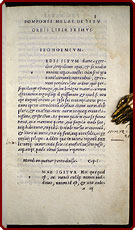
Sole Aldine Edition Mela, Pomponius. Pomponivs Mela. Ivlivs Solinvs. Itinerarivm Antonini Avg. Vibivs Seqvester. P. Victor de regionibus urbis Romae. Dionysius Afer de situ orbis Prisciano interprete. [colophon: Venetiis: In aedibvs Aldi, et Andreae soceri mense, M.D. XVIII {1518}]. 8vo (16.5 cm; 6.5"). 233, [1] ff., without the final two leaves (one blank, one with Aldine device).
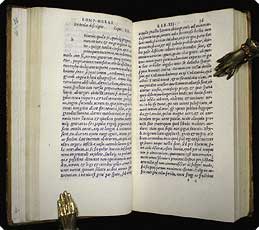 Click the images for enlargements.
 The sole Aldine edition of these works, it is also the editio princeps of Publius Victor, the second edition of Antoninus Augustus' Itinerarium, and the third edition of Dionysius in Latin.
As is to be expected, the text is in italic with spaces and guide letters provided for (unaccomplished) initials.
The register (leaf G2 recto) lists a gathering *4 that is not found here or in any known copy, so the reference would seem to be incorrect.
Binding: 18th-century English sprinkled tan calf, gilt spine extra and board edges gilt-tooled.
• Renouard, Alde, 83; Adams M1053; Schweiger, II, 607 (“seltene Ausg.”). Bound as above, small darkened spot near top of spine; joints starting to open but covers still nicely attached; without the final two leaves (one blank, one with Aldine device). Bookplate. Title-page holed at gutter, not nearing device; light waterstaining and a bit of dust-soiling to first and last leaves. Interior otherwise clean, even bright. (25876)
Ancient
Roman Commerce — LARGE
Paper Copy Mengotti, Francesco, conte. Del commercio de' romani dalla prima guerra punica a Costantino.... Padova: Nella stamperia del Seminario, 1787. 4to (29.8 cm, 11.5"). [2] ff., CXIII, [1 (blank)] pp. 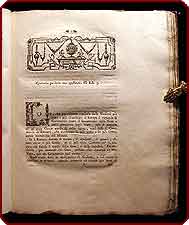
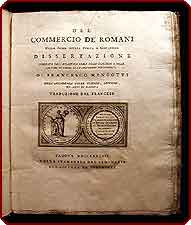 first edition includes an engraved vignette with the design for a medal honoring the author.
Single-click either image, for an enlargement.
first edition includes an engraved vignette with the design for a medal honoring the author.
Single-click either image, for an enlargement. • Goldsmiths'-Kress 13422.18. Contemporary mottled green paper over cartonneé covers: paper browned, torn, and chipped, especially along spine and edges. Uncut copy. Light soiling on deckle edges, endpapers, and title-page. Some light waterstaining in parts. Pencilled notes on front free endpaper.
Lexicographical
 Landmark
— Seriously
Polyglot!
Minsheu, John. Minshaei emendatio, vel à mendis expurgatio, seu augmentatio sui ductoris in linguas, the guide into tongues. London: John Haviland, 1627. Folio (37.6 cm, 14.9"). [4] pp., 760 columns (numbering very erratic in last few leaves).
Landmark
— Seriously
Polyglot!
Minsheu, John. Minshaei emendatio, vel à mendis expurgatio, seu augmentatio sui ductoris in linguas, the guide into tongues. London: John Haviland, 1627. Folio (37.6 cm, 14.9"). [4] pp., 760 columns (numbering very erratic in last few leaves).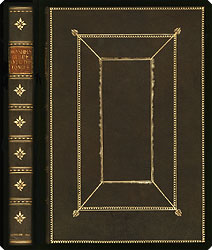
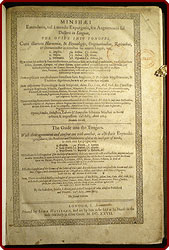
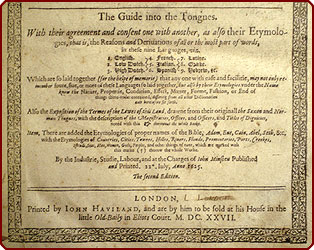 Click the interior images for enlargements.
  Latin,
Greek, and Hebrew ). The work incorporates etymology in
all nine languages; it is typographically quaint, using a variety of fonts including
black-letter.
Latin,
Greek, and Hebrew ). The work incorporates etymology in
all nine languages; it is typographically quaint, using a variety of fonts including
black-letter.
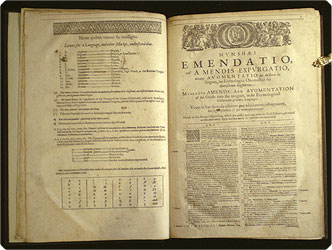
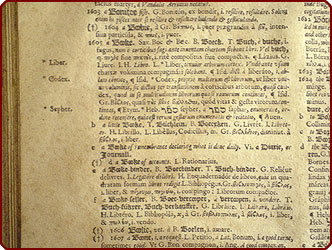
• STC (rev.) 17947; ESTC S121879; Allibone 1325; Vancil 165. On Minsheu, see: Dictionary of National Biography. Period-style morocco framed and panelled in gilt rolls with gilt-stamped corner fleurons, spine with original gilt-stamped leather title-label, gilt-ruled raised bands, and gilt-stamped decorations in compartments (signed by Grace Bindings in blind at inner area of rear cover, lower turn-in). Title-page institutionally rubber-stamped. Some age-toning and light to moderate spotting; one leaf with tear from outer margin into several lines of text, without loss; last leaf with small hole affecting a few words. (21047)
For
DICTIONARIES/GRAMMARS,
Euphony Cacophony Versification & CompLit Mitford, William. An inquiry into the principles of harmony in language, and of the mechanism of verse, modern and antient. London: Pr. by L. Hansard ... for T. Cadell and W. Davies, 1804. 8vo. xv, [1], 343 pp. (lacks the half-title).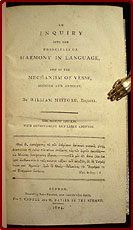
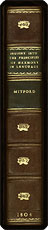 Click the interior image for an enlargement.
 • Recent quarter calf, round spine; raised bands accented with gilt beading, gilt center devices in spine compartments, and two green spine labels. Combed-pattern marbled paper sides. Lacks the half-title, only; occasional light foxing. A very good copy of an interesting and now uncommon book. (22228)
School
Text 1791 — “Muretus”
aMODEL
for StudentsMuret, Marc Antoine. Orationes, et epistolae...ad usum scolarum selectae.... Venetiis: Apud Josephum Orlandelli, 1791. 8vo (19 cm, 7.5"). 2 vols. I: xv, 359, [1] pp. II: 328 pp.

 Rare. No copies traced via NUC Pre-1956, OCLC or RLIN.
• On Muretus, see: Sandys, History of Classical Scholarship, II, 148–52. Contemporary half vellum over stencilled paper, spine with inked title; stained and paper torn with much chipping, especially on edges of covers. Ex-library with white-lettered call number on spines and, on title-pages, two different Catholic institutions’ rubber-stamps, plus the old inked ownership inscription of a Jesuit novitiate (Maryland). Ink scratches to frontispiece portrait (intentional?), and some inkstains in margins elsewhere. Lightly foxed. All edges speckled red.
The ANCIENT
ART of FISHING
Oppianus. Oppian's halieuticks of the nature of fishes and fishing of the ancients in V. books. Translated from the Greek, with an account of Oppian's life and writings, and a catalogue of his fishes. Oxford: Pr. at the Theatre, 1722. 8vo (23.3 cm, 9.125"). [4] ff., 13, [1 (blank)] pp., [1] f., 232 pp, [4] ff. 
• ESTC T139002; Schweiger, Handbuch
der classischen Bibliographie, I, 217; not in Dibdin. On Oppian, see:
Oxford Companion to Classical Literature, 395. Recent
quarter calf over marbled paper; spine gilt with a red leather title label.
A
brittle copy and some pages and gatherings now pulled loose.
A little soiling in some top margins, and a few occasions
of spotting. A few spots of very shallow chipping. Rubber-stamps from a now-defunct
library, including one on title-page. All edges speckled red.
For
Books for the BUSTED
Poëmata Embellished withLovely Engravings Orville, Pierre d'. Poëmata. Amstelaedami: Apud Adrianum Wor & Haeredes Gerardi, 1740. 8vo (22.7 cm, 9"). Added engr. title-page, [18], 291, [1] pp.


Uncommon. OCLC and NUC Pre-1956 find only four U.S. holdings.
• Brunet 13064. Contemporary vellum, covers framed and panelled in blind with blind-tooled central lozenge, spine with hand-inked title; front cover slightly warped, binding dust-soiled. Front pastedown institutionally rubber-stamped. Scattered spots of light to moderate foxing. Errata (final page) lined through in ink. (24490)
 Burman–Carey Ovid Ovidius
Naso, Publius. ... Opera, ad fidem editionis Burmannianae expressa. Londini: Rodwell & Martin et al., 1815. 12mo (13.2 cm, 5.2"). 3 vols. I: vi, 309, [1] pp. II: [4], 334 pp. III: [4], 360 pp.
Burman–Carey Ovid Ovidius
Naso, Publius. ... Opera, ad fidem editionis Burmannianae expressa. Londini: Rodwell & Martin et al., 1815. 12mo (13.2 cm, 5.2"). 3 vols. I: vi, 309, [1] pp. II: [4], 334 pp. III: [4], 360 pp.
 Click the interior image for an enlargement.
• NSTC C616; Schweiger, II, 632–33. Contemporary half calf and marbled paper–covered sides, spines with gilt-stamped titles and volume numbers; bindings showing overall rubbing and scuffing, one volume with spine head chipped. Front pastedowns each with private collector’s bookplate, institutional rubber-stamp, and pencilled notations. A few signatures at the beginning of vol. I unopened. Small areas of waterstaining to upper inner margins of first few leaves of vol. I and scattered small spots of light foxing elsewhere, pages generally clean. A nice little antiquarian set.
For more SETS, click here.
Satyricon, with Loads of Commentary Petronius Arbiter. Satyricon quae supersunt cum integris doctorum virorum commentariis; & notis Nicolai Heinsii & Guilielmi Goesii.... Amstelaedami: Iansonio-Waesbergios, 1743. 4to (26.3 cm, 10.4"). 2 vols. I: Frontis., [37] ff., 886, [2] pp.; illus. II: [4] ff., 408 pp., [66 (index)] ff. Click the image above for an enlargement.
• Brunet, IV, 575; Dibdin, II, 276–77; Schweiger, II, 725. 19th-century quarter sheep in imitation of morocco, with marbled paper–covered sides, spines with gilt-stamped titles; spines, edges, and extremities rubbed, vol. I with spot of discoloration to spine. Main title-page with shadows of pencilled numerals. Pages clean.
Bilingual
& AMERICAN Interest
 Pindarus. [two lines in Greek, romanized as] Pindaroy Periodos [then, in Latin]: hoc est, Pindari lyricorum principis, plus quam sexcentis in locis emaculati, ut jam legi & intellegi possit ... illustrati versione nova fideli .Rationis metricae indicatione certa. Dispositione textus genuina. Commentario sufficiente. Cum fragmentis aliquot
diligenter collectis. Indice locuplete, victorum, tutorum, rerum & verborum. Discursu duplici; uno de dithyrambis; altero de insula Atlantica ultra Columnas Herculis quae America hodiè dicitur. Opera Erasmi Schmidii Delitiani. [Witebergae]: sumptibus Z. Schureri, 1616. 4to. 4 parts in 1 vol. [6], 23, [1], 331, [9], 395, [9], 267, [9], 264 pp., 1 fold. table.
Pindarus. [two lines in Greek, romanized as] Pindaroy Periodos [then, in Latin]: hoc est, Pindari lyricorum principis, plus quam sexcentis in locis emaculati, ut jam legi & intellegi possit ... illustrati versione nova fideli .Rationis metricae indicatione certa. Dispositione textus genuina. Commentario sufficiente. Cum fragmentis aliquot
diligenter collectis. Indice locuplete, victorum, tutorum, rerum & verborum. Discursu duplici; uno de dithyrambis; altero de insula Atlantica ultra Columnas Herculis quae America hodiè dicitur. Opera Erasmi Schmidii Delitiani. [Witebergae]: sumptibus Z. Schureri, 1616. 4to. 4 parts in 1 vol. [6], 23, [1], 331, [9], 395, [9], 267, [9], 264 pp., 1 fold. table.


 Click the images for enlargements.
 The main text is composed of “In Pindaricam exegesin prolegomena” (pt. 1: fol. 1–5 recto); “Prolegomina de Olympiis” (pt. 1: fol. 5 verso – 12, p. 13–45); “De eidei, strophe, antisrophei [sic], epodoi, kolois, pedibus, & carminibus lyricis” (pt. 1: p. 46–51); “Pindarou Olympionikai” (pt. 1: p. 53–331; caption title p. 53); “Pindari Pythionicae” (pt. 2: p. [1–8], 1–395; half title p. [1]); “Pindari Nemeonicae” (pt. 3: p. [1-8], 1–267; half title p. [1]); “Pindari Isthmionicae” (pt. 4: p. [1–8], 1-–53; half title p. [1]); “ Catalogus victorum, qvibus eide haec scripta sunt” (pt. 4: p. 155–56); “Leipsana seu residua fragmenta scriptorum Pindari, incuria superiorum seculorum amissorum, ex diversis autoribus collecta ab E[rasmo S[chmidtio]” (pt. 4: p. 157–68); “De dithyrambis. Qvaestio in promotione XXXII. Philosophiae candidatorum d. 23. Martii Anno 1607. à M. Joachimo Jaschio proposita” (pt. 4: p. 247–55); and two indices.
• Alden & Landis 616/94; Sabin 62917; Jantz, German Baroque, 193; Schweiger, I, 235; Dibdin, Greek & Latin Classics, II, 288. Contemporary vellum. Browned copy; ex-library with bookplate and attractive rubber -stamp in margin of one preliminary leaf; old notes in an elegant hand on front and rear free endpapers. In fact a very good copy. (21201)

Prize
Binding, with the
CertificatePomey, François. Pantheum mythicum, seu Fabulosa deorum historia hoc epitomes eruditionis volumine brevitur dilucidéque comprehensa. Amstaelodami: Ex officina Schoudeniana ; Trajecti ad Rhenum: Apud J.J. a Poolsum, 1777. Small 8vo (15.5 cm; 6"). [8] ff., 298, [7] ff., 27 plts. (4 fold.).
the
CertificatePomey, François. Pantheum mythicum, seu Fabulosa deorum historia hoc epitomes eruditionis volumine brevitur dilucidéque comprehensa. Amstaelodami: Ex officina Schoudeniana ; Trajecti ad Rhenum: Apud J.J. a Poolsum, 1777. Small 8vo (15.5 cm; 6"). [8] ff., 298, [7] ff., 27 plts. (4 fold.).
 27 plates, four of which are folding. The text is edited by Samuel Pitiscus (1637–1727).

Provenance: With the printed and folding ex-proemium of J.J.S. van Goltstein van Hoekenburg, Jan. 1819.
• DeBacker-Sommervogel, VI, 976. Binding as above. All edges marbled. A very good copy; text block very slightly skewed in binding.
Long the Standard in its Field — Many Illustrations Potter, John. Archaeologia graeca or the antiquities of Greece. The fifth edition. London: Ja. & Jo. Knapton, R. Knaplock, J. & B. Sprint, et al., 1728. 8vo (19.8 cm, 7.75"). 2 vols. I: iv, [4], 464, [28 (index)] pp.; 2 fold. plts., 7 plts. II: [4], 420, [36 (34 index, 2 adv.)] pp.; 9 fold. plts., 13 plts.


 Click the images for enlargements. illustrated with 31 copper-engraved plates (11 folding) depicting temples, theatres, wrestlers and other burly athletes, armor, military maneuvers, ships, and elephant- and horse-drawn war carriages; the title-pages are printed in red and black, and the text is ornamented with head- and tailpieces in addition to decorative capitals.

 Present here under a handsome headpiece is a vigorous two-page note from "THE BOOKSELLERS TO THE READER," explaining why first editions are not always to be preferred and why some editions may not be among the trustworthy!


WORLD MYTHOLOGY — 8 Vols. & Thousands of Entries Pozzoli, Giovanni; Felice Romani; Antonio Peracchi, et al. Dizionario storico-mitologico di tutti i popoli del mondo. Livorno: Stamperia Vignozzi, 1824–28. 8 vols. 8vo (21 cm, 8.25"). I: 580 pp. II: 581–1163, [1] pp. (pp. 1057–64 repeated in place of pp. 1065–72). III: [1165]–1708 pp. (pagination 1551–52 repeated, 1687–88 skipped). IV: [1709]–2342 pp. V: 2351–3086 pp. (pagination skips 2519–26). VI: 3087–3855 pp. (pagination skips 3407–08). VII: 576 pp. VIII: 577–1074 pp.

 Click the middle and right hand-images for enlargements. Jewish, Greek, and Roman antiquities. The foundation of the work was François Noel's Dictionnaire de la Fable; copious additions and corrections were made by Pozzoli, Romani (the famed poet, scholar, and librettist for La Scala), and Peracchi (another librettist). The resulting encyclopedic endeavor was originally published from 1809–27 under the title Dizionario d'ogni mitologia e antichità incominciato, according to Graesse and Brunet, who both give Pozzoli's first name as Girolamo.
This set includes two volumes of supplemental text, adding a number of entries. The first edition was followed by two volumes of supplemental plates, not present here and not called for: Graesse describes this edition as “sans grav.”
The pagination is erratic in a number of places; there is a numbering gap from 2342 to 2351 between vols. IV and V, but the text and signatures are uninterrupted.
Uncommon: OCLC locates only two U.S. institutional holdings of this second edition.
Provenance: Most volumes with small inked ownership inscription in an outer margin: “G.R.W.” the mark of William Rollinson Whittingham (1805–79), fourth Episcopal Bishop of Maryland and an enthusiastic book collector.
• Brunet, IV, 851; Graesse, V, 429. Not in Sabin. Contemporary half binding, recently rebacked with tan paper, spines with printed paper labels; boards rubbed and faded with small chips, one vol. with front cover waterstained. Foxing almost throughout, generally no worse than moderate; light waterstaining in upper margins of vol. I; one leaf in vol. VII with lower outer portion torn away, with loss of words from about 18 lines on each side. Vol. II with printer's error replacing pp. 1065–72 with duplicates of pp. 1057–64; pagination erratic in other places. Most vols. with ownership mark as above; vol. VI with one pencilled and one inked marginal annotation. (25862)
ANOTHER
Dutch Prize . . .Propertius, Sextus. Sex. Aurelii Propertii elegiarum libri IV. Trajecti ad Rhenum: Barth. Wild, 1780. 4to (26.3 cm, 10.4"). [10], xiv, [2], 990 (i.e., 996; pagination repeats 627–32), [2] pp. 


Binding/Provenance: Prize binding of contemporary vellum, covers framed and panelled in gilt rolls with gilt-stamped corner fleurons and gilt central vignette with the crest of the city of Amsterdam, spine with gilt-ruled raised bands and gilt-stamped decorations in compartments. The partially printed, partially inscribed, bound-in prize certificate reads “Ingenuo magnaeque spei adolescenti, Henrico Gerteler propter insignes in artibus humanioribus progessus, in classe tertia . . . Quod testor R. v. Ommeren [/] Gymnasii publici Amstelaedamensis Rector,” dated 1791.
• Brunet, IV, 905; Dibdin, I, 385–86; Graesse, V, 460; Sandys, II, 455; Schweiger, II, 831. Binding as above, vellum slightly darkened, lacking ties; spine with gilt dimmed and traces of a now-absent label and inked call number at foot of spine. Lower edges with institutional rubber-stamp; title-page with shadow of a pencilled numeral. Front free endpaper with paper adhesions from a now-absent bookplate; back pastedown with rubber-stamp and small adhesion. Pages clean save for offsetting to upper margins of a few, from a laid-in slip.
 TO Part VI TO Part VI |