 PROVENANCE!
 . . . the history of ownership of an object . . .
PROVENANCE!  Once Thought to Be by
 Benjamin Franklin
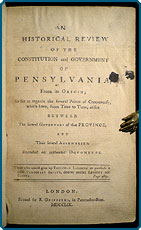
  Jackson, Richard. An Historical Review of the Constitution and Government of Pensylvania [sic]. London: Pr. for R. Griffiths, 1759. 8vo. viii pp., [9] ff., 444 pp.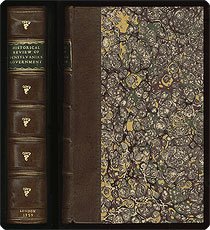
 Click the images for enlargements.
 This was long most commonly attributed to Benjamin Franklin, but recently, on the basis of new scholarship, authorship has been ascribed to Richard Jackson, a London barrister and colonial agent with whom Franklin collaborated in other publications. Franklin and his son, William, certainly supplied many of the materials that formed the basis of the book, which was published during Franklin's first mission to England.
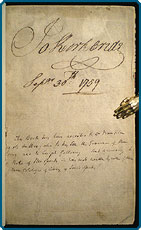
Provenance: Large signature of “Jo. Kirkbride” dated “Septr 30th 1759" on front free endpaper.
Manuscript additions: Under this ownership signature, in a later, much smaller hand, are five lines of speculation as to the work's authorship; a date is corrected on p. 263. Between leaves B3 and B4, a leaf is bound in containing, on its two sides, a handwritten “List of Governors of Pennsylvania — continued”; this, with one addition to the printed list on p. 262, takes the chronology through John W. Geary, inaugurated in 1867.
• Sabin 25512 (noting that the editor of the second edition (Philadelphia, 1812) “had no doubt as to [Franklin's] authorship” and supplied his name); Sparks, Franklin, III, 109 (affirming that the volume “was prepared under [Franklin's] direction, and doubtless from copious materials furnished by him”); ESTC T117618. Recent quarter calf, old style, with raised bands accented with gilt beading on each band, a gilt center device in each spine compartment, and a green leather title label. Boards covered with a stone pattern marbled paper. Title-page with two old ink blots; text lightly and uniformly age-toned. Inscriptions/additions as noted. (25085)

English Incunable Leaf — Crucifixion WoodcutJacobus de Voragine. Golden legend [single leaf]. [Westmynster: Wynkyn de Worde, 1498]. Small folio (27.5 cm; 10.5"). [1] f. .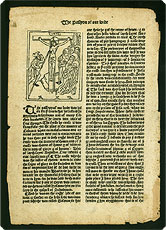
 Click the images for enlargements.
 The text is printed in double-column format in English gothic type. The printer, Wynkyn de Worde (a.k.a., Jan van Wynkyn) was England's first typographer and worked with William Caxton, England's first printer. In 1495, he took over Caxton's print shop, but only after a difficult three-year litigation following Caxton's death in 1491.
Provenance: Sold by Dauber & Pine (NY), the firm having dismembered an incomplete copy of the work and offered the individual leaves each with a letter-press leaf serving as ad hoc title-page.
English incunable leaves with woodcuts are increasingly difficult to obtain. That this Golden Legend leaf bears the image at the heart of its matter makes it a particularly desirable one.
• STC (rev. ed.) 24876; ESTC S103597; Duff 411; Copinger 6475; Goff J-151. Irregular in the margins and the recto of the leaf with old ink crossing out. The page with the woodcut in very good condition. (24601)

Hoe
Copy — BalladsBeautifully
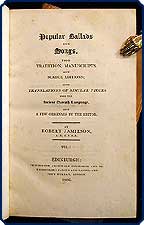
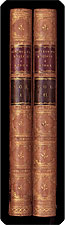
BoundJamieson, Robert. Popular ballads and songs, from tradition, manuscripts, and scarce editions; with translations of similar pieces from the ancient Danish language, and a few originals by the editor. Edinburgh: Archibald Constable & Co. (pr. by J. Ballantyne & Co.), 1806. 8vo (22.2 cm, 8.75"). I: [6], ii, xix, [1], 352 pp. II: [4], iii, [1], 409, [5] pp.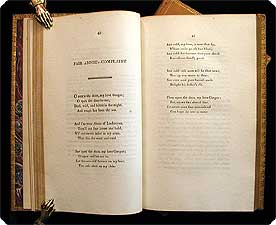
 Single-click either image for an enlargement.
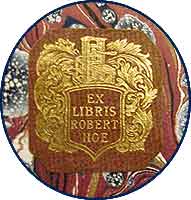
 Provenance: Hoe copy, with morocco “Ex libris Robert Hoe” bookplates on both front
pastedowns.
Provenance: Hoe copy, with morocco “Ex libris Robert Hoe” bookplates on both front
pastedowns.
Binding: 19th-century gold calf with covers framed in double gilt fillets, turn-ins gilt-stamped, marbled endpapers. Spines gilt-tooled and with gilt-stamped title and volume labels. All page edges gilt.
• NSTC J236. Leather showing moderate acid-spotting, with some cracking over the spine (one label repaired). One leaf with short tear from bottom edge; pages with a very few scattered spots of foxing only.  A very handsome set.


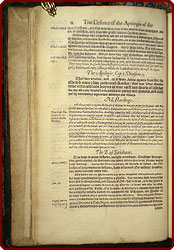
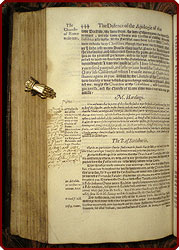
Contentious Counterpoint — Contemporary Binding Jewel, John. A defence of the apologie of the Churche of Englande conteininge an answeare to a certaine booke lately set foorthe by M. Hardinge, and entituled, A confutation of &c. London: Henry Wykes, 1567. Folio (30.9 cm, 12.1"). [24], 742, [6] pp. (title-page in facsim., pp. 675/76 lacking; pagination erratic).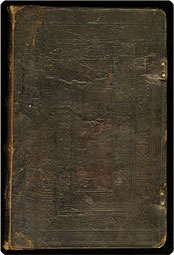
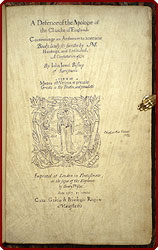
 Click the interior images for enlargements.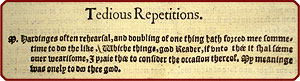
Binding: Contemporary calf over heavy boards, panelled and framed in blind with floral, geometric, and armorial blind-tooling within panels; a pencilled note on the front free endpaper says, “Richardson binding.” There once were clasps, now lost.
Provenance: Title-page with small inked inscription, dated 1836, of Charles Nice Davies (1794–1842), a Welsh linguist, librarian at the Congregational Library, and divinity tutor at Brecon College.
• STC (2nd ed.) 14600.5; ESTC S112182. Bound as above, rebacked preserving original spine; leather cracked, edges and extremities rubbed, clasps now lost, hinges (inside) reinforced some time ago. Institutionally rubber-stamped on lower closed page edges, front pastedown, and first contents page. Title-page provided in early pen and ink facsimile, with inscription as above; last text page with commentary on the book's age, dated 1724 and 1913. Early inked underlining and marks of emphasis throughout; occasional marginalia, two pages dealing with women and the Church having extensive annotations. Pp. 675/76 lacking. One leaf with tear from upper margin extending into three lines of text, without loss; one leaf with large chip from lower margin, not affecting text. Scattered spots of staining only — a clean, strong volume. (24511)
“My
Legs A-Bein' Queer,
They Never Let Me
Walk”
Johnson, Maurice.
 Songs
of a cripple. New York: Grafton Press, © 1909. 12mo
(15.5 cm, 6.1"). Frontis., xi, [1], 103, [1] pp.; 5 plts.
Songs
of a cripple. New York: Grafton Press, © 1909. 12mo
(15.5 cm, 6.1"). Frontis., xi, [1], 103, [1] pp.; 5 plts.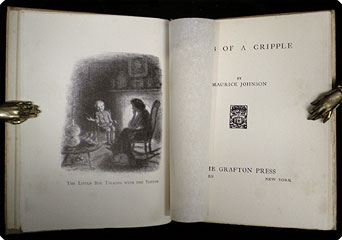
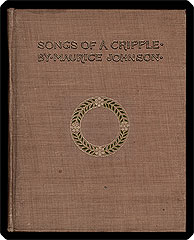 Click the images for enlargements.
 Signed by the author: With tipped-in typed sheet bearing inspirational message, signed in pencil. Also tipped in is a photograph of the author inan early motorized wheelchair.
• Publisher's tan cloth, front cover with gilt-stamped title and gilt and green laurel wreath, spine with gilt-stamped title and a little sunned; touches of rubbing and some pages with light to moderate spotting. A nice copy. (26621)
 Irish Insurgency — American Imprint & Provenance Jones, John, of Dublin. An impartial narrative of the most important engagements which took place between His Majesty's forces and the insurgents, during the Irish Rebellion, in 1798; including very interesting information not before published. Carefully collected from authentic letters. Second edition, with additions and corrections. South Newberlin, NY: Levi Harris, 1834. 12mo (18.3 cm, 7.2"). Frontis., 227, [1] pp.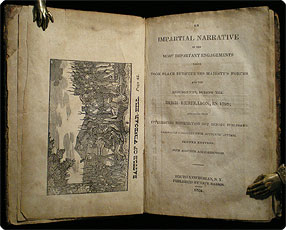
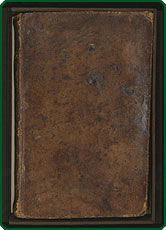 Click the interior image for an enlargement.
 Provenance: Inked inscriptions of James Mack of Windham, VT (1784–1860) on front free endpaper and rear fly-leaf. Although both inscriptions are dated 1840, one gives “Col. James Mack” and the other “Major James Mack.”
• American Imprints 25154. Contemporary treed sheep, spine with gilt-stamped leather title-label; joints, edges, and extremities rubbed, spine leather darkened and cracked, boards very slightly sprung. Inscriptions as above. Light to moderate age-toning and foxing, more pronounced to frontispiece and title-page. Now housed in a cloth clamshell case with gilt-stamped leather spine label. (25116)

His
Surviving Oratory
&
The FIRST
BIBLIOGRAPHY
Printed
in the New World
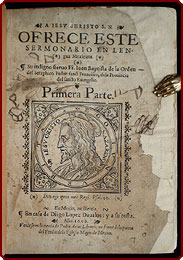
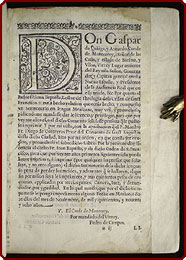
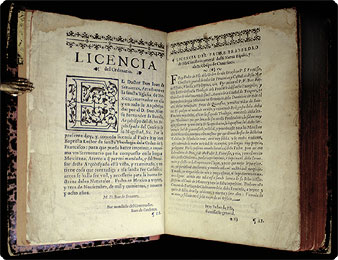
Juan Bautista, fray. A Jesu Christo S.N. ofrece este sermonario en lengua mexicana ... Primera parte. Mexico: En casa de Diego Lopez Davalos, 1606. 4to (21.5 cm; 8.5"). [26] ff., pp. 1–559, ff. 560–99, pp. 600–39, ff. 640–47, pp. 648–55, 664–709, [1] p., [20 of 24] ff., lacks final 4 leaves.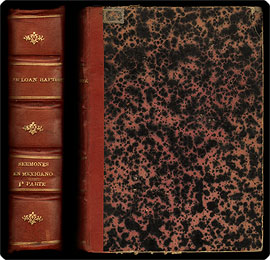
 Click the images for enlargements.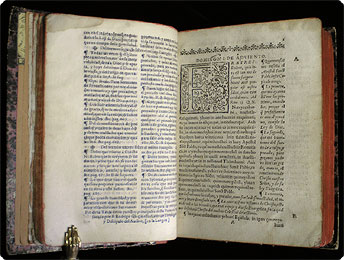
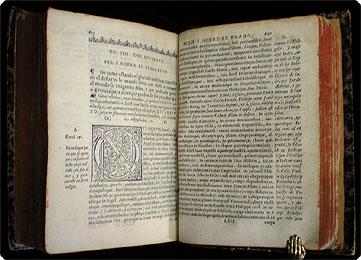
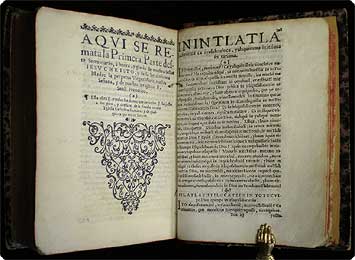
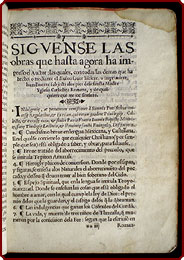
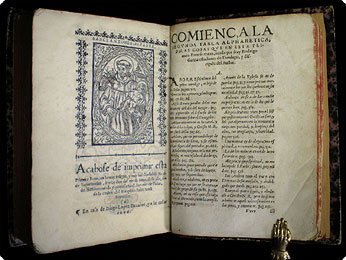
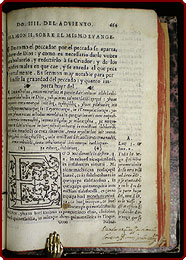
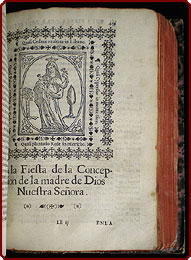
A long unnoticed feature of this book is that it contains the first bibliography published in the New World. On signature **iiii recto and verso is a list of “las obras que hasta agora ha impesso el Auctor” (“the works that until now the author has had published”). The list is not in chronological order nor is it alphabetical by title; nonetheless it is a bibliography and supplies us with information now known only because of its inclusion here. Of the 17 items listed, several have failed to survive in any known copy, including the second part of this sermonario — though at the time of publication of this part one, “de la segunda parte esta ya impresso gran pedaço” (“of the second part a large portion is already printed”).
The volume is enhanced by  half-page woodcuts: here, Christ's portrait profile on the title-page, St. Andrew with his Cross, St. Anne with the Virgin as infant (appearing twice), and St. Anthony of Padua. The text is in roman with side- and shouldernotes in italic type. Printer López Dávalos employs an interesting set of very large (5 x 5 cm; 2" x 2") foliated woodcut initials throughout the volume.
Provenance: 18th-century signature in a few margins of Carlos Perez; late 19th- or early 20th-century bookplate of Nicolás León; in the collection of the John Carter Brown Library (deaccessioned).
• Medina, Mexico, 227; García Icazbalceta, Lenguas, 13; H. de León-Portilla, Tepuztlahcuilolli, 342; Viñaza 114; Newberry Library, Ayer Indians, Nahuatl-21; Pilling, Proof-sheets, 235; Palau 23467; Putick & Simpson 154; Schwaller 11. For biographical information on Bautista, see: Archivo biográfico de España, Portugal, e Iberoamérica, fiche 104, frames 339–73. Late 19th-century quarter red Mexican sheep with purple and black mottled paper sides. Title- and following leaf with irregular foremargins, loss of blank areas of old repaired; waterstaining in margins of early leaves. Some worming in text costing letters here and there but not impeding sense for the reader. Last four leaves, one bearing an illustration of the Crucifixion, absent (i.e., from the section of Bible citations used in the sermons); last leaves present a bit chipped/gnawed at lower corners and one fore-edge. Old marca de fuego eradicated from top edge; all edges red and corners elegantly rounded. Some 18th-century marginalia in Spanish explicating words and phrases in the Nahuatl text. (26393)

 NO! Copies of the BOOK in the U.S. Justinianus. A leaf from the Digestum vetus. Venice: Andreas Torresanus, de Asula, 26 March 1491. Folio (42.5 cm; 16.625"). [1] f.
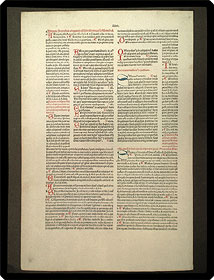 Click the image for an enlargement. In 1479 Torresano acquired the fonts of Nicholas Jenson and in 1505 he acquired Aldus Manutius as a son-in-law!
In the U.S., both Goff and the ISTC only locate only stray leaves of this text: two at Stanford and one at Illinois.
Provenance: Clearly once part of a offering of The Foliophiles Incorporated, and probably from its ad hoc album Pages from the past : a collection of original leaves from rare books and manuscripts [New York: T.F.I., c1926–27].
• ISTC ij00554000; Goff J554; H 9556*; GKW 7675; Pr 4725; BMC, V, 309. Mounted on a brown cardboard backing, with a description (but no bibliographical information) on the verso of the board. Leaf in very good, bright condition. (27100)
In Latin, Printed at The HagueJuvenalis, Decimus Junius, & Aulus Persius Flaccus. D. Iun. Iuvenalis et Auli Persii Flacci Satyrae. Hagae Comitum: Apud Arnoldum Leers, 1683. 12mo (14 cm, 5.5"). 189, [1 (blank)] pp.
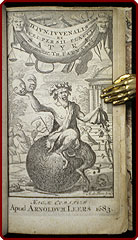
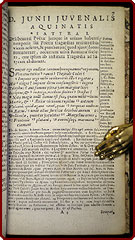 Click the images for enlargements. apparently the first printing at The Hague of any Latin Classic(s) in their original Latin.
Juvenal was a Roman poet of the early second century A.D. His Satires are a standard of the genre, eloquent, humorous, and rhetorically polished, but revealing a very bitter man. Persius (a.d. 34–62), was a gentler soul than Juvenal, and his poems are more Stoic sermons than satires, preaching a moral life during one of Rome's more corrupt periods and doing so, most remarkably, without a hint of self-righteousness. The two Satyrae are often published together, in contrast and comparison.
This is the first printing at the Hague of this edition with Farnaby's notes, originally printed at London in 1612 and then reprinted in Amsterdam in 1630. The emblematic engraved title-page here was done by A. de Blois; the separate title-page for Persius bears the printer's device.
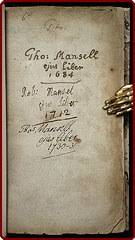
Provenance: Front fly-leaf with three generations of early, dated, inked ownership inscriptions: Thomas Mansell, first Baron Mansel (1684); Robert Mansel (sic, 1712); and Thomas Mansell (1730–31).
• Brunet, III, 631; Graesse, III, 520; Morgan, Bibliography of Persius, 298; Schweiger, I, 511. Recent marbled paper–covered boards, spine with gilt-stamped leather title-label. Front fly-leaf darkened and engraved title a littlevery little tattered at edges, the first with inscriptions “stacked” as above and the second with old repair. Pages gently age-toned and generally clean, with all edges red. (25952)
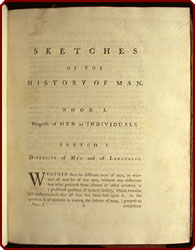
One of Those Wonderfully AMBITIOUS!18th-Century “Sketches”Kames,
Henry Home, Lord. Sketches
of the history of man. Edinburgh: W. Creech, W. Strahan, & T. Cadell,
1774. 4to (27.5 cm, 10.9"). 2 vols. I: xii, 519, [1 (blank)] pp. II: [4], 507,
[1 (blank)] pp.
Wonderfully AMBITIOUS!18th-Century “Sketches”Kames,
Henry Home, Lord. Sketches
of the history of man. Edinburgh: W. Creech, W. Strahan, & T. Cadell,
1774. 4to (27.5 cm, 10.9"). 2 vols. I: xii, 519, [1 (blank)] pp. II: [4], 507,
[1 (blank)] pp. 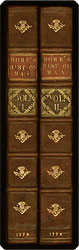
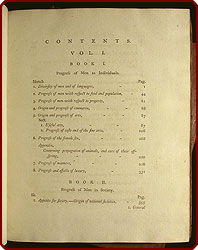 Click the images for enlargements.
 Provenance: Front pastedown with bookplate “De la bibliotheque de F. Freudenreich.”
• ESTC T48434; Alston, III, 308; Goldsmiths’-Kress 11089; Sabin 32702. Contemporary speckled calf, neatly rebacked preserving original gilt-stamped leather title and volume labels, spines with gilt-stamped thistle decorations; edges and corners rubbed, sides showing small scrapes and discolorations. Residue on pastedowns from sometime removal of bookplates. Pages age-toned, with occasional small spots, and offsetting from binding to in margins of first and last few leaves. All edges speckled.
 For more SETS, click here.
“Oh,
what terrible sights met my view!”
Kelly, Fanny. Narrative of my captivity among the Sioux
Indians. Hartford, CT: Mutual Publishing Co., 1871. 8vo. Frontis., 285, [1] pp., 11 plts.
For more SETS, click here.
“Oh,
what terrible sights met my view!”
Kelly, Fanny. Narrative of my captivity among the Sioux
Indians. Hartford, CT: Mutual Publishing Co., 1871. 8vo. Frontis., 285, [1] pp., 11 plts.
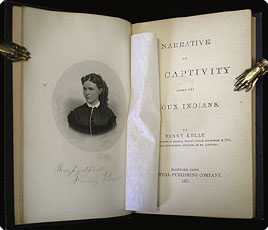 Click the images for enlargements.
 A later issue of the first edition, with a different title-page but printed from the same stereotype plates as the first edition, which was published in Cincinnati in 1871.
Provenance: “Presented by / D. Johnstone to his / son Washington. / Brantford Setp. 12 '77.”
• Howes K62; Newberry Library, Indian Captivities, 170; Graff 2296. Publisher's blue cloth, salmon endpapers, title in gilt on spine with top and bottom of spine pulled; blind-stamped image of an Indian within borders on each cover, covers spotted. Interior clean and with remarkably little foxing; indeed, this appears only (and minimally) to the frontispiece. (25972)

 One of Only 20 Sets — Splendidly Bound
La Fontaine, Jean
Louis. Oeuvres complettes de J. La Fontaine.... A Paris: de l'imprimerie de Crapelet, Chez Lefèvre, libraire, 1814. 8vo. 6 vols.
One of Only 20 Sets — Splendidly Bound
La Fontaine, Jean
Louis. Oeuvres complettes de J. La Fontaine.... A Paris: de l'imprimerie de Crapelet, Chez Lefèvre, libraire, 1814. 8vo. 6 vols.
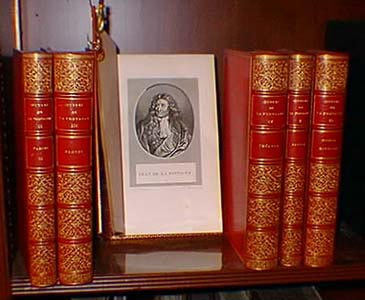
 This set carries the bookplate of French collector Louis Mercier.
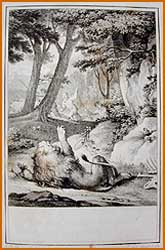
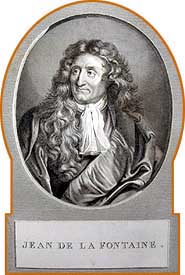
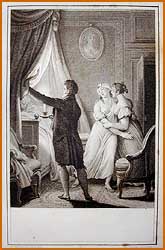
 Luscious.
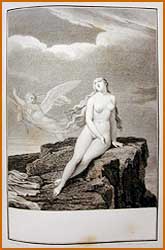
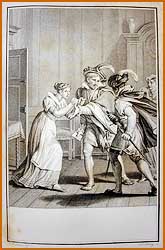
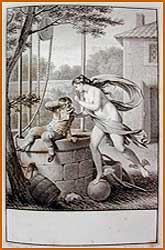
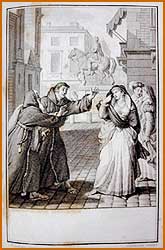 A fine set of a scarce and beautiful edition.
For more SETS, click here.
A fine set of a scarce and beautiful edition.
For more SETS, click here.
“Oriental” Romance for CT SubscribersLanghorne, John. Solyman and Almena: an Oriental tale. East Windsor, Conn.: Pr. by Luther Pratt, 1799. 12mo. 168 pp.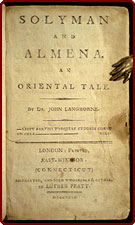
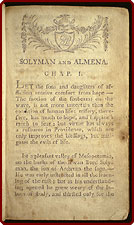
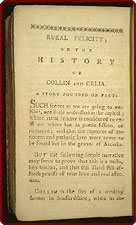
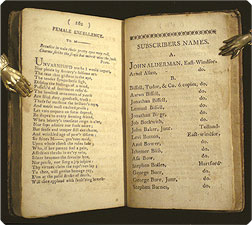 Click the images above for enlargements.
 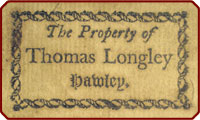 Provenance: Bookplate of Thomas Longley (Hawley).
We find seven copies reported in libraries, ALL between Worcester/Providence and Washington, D.C.
• Evans 35710; Trumbull, Connecticut, 2313; ESTC W3365. Old calf with remnants of black leather spine label; leather with one gouge to back cover and a bit abraded overall. Tear and chip to front free endpaper; title-page with tiny edge tears. Small wormhole at base of initial three leaves, not touching print. Some leaves extruded with shallow tattering. Bookplate as above on front free endpaper. Offsetting from leather of cover and a brown blot or stain at outer margin of title- and following page; same offsetting to last leaves; some general staining and an ink "x-mark" in margin of one other page. This seems to have been read with enthusiasm! (20994)
Exploring One of those “Lesser Paths” of History“One Hundred Illustrations”Larwood, Jacob, & John Camden Hotten. The history of signboards, from the earliest times to the present day... sixth edition. London: John Camden Hotten, 1867. 8vo (18.8 cm, 7.4"). Col. frontis., x, 536 pp.; 19 plts.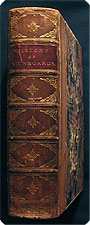
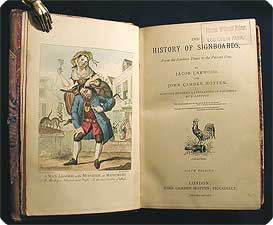
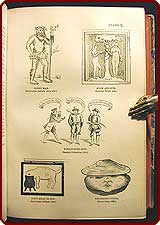 Click the interior images for enlargement.
Provenance: Title-page stamped by a private collector: “Thomas Witherell Palmer, Log Cabin Park” (Detroit).
• Contemporary half calf with marbled paper–covered sides, spine with gilt-stamped leather title-label and ornate gilt-stamped decorations within compartments; binding with light to moderate rubbing overall, with spine leather starting to show some cracking. All edges stained red. Delightful reading and looking, and a delightful copy.

Quaker
Meditations —
A Neat Compendium Two
Women in the Contents —
Womanly Provenance, Too
[Law, William].
An extract from a treatise on the spirit of prayer, or the soul rising out of
the vanity of time into the riches of eternity. With some thoughts on war. Remarks
on the nature and bad effects of the use of spirituous liquors. And considerations
on slavery. Philadelphia: Joseph Crukshank, 1780. 12mo (16.3 cm, 6.45"). 84
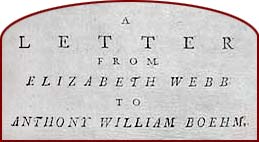
pp. [bound with] Webb,
Elizabeth. A letter...to Anthony William Boehm, with his answer.
Philadelphia: Joseph Crukshank, 1783. 44 pp. [with]
[Benezet, Anthony]. In the life
of the lady Elizabeth Hastings... [Philadelphia: Joseph Crukshank, 1784]. 8
pp.
Two
Women in the Contents —
Womanly Provenance, Too
[Law, William].
An extract from a treatise on the spirit of prayer, or the soul rising out of
the vanity of time into the riches of eternity. With some thoughts on war. Remarks
on the nature and bad effects of the use of spirituous liquors. And considerations
on slavery. Philadelphia: Joseph Crukshank, 1780. 12mo (16.3 cm, 6.45"). 84
pp. [bound with] Webb,
Elizabeth. A letter...to Anthony William Boehm, with his answer.
Philadelphia: Joseph Crukshank, 1783. 44 pp. [with]
[Benezet, Anthony]. In the life
of the lady Elizabeth Hastings... [Philadelphia: Joseph Crukshank, 1784]. 8
pp. 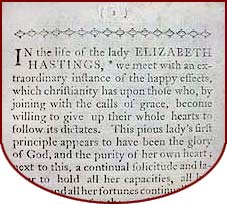
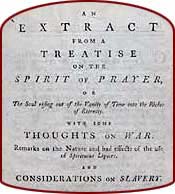
 Elizabeth Webb, "an acknowledged minister among the people called Quakers," first encountered Prince George of Denmark's chaplain Boehm while on a visit to Great Britain; the missive with which she opened her subsequent correspondence with him, here, greatly inspired him and a number of his friends.
Provenance: With
inscription
reading "Miss Hannah Amelia Moore / Book a Present from her worthy / Friend Ruth
Patton / 1789."
Progressive Charity Lesley, Susan I. [cover title] Suggestions to ward visitors. A paper read by Susan I. Lesley, before the visitors of the Seventh Ward. October 27th, 1879. Philadelphia: McCalla & Stavely, printers, 1879. 8vo. 24 pp.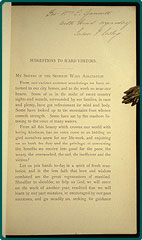 Click the image to the right
 Provenance: Inscribed by the author to William C. Gannett, at top margin of p. [1]. Gannett spent three years in the 1860s working among freedmen in the South; he was afterwards to become a Unitarian minister and pastor of the church where Susan B. Anthony worshipped.
• Original dark blue wrappers. A couple of tiny tears at top edge of front cover. Very good. (20940)
“A Short & Easy Method with theDeists”
Leslie, Charles. A short and easy method with the deists:
wherein the certainty of the Christian religion is demonstrated, by infallible proof from four rules, which are incompatible to any imposture that ever yet has been, or that can possibly be. In a letter to a friend. Windsor, VT: Pr. by T.M. Pomroy, 1812. 12mo. 168 pp.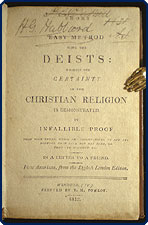
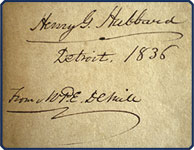 Click the title page image for an enlargement.
 Provenance: Property, in 1836, of Henry G. Hubbard of Detroit.
• Shaw & Shoemaker 25848. Contemporary sheep. Spine with compartments divided by gilt rules. Leather much rubbed with a little chipping. Browning from turn-ins onto endpapers and title-page. Top margins closely trimmed with loss of page numbers in some places. Inked ownership inscriptions on recto of front free endpaper and title-page. (5442)
 Collection of UncommonScientific “Catechisms” Lewis, William Greatheed. A catechism of hydrostatics; on a new plan ... to which is added, an etymological and pronouncing vocabulary of the technical terms [with 6 others as below]. London: Thomas Dolby, 1825. 12mo (13.5 cm, 5.3"). Frontis. (incl. in pagination), 60 pp.; illus. [with the same author's] A catechism of pneumatics. London: Thomas Dolby, 1825. 12mo. Frontis., 59, [1] pp.; illus. [and] A catechism of hydraulics. London: Thomas Dolby, 1825. 12mo. Frontis., 53, [1] pp.; illus. [and] A catechism of optics. London: Thomas Dolby, 1825. 12mo. 72 pp.; illus. [and] A catechism of acoustics. London: Thomas Dolby, 1825. 12mo. [2], [v]/vi, [5]– 42 pp.; illus. [and] A catechism of magnetism. London: Thomas Dolby, 1825. 12mo. Frontis. (incl. in pagination), 40 pp.; illus. [and] A catechism of electricity. London: J. Robins & Co., 1827. 12mo. [2], v/vi, [5]–46, [8] pp.; illus.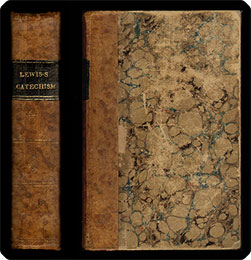
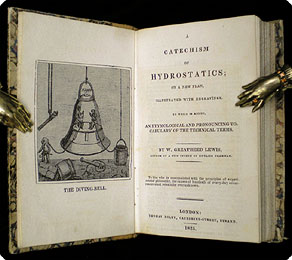
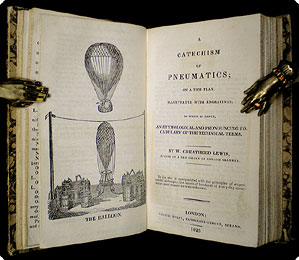
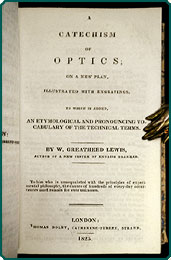 Click the images for enlargements. SEVEN JUVENILE scientific textbooks from Lewis's “Catechisms of the Arts and Sciences” series, six of which areunrecorded by OCLC in any edition (the first edition of the first work is held by one U.S. institution, under the title A Cathechism [sic] of Hydrostatics). Lewis was best known in his day for his Grammar of the English Language and for his imprisonment on charges of sedition; here he freely acknowledges acting more as a compiler than an author, but proudly proclaims the originality and usefulness of the “Etymological and Pronouncing Vocabulary” found in each of these introductions to scientific topics.
In addition to the vocabularies, each work features a number of wood-engraved, in-text illustrations, and four include a frontispiece.
Provenance: Signature on front free endpaper of “Horace Adams / Lowell / Mass.”
• Not in NSTC. Contemporary quarter mottled calf and marbled paper–covered sides, spine with gilt-stamped leather title-label; moderately rubbed overall, but solid and sturdy. Front free endpaper with early inked ownership inscription. Electricity with upper outer corners of title-page and first few leaves ink-stained, occasional light offsetting elsewhere, pages otherwise clean. Some leaves closely trimmed at bottom edges.  A charming compendium of scientific instruction, illustrated. (26678)
Humane Understanding Locke, John. An essay concerning human understanding ... the seventh edition, with large additions. London: A. & J. Churchill and S. Manship, 1715;
J. Churchill & Samuel Manship, 1716. 8vo (20.1 cm, 7.9"). 2 vols. I: [32], 371, [1 (blank)] pp. (lacking frontis.) II: [16], 340, [28] pp. 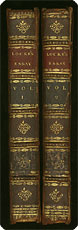
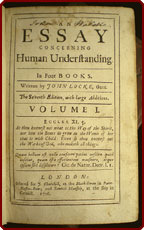 Click the interior image for an enlargement.
 Provenance: Each front pastedown with the armorial bookplate and title-page with the early inked ownership inscription of John Waldie. A blue paper slip below the bookplate shows that this was shelved with “Natural History, Science &c.” being “No. 64.”
• ESTC T65491; NCBEL, II, 1837; Printing & the Mind of Man 164. Contemporary speckled calf, covers framed and panelled in blind with blind-tooled corner fleurons, spines with gilt-stamped leather title and volume labels, gilt-ruled raised bands, and gilt-stamped decorations in compartments; front joints cracked, back joints starting, leather chipped at spine extremities and rubbed along board edges, spines with faint traces of inked call numbers visible. First text pages each with stamped numeral in lower margin; lower edges institutionally rubber-stamped; one back free endpaper with slip. Frontispiece of vol. I lacking. Occasional early marks of emphasis in margins, some inked and some pencilled; one pair of leaves with rough edges from awkward cutting. Occasional light spotting, pages generally clean. One page with lower outer corner torn away, not touching text. Last index page adhered to back free endpaper. Actually, attractive!
For more SETS, click here.
Separation of Church & State — RELIGIOUS LIBERTYFirst Collected Edition Locke, John. Letters concerning toleration. London: A. Millar, H. Woodfall, I. Whiston & B. White, I. Rivington, et al., 1765. 4to (29.5 cm, 11.6"). Frontis., [8], 399, [1 (blank)] pp.
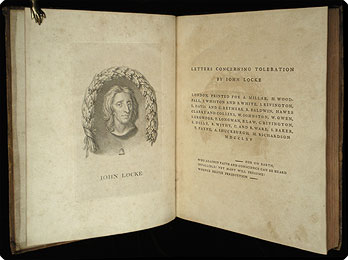 Click the images for enlargements.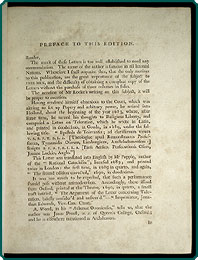
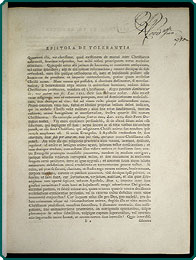
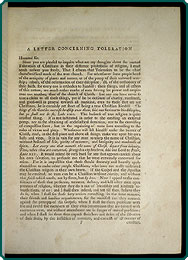 This is a lovely, “gentleman's library” edition, well printed with generous margins.
Provenance: Two text pages and back pastedown with flourished ownership inscriptions of Richard Wood, Jr., dated 1780.
• ESTC T114245; Graesse, IV, 243; Lowndes 1380; Allibone 1113–14. Contemporary speckled calf, spine with gilt-ruled raised bands and gilt-stamped leather title-label; binding lightly rubbed/scuffed overall, joints starting from top and front hinge (inside) starting; spine with a chip and a small paper label. Front pastedown with three bookplates most tantalizingly layered over one another, the most recent being from a 19th-century social club library; front free endpaper with pencilled and inked numerals in an early hand. Pages age-toned and faintly to moderately spotted; minor offsetting from frontispiece to title-page. (26302)
“The
Most Perfect Specimen”
— Yep,
Strawberry-Hill!
Lucanus, M Annaeus. Pharsalia cum notis Hugonis Grotii, et Richardi Bentleii. Strawberry-Hill [Twickenham]: [Strawberry Hill Press], 1760. 4to. [2] ff., 525, [1 (blank) pp., without the “Ad Lectorem” leaf.
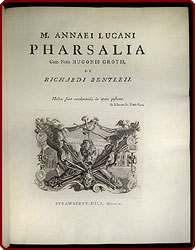
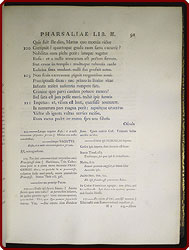
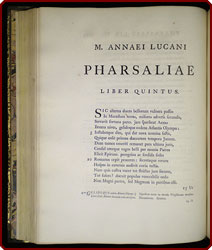 Click the images for enlargements. This edition consisted of only 500 copies.
Horace Walpole (1717–97), the 4th earl of Orford, is best remembered as the author of the Gothic novel The Castle of Otranto. Among bibliophiles he is also remembered for his private press, variously known as the Officina Arbutana or the Strawberry Hill Press. Walpole's almost fantastic wealth allowed him the connoisseur's luxury of this noble enterprise, which he operated in the arena of the rebirth of fine printing in Great Britain that was being carried on by the Foulis brothers, Baskerville, and others.
Binding: Contemporary sprinkled calf with a single gilt rule framing covers, rebacked and original spine reapplied; spine with raised bands, each compartment elegantly filled with tooling and each band itself gilt-accented; complementary gilt-tooled bands at top and bottom of spine; the epitome of “gilt extra” without being gaudy. Red leather spine label lettered and ruled in gilt (“LUCAN STRAWBERRY HILL”); gilt roll on board edges and on turn-ins; marbled endpapers.
Provenance: Bookplates of Charles James Packe (British, late-19th century) and H.M. Brower (American, early- to mid-20th century).
• Hazen (1973 ed.), Bibliography of the Strawberry Hill Press, 7; Dibdin (4th ed.), Introduction to . . . Greek and Latin Classics, II, 187; ESTC T11286; Schweiger, II,565. Bound as above, corners rubbed and expertly, even beautifully, rebacked; lacks the “Ad Lectorem” leaf (only). Good paper, wide margins, only the occasional instance of offsetting or soil. A very good copy. (25974)
 “A Valuable Edition” —
per DibdinLucanus, Marcus Annaeus. Pharsalia, cum commentario Petri Burmanni. Leidae: Apud Conradum Wishoff, Danielem Goetval, & Georg. Jacob. Wishoff, 1740. 4to (25 cm, 9.75"). [52], 735, [1 (blank)], [160 (index)] pp.
“A Valuable Edition” —
per DibdinLucanus, Marcus Annaeus. Pharsalia, cum commentario Petri Burmanni. Leidae: Apud Conradum Wishoff, Danielem Goetval, & Georg. Jacob. Wishoff, 1740. 4to (25 cm, 9.75"). [52], 735, [1 (blank)], [160 (index)] pp.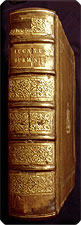
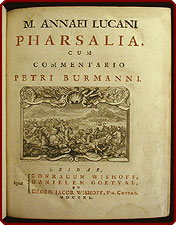
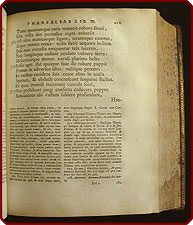 Click the interior images for enlargements.
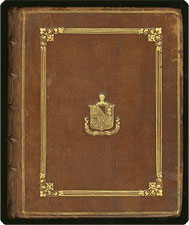
 Binding / Provenance: Contemporary calf, framed in gilt triple fillets and panelled in gilt quadruple fillets with gilt-stamped corner fleurons and gilt-stamped central coat of arms of the Wilder family, with the motto “Virtuti moenia cedant.”
• Schweiger, II, 565; Dibdin, II, 186–87. Binding as above, rebacked making use of most of the original spine, spine with gilt-stamped compartments and gilt-stamped leather title-label; edges worn and rubbed, portions of original spine leather cracked and chipped. Front pastedown with small abraded area; front fly-leaf with inked inscriptions dated 1834 and 1938. Some leaves with faint waterstaining in upper margins and lower outer corners. Attractive.
The Papal Court — As Seen by a CriticLunadoro, Girolamo. Relazione della corte di Roma e de’riti, che si osservano in esta, suoi officij, dignità, e magistrati ...nuovamente corretta, & accresciuta, con l’aggiunta del Moderno maestro di camera. Roma: Presso Michel’Angelo, e Pier Vincenzo Rossi, 1697–98. 12mo (14.3 cm, 5.6"). π8A–O12*3 2A–2G12 2H4 (-π1); [7] ff., 336, [6], 176 pp. (lacks initial blank)
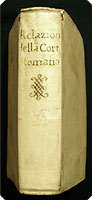
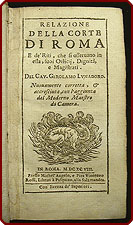 Click the interior image for an enlargement.
Francesco Sestini’s Il Moderno Maestro di Camera has a separate title-page, dated 1698; the first title-page bears the printer’s crowned salamander device and the second a vignette of Minerva. The collation here matches descriptions of other copies.
Uncommon: Searches of OCLC and RLIN locate only three copies in U.S. libraries.
Provenance: Late 18th-century private collector’s booklabel — “Ex Biblioth. Hamburg. Wolfiana”; also with a 19th-century bookplate.
• Contemporary vellum, spine with early hand-inked title; binding with small spots of light discoloration, spine title a bit scuffed. All edges speckled blue. Front pastedown with bookplates as above; front free endpaper with early inked shelving number. First gathering, including title, a cancel. Title-page reinforced at inner margin. Pages clean.

Mariology for the New World Luzuriaga, Juan de. Paranympho celeste[.] Historia de la mystica zarza, milagrosa imagen, y prodigioso santuario de Aranzazu de religiosos observantes de n. seraphico padre San Francisco en la provincia de Guypuzcoa. Mexico: Por los herederos de la viuda de Bernardo Calderon, 1686. Folio (27 cm; 10.75"). 3 pts. in 1 vol. [17 of 18] ff., 114, 96, 112 pp., [8] ff., lacking the plate (as usual), and a leaf in the preliminaries.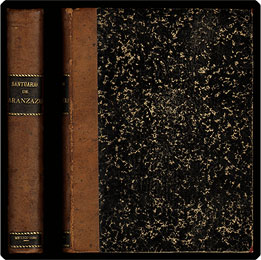
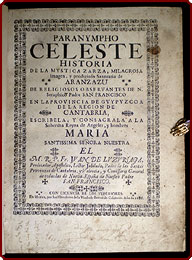 Click the images for enlargements.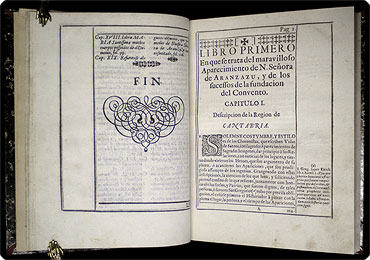
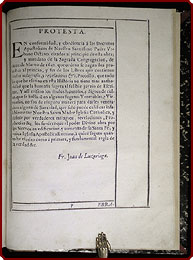 It is extremely noteworthy that this thick and significant history of this Cantabrian apparition was written and published in Mexico and not in Spain. After years of service in Cantabria, his native region, in 1680 the author was transferred to New Spain to serve as the Comisario General of the Franciscan Order in New Spain and the Philippines, and it was in Mexico City that he composed his massive and important work. He then also had it printed there, in spite of the fact that he retained contacts in Spain where it presumably would have had a greater natural audience, and in spite of the fact that it was, for its day, a very large project for a Mexican press to be offered. Or for one to take on! Additionally, it is printed on exceptionally thick paper.
Provenance: Bookplates of Luis and Clotilde Montt (Chilean collectors) and of the John Carter Brown Library (deaccessioned).
• Medina, Mexico, 1376; Palau 144367; Beristain, II, 198; Leclerc 1190. On Luzuriaga, see: Archivo biográfico de España, Portugal, e Iberoamérica, fiche 534, frames 77–81. 19th-century quarter brown sheep with black leather spine labels lettered in gilt; black and white marbled paper sides. Without the plate and one leaf in the preliminaries; last three leaves of the index damaged with loss in the foremargins, costing a few words and letters; title-page soiled and with several old tears very well-repaired of old; stains occasionally, never bad ones. Withal a rather good copy of a very uncommon work of New World Mariology. (26392)
 TO
Part VI TO
Part VI |