 PROVENANCE!
 . . . the history of ownership of an object . . .
PROVENANCE!  BOOKS with discoverable provenance
do NOT necessarily command a premium price
over other copies of the same edition. For example, the famous Sunderland
Library at Blenheim was pleased to gather
BOOKS with discoverable provenance
do NOT necessarily command a premium price
over other copies of the same edition. For example, the famous Sunderland
Library at Blenheim was pleased to gather anything
interesting — it was wonderfully omnivorous! And that two of the books
below are "Sunderland Copies" makes them cost no more — it only gives
them a bit more charm for the same price, as the Sunderland sale was a
major 19th-century biblio-event. anything
interesting — it was wonderfully omnivorous! And that two of the books
below are "Sunderland Copies" makes them cost no more — it only gives
them a bit more charm for the same price, as the Sunderland sale was a
major 19th-century biblio-event.
 Yet
not USUALLY in ways that make
one pay more. Yet
not USUALLY in ways that make
one pay more.
|

 A
Volume EXTRA
ILLUSTRATED &
Then Some!
A
Volume EXTRA
ILLUSTRATED &
Then Some!
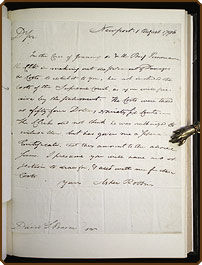
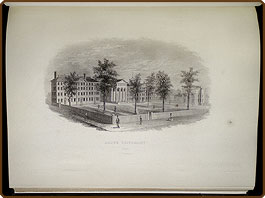
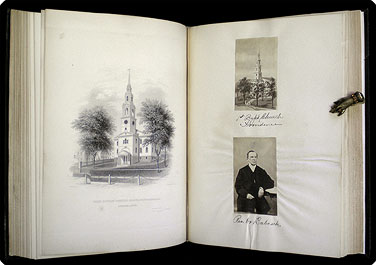
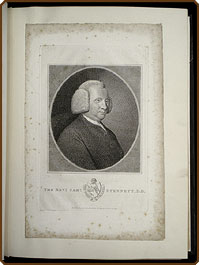
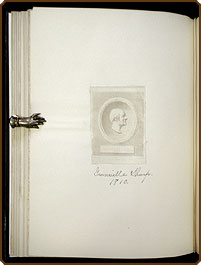
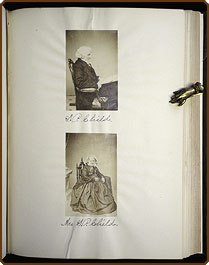
 (A
UNIQUUM). Brown University.
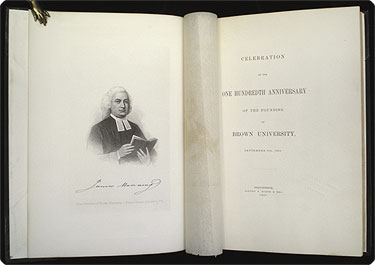
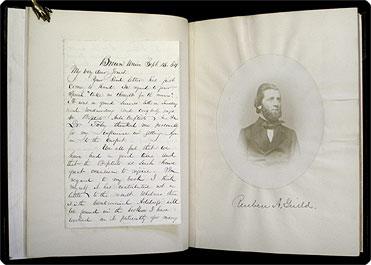
Celebration of the one hundreth anniversary of the founding of Brown University,
September 6th, 1864. Providence: Sidney S. Rider & Bro., 1865. 4to (26.5
cm; 10.25"). [4] ff., 178 pp., [1] f.
(A
UNIQUUM). Brown University.
Celebration of the one hundreth anniversary of the founding of Brown University,
September 6th, 1864. Providence: Sidney S. Rider & Bro., 1865. 4to (26.5
cm; 10.25"). [4] ff., 178 pp., [1] f. 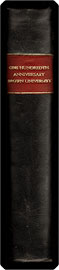
 Click the images for enlargements.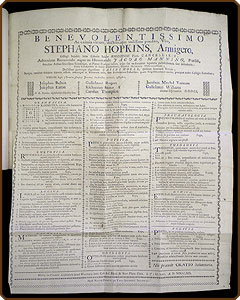
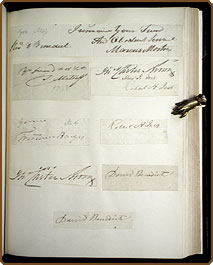
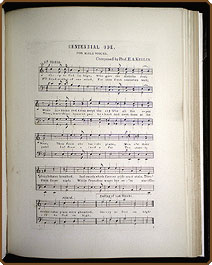
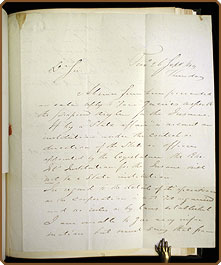
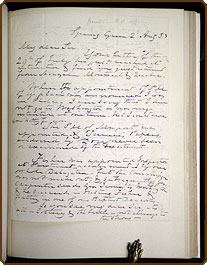
 A
full list of contents is available by clicking
here.
A
full list of contents is available by clicking
here.


Into the Woods Abbott, Henry. Camps and trails. New York: Pr. for the author, 1918. 12mo (15.1 cm, 5.9"). 64 pp.; illus.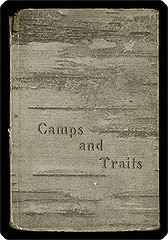
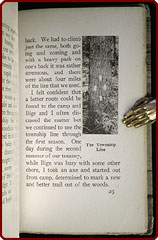
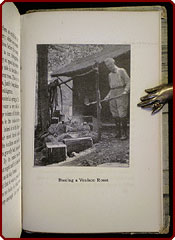 Click the images for enlargements.
  The work is illustrated with a number of mounted black-and-white photographs.
Each book in the series was published by the author as a very limited edition and distributed to his friends as a Christmas gift; the present copy is  inscribed by Abbott: “Wishing you peacetime Christmas cheer.”
This is the original first, 1918 edition, not a modern reprint.
• Publisher's bark-patterned paper–covered boards, front cover with printed title; extremities chipped (most notably spine head). Front free endpaper with pencilled inscription as above; pages clean. (26848)
 Animal Stories — Fly-Fishing, Too!Aelianus, Claudius. [4 lines in Greek, then] Aeliani de natvra animalivm.... Londini: Gulielmus Bowyer, 1744. 4to (26.2 cm, 10.4"). 2 vols. I: xiv, xxvii, [35 (index)], 603, [1] pp. II: [605]–1128, [88 (index and addenda)] pp.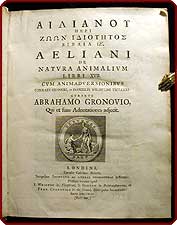
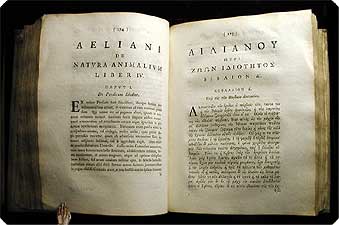
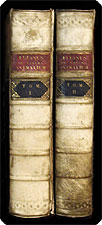
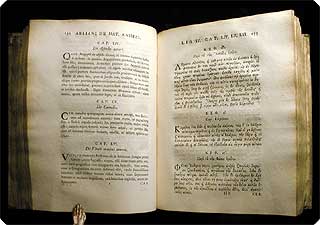
• ESTC T88657; Dibdin, I, 232; Schweiger, I, 2. Contemporary vellum-covered boards, covers framed and panelled in blind with central blind-stamped strapwork medallions, spines with gilt-stamped leather title and volume labels; front joints repaired and now strong, vellum soiled. Front free endpapers with early inked owner's name as above; shadow of shelf number once pencilled on title-page, erased. Spotting of various sorts and minor smudging in upper margins of some pages; leaves otherwise clean.

A
Learned HUGUENOT Discusses theThrice-Holy
HymnAllix, Pierre. Dissertatio de Trisagii origine. Rothomagi: Apud Joannem Lucas, 1674. 8vo (18.2 cm, 7.125"). A–I4; 70 pp., [1 (blank)] f. 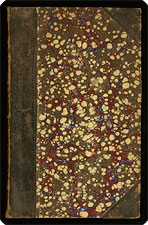
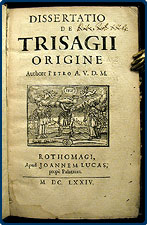
 Click the interior images for enlargements.
 This  sole edition is ornamented with a woodcut printer’s device and a woodcut headpiece and initial; the text is referenced with sidenotes.
Rare: Only two copies traced in the U.S. via OCLC, RLIN, and NUC Pre-1956.
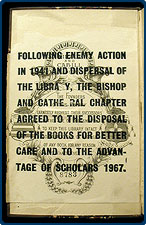
Provenance: Bookplate of Virtue & Cahill Library (the library of Portsmouth’s Catholic Cathedral) no. 8783, with a large overlaid rubber-stamp thereon starkly, blackly noting the dispersal and eventual sale of the library “following enemy action”—the cathedral having been bombed by the Germans in 1941.
• On Allix, see: The Dictionary of National Biography, I, 334–35. 19th- or early 20th-century half calf over marbled paper, spine with gilt title; edges of leather with a dog’s tooth roll in blind. Leather rubbed, especially on joints and edges. Some soiling and waterstaining, mostly light and most notable on early leaves, with some small wormholes in the margins; a little fine chipping and some shallow dog-ears. Old inked ownership inscription on title-page, crossed out but still legible.
He Tries to Cover It ALL!
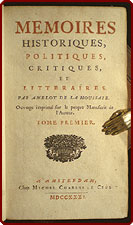
Amelot de la Houssaye, Abraham-Nicolas, sieur. Memoires
historiques, politiques, critiques, et literraires. Par Amelot de la Houssaie. Ouvrage imprimé sur le propre manuscrit de l'auteur. Amsterdam: Michel Charles Le Cene, 1731. 12mo. 2 vols. I: 561 pp. II: 462 pp., [11 (adv.)] ff.
Cover It ALL!
Amelot de la Houssaye, Abraham-Nicolas, sieur. Memoires
historiques, politiques, critiques, et literraires. Par Amelot de la Houssaie. Ouvrage imprimé sur le propre manuscrit de l'auteur. Amsterdam: Michel Charles Le Cene, 1731. 12mo. 2 vols. I: 561 pp. II: 462 pp., [11 (adv.)] ff.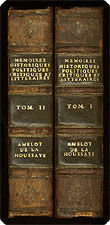
Provenance: From the collection of 19th-century scholar Dr. Johann August Neander (1789–1850), a convert from Judaism who became a leading scholar of Christian church history.
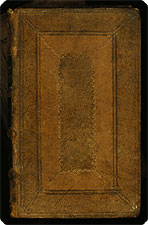
• Brunet 18324. Contemporary calf, spine with raised bands, gilt-stamped compartment decorations at top/bottom, and later black leather gilt-stamped labels; covers blind-tooled in concentric compartments. Rubbed with bits of leather lost at extremities; offsetting from leather along margins of endpapers and title-pages. Marbled endpapers, free ones missing in both volumes; front pastedowns each with library bookplate and both title-page versos with call number in pencil. Initial pages of vol. II toned. A good solid set. (21186)
For more SETS, click here.
Inscribed
by the Author
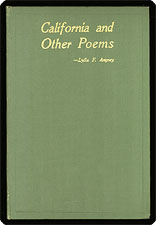
Angney, Lydia F. California and other poems. Gilroy, CA: Pr. for the author by A.C. Eaton, 1900. 8vo. 96 pp.
the Author
Angney, Lydia F. California and other poems. Gilroy, CA: Pr. for the author by A.C. Eaton, 1900. 8vo. 96 pp.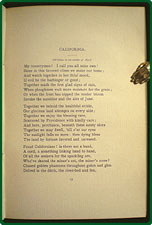
 “Californianum”
— this copy with a laid-in slip of paper reading, “Christmas Greeting
to Frank & Annie, from Aunt Lydia.”
Lydia Francis Witham Angney authored two volumes of poetry, both published
in Gilroy, the home of the annual Garlic Festival, and endured a long widowhood
following the death of er husband W. Z. Angney. W.Z. served in the Mexican War
and played a major role in the U.S. occupation of New Mexico and in the territorial
government, then moved on to California, settling in Gilroy to raise tree fruit
in his orchards, but being sent to the state senate and called on by the governor
for other civic duties. He died in January 1878.
Click
the interior image for an enlargement.
“Californianum”
— this copy with a laid-in slip of paper reading, “Christmas Greeting
to Frank & Annie, from Aunt Lydia.”
Lydia Francis Witham Angney authored two volumes of poetry, both published
in Gilroy, the home of the annual Garlic Festival, and endured a long widowhood
following the death of er husband W. Z. Angney. W.Z. served in the Mexican War
and played a major role in the U.S. occupation of New Mexico and in the territorial
government, then moved on to California, settling in Gilroy to raise tree fruit
in his orchards, but being sent to the state senate and called on by the governor
for other civic duties. He died in January 1878.
Click
the interior image for an enlargement.
• Publisher's green cloth, front cover and spine with gilt-stamped title; light shelf wear to corners and spine extremities. (22223)

Wildcats, Bears, Rabbits, Otters, Skunks, Buffalo,
& “Wapite”Audubon, John James, & John Bachman. The quadrupeds of North America. New-York: V.G. Audubon, 1854. Royal 8vo (27.5 cm; 10.75"). 3 vols. I: viii, 383, [1 (blank)] pp., 50 plts. II: [2] ff., 334 pp., 49 plts. III: v, [1], 348 pp., [1] f., 51 plts.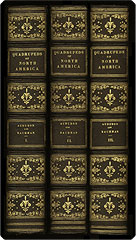
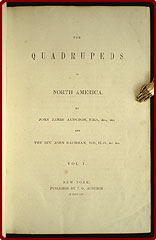
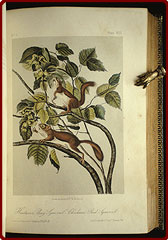
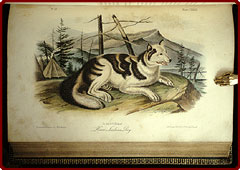
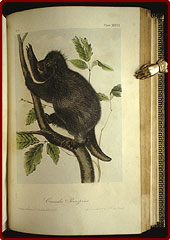
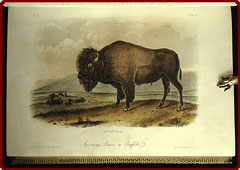
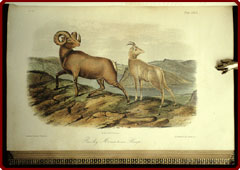
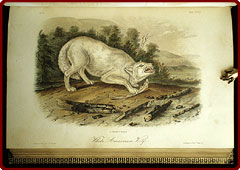 155 fine handcolored lithographed plates by W. E. Hitchcock and R. Trembly after J.J. and J.W. Audubon, lithographed by J.T. Bowen.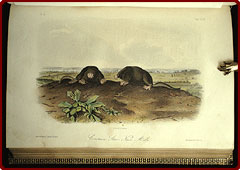
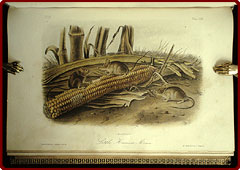
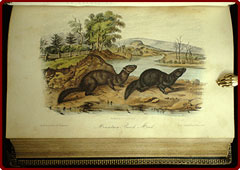
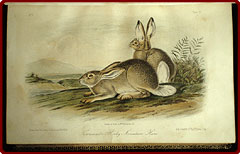
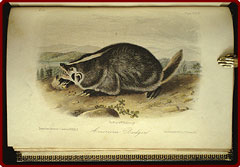
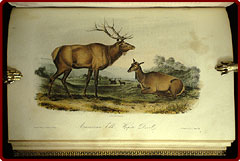 A lovely set. (23904)
For more SETS, click here.
A lovely set. (23904)
For more SETS, click here.
 “Fundamentall to the Erecting & Building of
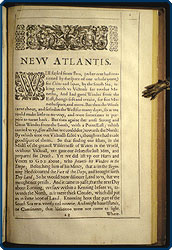
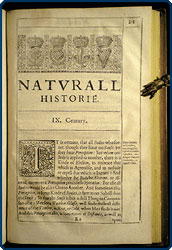
 a True Philosophy”Bacon, Francis. Sylva sylvarum or a naturall history in ten centuries. London: Pr. by J.H. for William Lee, 1627. 8vo (27.6 cm, 10.9"). Frontis., add. engr. t.-p., [10], 266, [16], 47, [3] pp. (lacking final blank f.).
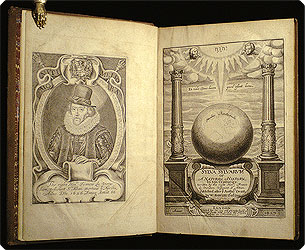
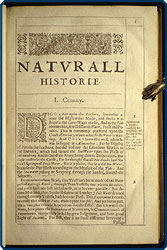 Single-click any image where the hand appears onNew Atlantis, an unfinished allegorical fantasy begun shortly after his political downfall and not long before his death. Together, the two works exemplify Bacon's scientific and literary accomplishments.
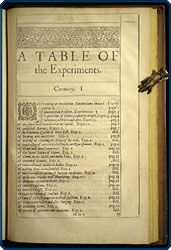
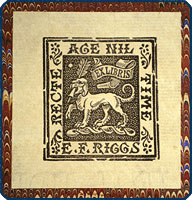
Provenance: Riggs family: Front pastedown with armorial bookplate of philanthropist Elisha Francis Riggs, who funded the Riggs Library at Georgetown University; volume inherited by T. Lawrason Riggs, founding chaplain of St. Thomas More Chapel, Yale University; donated to St. Thomas More Chapel Library; deaccessioned 2008.
• ESTC S106924; STC (2nd ed.), 1169; Gibson, Bacon, 171. On Bacon, see: Dictionary of National Biography. 18th-century calf framed in gilt single fillet, spine with recent gilt-stamped leather title and author labels, board edges with gilt roll; a little rubbed and covers with portions darkened. All edges stained yellow. Front pastedown with bookplate as above. Some pages gently age-toned, with occasional minor spotting. Small hole to added engraved title-page just beneath publication information, not affecting text. Final blank leaf (only) lacking. (24666)
 The Andrade Set inQuarter Red Morocco Barcía, Andrés González de. Ensayo cronologico, para la historia general de la Florida. Madrid: Imprenta de los Hijos de Doña Catalina Piñuela, 1829. 12mo. 2 vols. I: [2] ff., 508 pp., fold. table. II: [2] ff., 512 pp.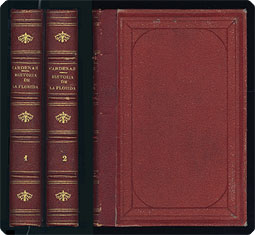
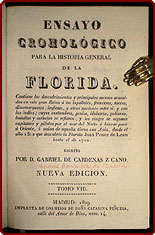
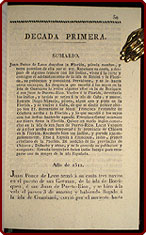
 Click the page-images for enlargements.
 The present edition forms volumes 8 and 9 of the series Historia de la conquista del Nuevo Mundo.
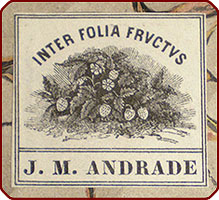
Provenance: Bookplate of the great 19th-century Mexican collector J. M. Andrade on the front pastedown of each volume.
• This edition not in Sabin. 19th-century quarter red morocco with red textured cloth sides. Spine with raised bands and very good gilt tooling including center devices in spine compartments. Interiors clean. A very good set. (25271)
TWO
Quaker
Classics forPhiladelphians,
1788
Barclay, Robert. A catechism and confession of faith, approved of and agreed unto, by the general assembly of the patriarchs, prophets, and apostles, Christ himself chief speaker in and among them. Philadelphia: Joseph James, 1788. 12mo (16.8 cm, 6.7"). viii, 147, [3] pp. [issued with] The ancient testimony of the people called Quakers, revived; by the order and approbation of the yearly meeting, held for the provinces of Pennsylvania and New-Jersey, 1722. Philadelphia: Joseph James, 1788. 34 pp. 
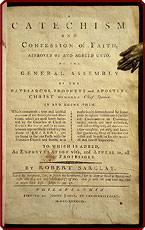
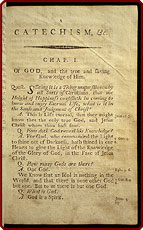 Click the interior images above for enlargements.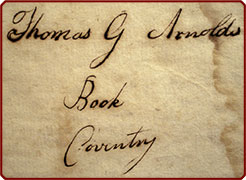
Provenance: Front fly-leaf inscribed “Thomas G. Arnolds Book Coventry,” inked in an early hand.
• ESTC W37335; Evans 20950; Sabin 3366. Contemporary speckled sheep, worn and very slightly sprung, spine scuffed with foot chipped. Pages age-toned and variably waterstained, with occasional edge nicks and crumpled corners; yet not brittle or nasty and the volume quite pleasant for reading. (24391)

Limited to 200 Copies — A Polyglot “Song of Moses” Bargès, Jean Joseph Léandre. Notice sur deux fragments d'un Pentateuque hébreu-samaritain rapportés de la Palestine par M. le sénateur F. de Saulcy. Paris: Imprimerie Polyglotte Édouard Blot, 1865. 8vo (24.5 cm, 9.6"). [6], 91, [1] pp.; 1 fold. plt.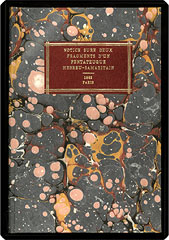
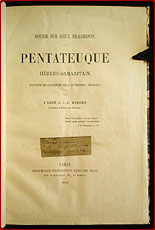
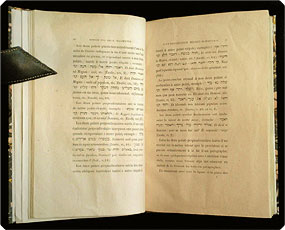 Click the interior images for enlargements.
 Uncommon: OCLC and NUC Pre-1956 locate only five U.S. holdings.
Provenance: Ownership label of George Williams (1814–78), who served as Vice-Provost of King's College from 1854 to 1857.
• Recent marbled paper–covered boards, front cover with gilt-stamped red leather title-label. Title-page with small affixed slip with ownership inscription of George Williams of King's College. Occasional edge nicks and short tears, and a number of leaves with old creases or the odd smudge; last leaf with old, small repairs to margins, and one other leaf with very good repair from blank reverse to an interior tear (no text lost or even affected). (25368)
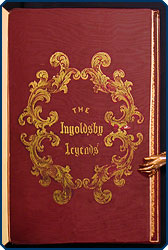
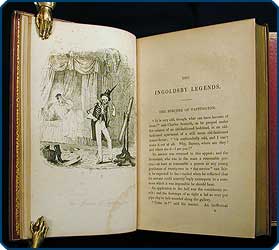
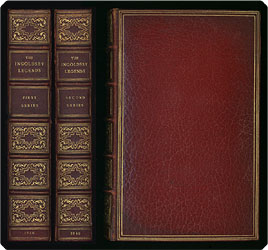
The Private Edition, One of 12 Copies OnlyA Family Copy Barham, R. Harris. The Ingoldsby legends or mirth and marvels by Thomas Ingoldsby Esquire [with] The Ingoldsby legends ... Second series. London: Richard Bentley, 1840 & 1842. 8vo. 2 vols. I: [6], v, [3], 338, [2] pp. with inserted extra-engraved title (a proof before letters), numbered colophon leaf, engraved title, and six etched plates; II: vii, [3], 288 pp. with engraved title and seven etched plates.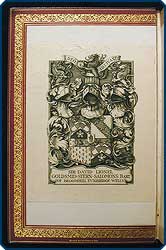
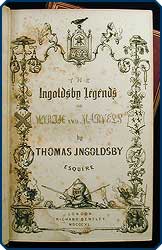
 Click any image where the hand appears on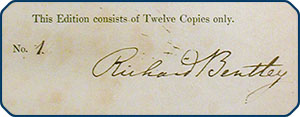
Sadleir's analysis suggested to him the following probable sequence: a) the private edition, b) copies of the public edition with p. 236 in the same form as it appears in the private edition, c) copies of the public edition with p. 236 blank; and d) copies of the public edition with the complete new version of the text on p. 236.
However, the remnants of the binding preserved at the back of the present first volume — see note below and
Barham began writing the short pieces making up this series as contributions to his friend and classmate's Bentley's Miscellany. The subject matter was “at first derived from the legendary lore of the author's ancestral locality in Kent, but soon [was] enriched by satires on the topics of the day and subjects of pure invention, or borrowed from history or the ‘Acta Sanctorum’. . . . The success of the ‘Legends’ was pronounced from the first, and when published collectively in 1840 they at once took the high place in humorous literature which they have ever since retained” (DNB).
Provenance: With R.H.D. Barham’s signature as noted above, and with the armorial bookplate of Sir David Lionel Salomons (1851–1925) in each volume.
• NCBEL, III, 365; Sadleir 156a; Tinker 216 (public edition); Carter, Binding Variants, p.92. Bindings a bit darkened and slightly discolored at extremities, light rubbing to joints, some foxing to the prelims of the first volume, with an old tide-mark in the lower gutter areas of the plates; a tipped-in bookseller's description in the first volume. A very good, very interesting example of a very rare thing.

“Opera quae exstant” NOT Basilius Seleucensis. [five lines in Greek, the] B. Basilii
Seleuciae Isauriae Episcopi, qui I. Chrysostomo contubernalis fuit, Opera quae exstant. [Heidelberg]: In bibliopolio H. Commelini, 1596. 8vo (16.5 cm; 6.5"). 8, 408 pp.
NOT Basilius Seleucensis. [five lines in Greek, the] B. Basilii
Seleuciae Isauriae Episcopi, qui I. Chrysostomo contubernalis fuit, Opera quae exstant. [Heidelberg]: In bibliopolio H. Commelini, 1596. 8vo (16.5 cm; 6.5"). 8, 408 pp.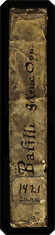
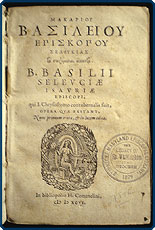
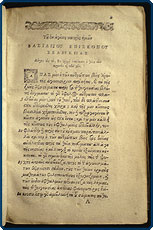 Click the interior images for enlargements.
 Provenance: Early 19th-century armorial bookplate of Robert Chambers; manuscript ownership “Ex libris G.R.W.”— William R. Wittingham, fourth Anglican bishop of Baltimore (a Latinophile who used “Guillelmus” for “William”), dated Sept. 22, 1856; later in the diocesan library of Maryland; deaccessioned 2006.
• VD16 B 727. Contemporary limp vellum with evidence of ties; slightly yapp edges. Occasional light foxing. 19th-century library stamps on the front free endpaper and title-page. A clean solid copy. (24432)
Greek–Dutch! — A Dictionary,
1822Bergman, Jean Théodore. Handwoordenboek der Grieksche taal, volgens etymologische orde, ten dienste der scholen. Te Zutphen: H.C.A. Thieme, 1822.
8vo in 4s (22.5 cm, 8.8"). 2 vols. in 1. XXII, 532, [4], 533–996 pp. (pagination skips 305–08, text apparently uninterrupted).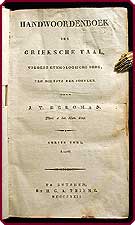
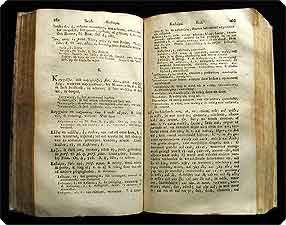
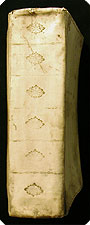
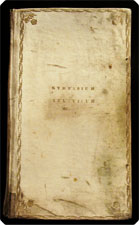 Click any image where the hand appears on
Provenance: Covers gilt-stamped “Gymnasium Velavicum.”
• Contemporary vellum-covered boards, covers framed in gilt rolls with gilt-stamped corner fleurons, spine with gilt-stamped bands and decorations within compartments; vellum chipped over spine extremities and showing moderate dust-soiling. Upper portion of front free endpaper excised; half-title crumpled, with inner and outer margins chipped. Pagination skips from 304 to 309, with signature complete and text apparently uninterrupted. Some edges and corners waterstained and a few lower margins inkstained, with occasional instances of edge chipping. Creasing to a handful of index leaves.
First Printing in Europe of theBhagavadgitaBhagavadgītā. Bhagavad-Gita, id est Thespesion melos sive almi Krishnae et Arjunae colloquium de rebus divinis, Bharateae episodium. Textum recensuit, adnotationes criticas ed interpretationem latinam adiecit Augustus Guilelmus a Schlegel. Bonnae: in Academia Borussica Rhenana Typiis Regis, Prostat apud E. Weber, 1823. 8vo (23 cm; 9"). xxvi, 189 pp.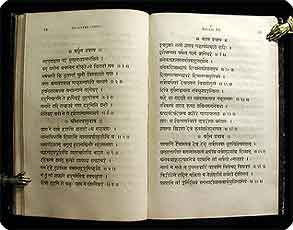
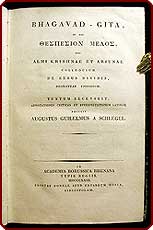 Click either image
Provenance: From the collection of 19th-century scholar Dr. Johann August Neander (1789–1850), a convert from Judaism who became a leading scholar of Christianity.
Uncommon: Of U.S. institutional copies we trace fewer than 10.
• 19th-century German black mottled paper over boards. Binding shows wear. Ex-library with call number tag on spine; bookplate.


Blake,
Rosenwald,
& Keynes
— Trianon PressA
Presentation Copy from
the Owner of the Original
Blake, William. The book of Ahania. [colophon: Boissia, Clairvaux: Published by the Trianon Press for the William Blake Trust, London; distributed by B. Quaritch, London, 1973]. 4to (28.8 cm; 11.5"). [11] ff., 7 of which are plates (6 color).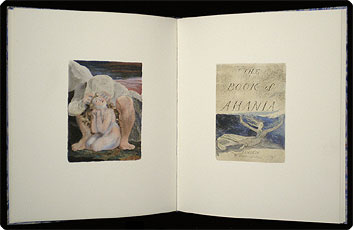 Click the image for an enlargement.
 “Commentary and bibliographical history” (p. [3–7]) signed in type by Geoffrey Keynes.
• Bentley, Blake Books, A15. Publisher's quarter black morocco with marbled paper sides. In the publisher's marbled paper slipcase. Very good condition. (25900)
Trianon Innocence
“Pre-”
(their) ExperienceBlake, William. The songs of innocence, [a facsimile of the illuminated book]. [colophon: Boissia, Clairvaux: Published by the Trianon Press for the William Blake Trust, 1954]. 8vo (22cm.; 8.625"). [60] ff. (54 facsims. of the original; 1 f. a facsim. of provenance information, 5 ff. of text.
Innocence
“Pre-”
(their) ExperienceBlake, William. The songs of innocence, [a facsimile of the illuminated book]. [colophon: Boissia, Clairvaux: Published by the Trianon Press for the William Blake Trust, 1954]. 8vo (22cm.; 8.625"). [60] ff. (54 facsims. of the original; 1 f. a facsim. of provenance information, 5 ff. of text.
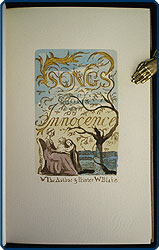
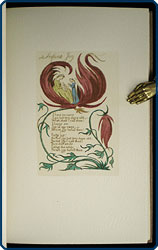 Click the images for enlargements.
 The edition was limited to 1626 copies, this being no. 840 of 1600 regular copies. The Trianon Innocence AND Experience (our emphasis) did not appear until the year after this did.
Provenance: Presentation copy from Lessing Rosenwald to his daughter Joan and her husband Isadore Scott: “For Scotty and Joannie / With love / Dad / 2/15/55" in Lessing's characteristic green ink.
• Bentley & Nurmi 156; Bentley, Blake Books, 165. Publisher's quarter tan calf, abraded; usual discoloration at hinges (inside) from the binding glue. Top edge gilt. In the publisher's leather trimmed slipcase, leather here also abraded (leather too soft!!). A clean, attractive copy with a provenance up there amongst the best imaginable. (25939)
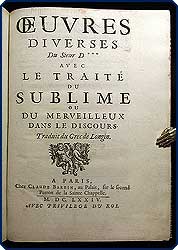
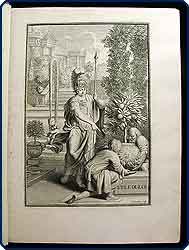
Lovely French Printing — GORGEOUS! French BindingBoileau
Despréaux, Nicolas. Œuvres diverses du Sieur D*** avec le traité du sublime ou du merveilleux dans le discours, traduit du Grec de Longin. Paris: Claude Barbin (pr. by Denys Thierry), 1674. 4to (25.3 cm, 10"). π2A–R4S8T–Y4Z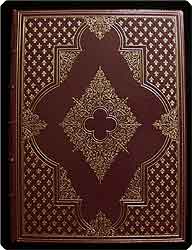
 Click any image where the hand appears on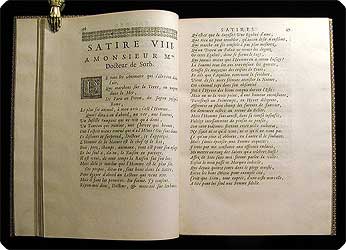
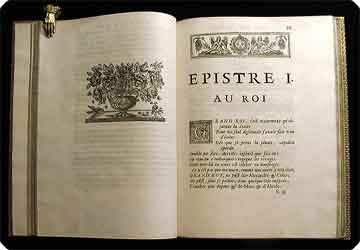
• Brunet, I, 1056; DeBacker, Auteurs du XVIIe siècle, 1020; Tchemerzine, II, 271. Binding as above, nearly perfect save for just a touch of rubbing to the spine extremities, in cloth-covered slipcase, worn, with cloth starting to split over edges. Frontispiece and title-page separating from binding; title with red-tinted signs, near edges, that the marbling process did not go entirely smoothly; upper margins of several other leaves with hints of very faint waterstaining. Otherwise, clean and quite lovely.
“Large Scale” in Several Respects . . .62 Engravings & Bedford Bound Brayley, Edward Wedlake. The history and antiquities of the abbey church of St. Peter, Westminster: Including notices and biographical memoirs of the abbots and deans of that foundation. London: J.P. Neale for Longman, Hurst, Rees, Orme, & Brown, 1818–23. Folio (37.9 cm, 14.9"). 2 vols. I: [18], 227, [19], 72, [10] pp.; 13 plts. II: [2], 304, [40] pp.; 49 plts.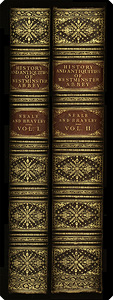
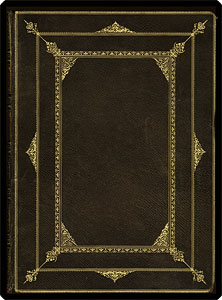
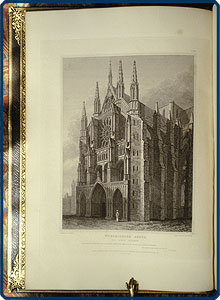 Click any image where the hand appears on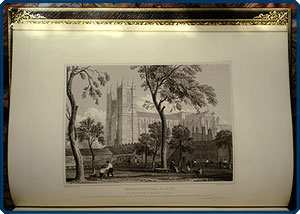
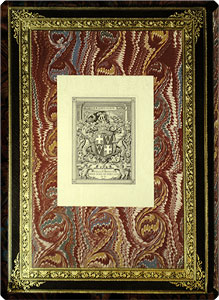
Provenance: Each front pastedown with armorial bookplate of William Arthur, sixth Duke of Portland.
• NSTC 2B46491; Allibone 240; Brunet, II, 1215. Binding as above, minor shelf wear to lower edges and corners, vol. I with front board expertly reattached and with small dent to outer edge of front cover. Joints delicate, due to size and weight of volumes, but holding. A few pages and plates with faint foxing, otherwise clean. (24100)
For more SETS, click here.
Gastronomic Masterpiece ILLUSTRATED — Limited Edition Brillat-Savarin, Jean Anthelme. Physiologie du goût ou meditations de gastronomie transcendante. Paris: Les Arts & Le Livre, 1926. 2 vols. 8vo (24 cm, 9.4"). I: xlii, [2], 252 pp.; illus. II: [4], 300, [2] pp.; illus.
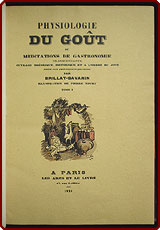
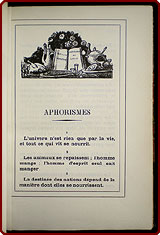
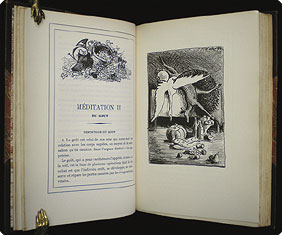
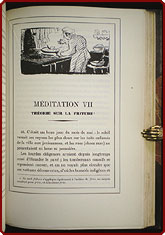 Click the images for enlargements.
 Provenance: Front pastedown of vol. I with bookplate of Francis de Neufville Schroeder, a descendent of the first mayor of New York.
• Not in Bitting. Contemporary half red morocco and marbled paper–covered sides, spines with gilt-stamped author and title; corners and joints showing some shelf wear, spines slightly darkened. Vol. I front pastedown with bookplate as above. Original yellow wrappers in near-perfect condition; overall, a lovely set. (25885)
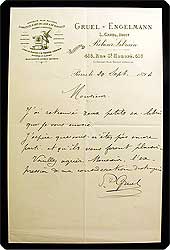
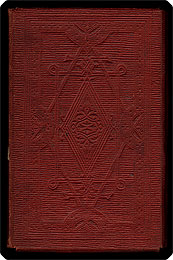
BROUGHAM on Literature & Science — with MS. Letter Brougham, Henry Peter, Baron Brougham & Vaux. Addresses on popular literature, and on the monument to Sir Isaac Newton: Delivered at Liverpool and Grantham. London: Edward Law, 1858. 8vo. 63, [1] pp.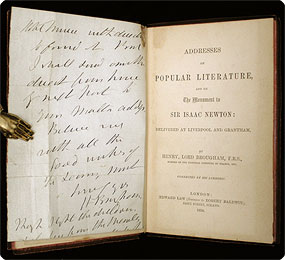
 Click the images for enlargements.
 Provenance: Ownership signature on front free endpaper, “Mr. Justice McDougall, Jamaica.”
Autograph manuscript addition: Tipped onto the title-page is a manuscript letter signed by Brougham, dated 1839. In this informal but warmly written letter apparently addressed to an uncle, he declines an invitation and briefly mentions “the children,” whom he thought were left safe from the measles at Paris; he had one living daughter at the time of this letter's composition, and may be referring to members of his extended family.
• NSTC 2B51067. Publisher's limp red cloth in imitation of morocco, yapp edges, covers blind-stamped, spine with gilt-stamped title; extremities rubbed, spine slightly darkened with small paper label, sides with small areas of minor discoloration. All edges stained red. Front free endpaper with early inked inscription and small private pressure-stamp. Pages age-toned; one early inked correction. (26986)

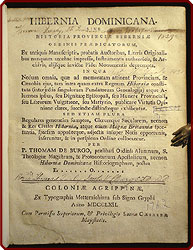
Really Printed inKilkenny, not Cologne Burke, Thomas. Hibernia Dominicana. Sive Historia Provinciae Hiberniae Ordinis Praedicatorum. Coloniae Agrippinae [i.e., Kilkenny]: ex typographia Metternichiana sub Signo Gryphi, 1762. 4to (23 cm; 9.125"). xv,, 949, [1] pp.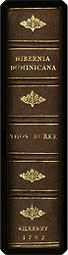
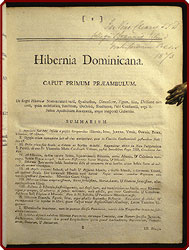 Click the interior images for enlargements.
 Those copies with the Kilkenny impirnt (Killkenniae: ex typographi Jacobi Stokes) are far fewer than those with the Cologne imprint, but it is clear that all copies were printed at Kilkenny by Stokes.
Not a common work: NUC Pre-1956 and OCLC combine to locate only eight copies in U.S. libraries.
Provenance: On title-page, ownership inscriptions of the Revs. Thomas Qualy (1829) and Jacob Cleary. Additional Cleary ownership inscriptions on p. 1 (1873) and iii (1891), the latter a gift inscription on the occasion of that owner's giving the volume to a Rev. Thomas Kelly.
• Bradshaw Irish Coll., nos. 5222-5223; ESTC t036179. Recent full brown calf with covers panelled in the Cambridge style, author/title/etc. lettering in gilt directly to spine; spine with gilt rules above and below bands and gilt devices in the compartments. Title-page soiled and small portion of lower inside blank margin torn away and repaired; same page has old library call number in ink and the date of publication in ballpoint! Ownership notes as above. Very light waterstain in lower blank margins of preliminary leaves. Generally a very nice, clean copy. (24805)
 TO
Part II TO
Part II |
 SUPER-EXCELLENT
copies!
SUPER-EXCELLENT
copies!
 THE SIGNATURE in a 16th- or 17th-century scholar's working copy — or
a 19th- or 20th-century bibliographer's copy — a cookbook bearing an
18th- or 19th-century century woman's name, with a note as to where
she bought it — the 19th-century volume specially bound and inscribed
to be a gift, or even a copy of a "souvenir" pamphlet with some long-ago
tourist's name written on the cover — such ownership indications connect
us to earlier book users and lovers in ways that bear notice.
THE SIGNATURE in a 16th- or 17th-century scholar's working copy — or
a 19th- or 20th-century bibliographer's copy — a cookbook bearing an
18th- or 19th-century century woman's name, with a note as to where
she bought it — the 19th-century volume specially bound and inscribed
to be a gift, or even a copy of a "souvenir" pamphlet with some long-ago
tourist's name written on the cover — such ownership indications connect
us to earlier book users and lovers in ways that bear notice.