 TRANSLATIONS
A-B • Bibles • C-D • E-H
I-L • M • N-Sg • Sh-Z
TRANSLATIONS

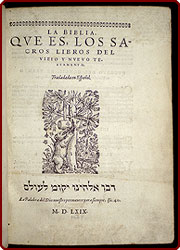
 The Bear Bible — The FIRST Complete Bible in Spanish
  Bible. Spanish. Reina. 1569. La Biblia, que es, los sacros libros del vieio y nueuo testamento. [Basel: Thomas Guarinus for or with Samuel Apiarius], 1569. 4to. [15 of 16] ff., 1438 columns, [1] p., 544, 508 columns, [1] p., [1] f. (without the 3 leaves of “Annotationes” and the final blank); illus.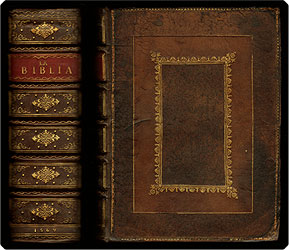
 Click the images for enlargements.
 Rather, the production of a Bible in Spanish fell to a peripatetic exiled Spaniard named Casiodoro de Reina (ca. 1520–94), a man who began his adult life as a monk, came under suspicion of being a “Reformist,” and fled Spain for Geneva — later fleeing that city for a series of others and declaring it “a new Rome” for its intolerance of new ideas. Whether the translation is solely from his pen or is the work of a committee in which he was primus inter pares is not known.
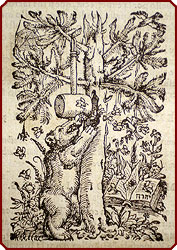
This Bible is known as the “Bible of the Bear” or the “Bear Bible” because of the printer's device on the title-page, a bear at a honey comb, which was the device of Samuel Apiarius. The relationship between Apiarius and the actual printer, Thomas Guarinus, is unresolved. The Old Testament in this translation is based on the Hebrew and derived heavily from the Latin of St. Pagninus and from the Ferrara version. The New Testament is based on the Greek of Erasmus with comparisons to the Vetus Latina and Syriac manuscripts.
There are two states of the title-page, this being state A with the line of type ornaments described in Darlow and Moule.
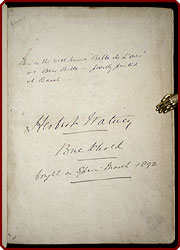
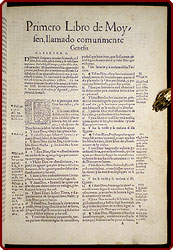
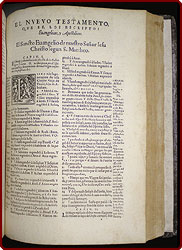
• VD16 B2869; Rumball-Petre262; Darlow & Moule 8472; Graesse, I, 386; Palau 2894; Adams B12061. 17th-century English calf, rebacked with new spine gilt extra very suitable in style; leather of covers a bit crackled and variously darkened; small areas of the covers at board edges replaced with new leather sympathetically gilt-tooled. Lacks the blank preliminary leaf and the four leaves at the end of “Annotationes breves sobre los lugares . . . “, both of which are very often lacking, the latter leaves having perhaps (even probably) been printed separately and later. Small piece of front fly-leaf cut away (probably removing an ownership inscription). The occasional instance of light soil or light waterstaining to fore- or bottom margins, sometimes reaching text; a generally clean and good copy. All edges mottled red and blue-green. (25772)

FIRST LATIN BIBLE Printed in England Bible. Latin. 1580. Tremellius–Junius. Testamenti veteris Biblia Sacra sive libri canonici, priscae Iudaeorum Ecclesiae a Deo traditi, Latini recens ex Hebraeo facti, brevibusque scholiis illustrati ab Immanuele Tremellio & Francisco Iunio.... Londini: Henricus Middletonus, impensis G.B., 1579–80. 4to (21.6 cm, 8.5"). [16], 219, [1], 299, [1], 251, [1], 390, [2], 192 (some pp. bound in out of order), [4], 194, [2] pp.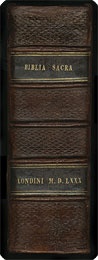
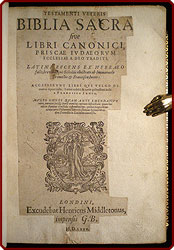
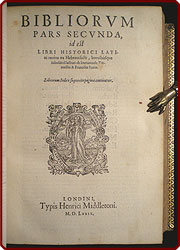
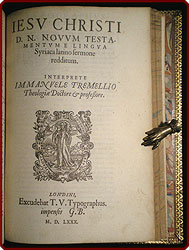 Click the interior images for enlargements.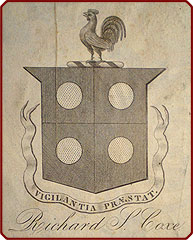
Provenance: Front pastedown with armorial bookplate of prominent attorney Richard S. Coxe, of whom it was once said that “he was employed in more cases upon the docket of the Supreme Court of the United States than any other lawyer in the country” (Dictionary of American Biography); front free endpaper with affixed handwritten description of the volume by Coxe; front fly-leaf with inked presentation inscription by Coxe, dated 1859.
• ESTC S121318; STC (2nd ed.) 2056.4; Rumball-Petre 240; Darlow & Moule 6166. On Coxe, see: DAB, IV, 487–88. 19th-century calf, covers framed and diced in blind with spine also blind-diced, but smaller, and bearing gilt-stamped leather title, place, and date labels; rebacked with old spine laid on, and joints strengthened. Edges and extremities lightly rubbed, spine leather with a few small cracks. Front pastedown with private bookplate as above and smaller institutional bookplate. Title-page text excised from original leaf and mounted, some time ago; outer margin of last page excised and leaf mounted. One early inked textual annotation. First few leaves with small area of worming in lower margins; one leaf with short tear from lower margin, extending into text without loss. Pages age-toned, with scattered light spotting throughout and instances of faint waterstaining; upper edges trimmed closely, occasionally affecting pagination or headers. Turn-ins with gilt roll; all edges marbled to match endpapers. (24877)


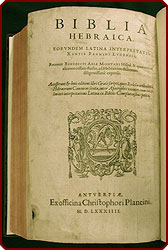
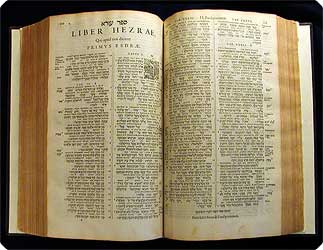
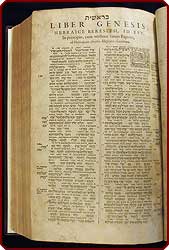
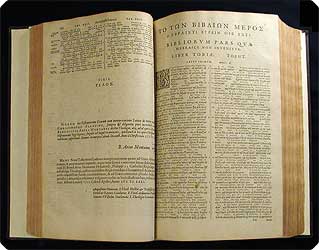
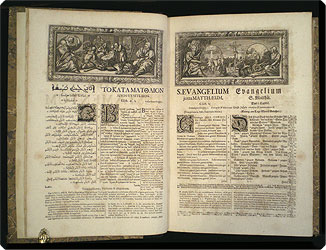
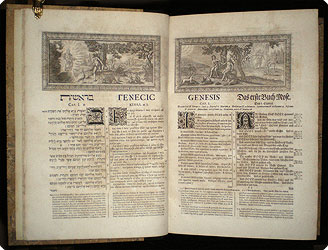
The Hebrew & Greek Volume of PLANTIN’S POLYGLOTBible.
Greek & Hebrew. 1584. Biblia Hebraica & Novum Testamentum Graecum. Antuerpiae: Ex officina Christophori Plantini, 1584. Tall folio (35 cm, 13.9").
¶4 A–Z4 π1 Aa–Qq4, †4 ††6 A–O6 P8
a–x6 y8 z8 aa–gg6 AA–RR6; [viii], 186, 128, [xx], 283, [1], 203, [1] pp.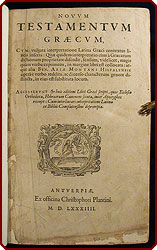
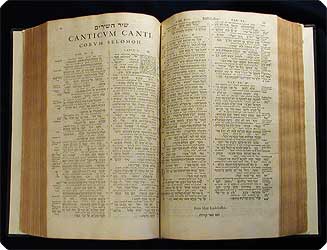
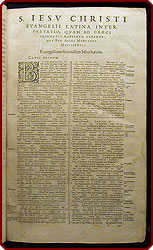 Click the images for enlargements.
 the Royal Antwerp Polyglot. It is comprised of two parts in one volume, edited by B. Arias Montanus: A “complete
Bible in the original languages, with an interlinear Latin translation; the whole reprinted from the Antwerp Polyglot. The Hebrew O.T. starts at the end of the volume, and the Greek N.T. at the beginning, followed by the Greek Apocrypha; each of the two parts has its own separate title” (Darlow and Moule).
the Royal Antwerp Polyglot. It is comprised of two parts in one volume, edited by B. Arias Montanus: A “complete
Bible in the original languages, with an interlinear Latin translation; the whole reprinted from the Antwerp Polyglot. The Hebrew O.T. starts at the end of the volume, and the Greek N.T. at the beginning, followed by the Greek Apocrypha; each of the two parts has its own separate title” (Darlow and Moule).
 Front
pastedown with large, gilt-stamped version of the covers' blind Plantin device.
Both title-pages neatly backed and with marginal restoration. Lacks one blank
between New Testament sections (only). One instance of early underlining. One
leaf with tear from lower margin, not touching text. All edges stained red,
with white splotches to top and bottom ones. Overall, a very clean and well
margined copy, solid for use in an appropriate binding.
Front
pastedown with large, gilt-stamped version of the covers' blind Plantin device.
Both title-pages neatly backed and with marginal restoration. Lacks one blank
between New Testament sections (only). One instance of early underlining. One
leaf with tear from lower margin, not touching text. All edges stained red,
with white splotches to top and bottom ones. Overall, a very clean and well
margined copy, solid for use in an appropriate binding.
The
First Translation of the
Bible into Italian
fromHebrew
& Greek Sources
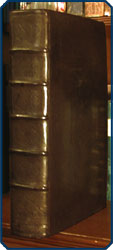
Bible.
Italian. Diodati.
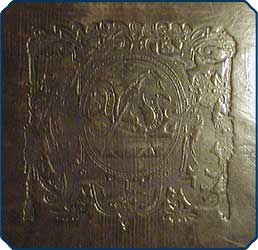
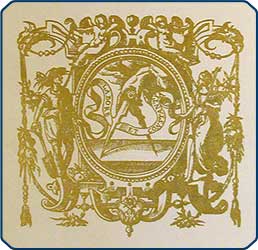
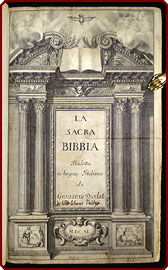
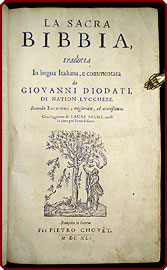
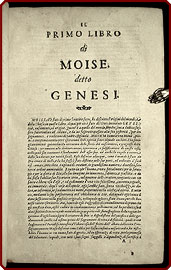
1641. La sacra bibbia tradotta in lingua Italiana, e commentata da
Giovanni Diodati. Stampata in Geneua: Per Pietro Chovët, 1641. Folio (30.5
cm; 12.125"). [3] ff., 837, [3], 331, [1], 148, 68 pp.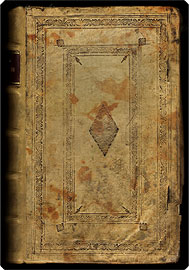
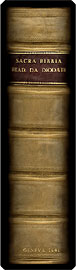
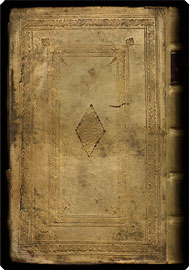 Click the images for enlargements.
 Diodati (1576–1649), a Protestant theologian, in 1609 succeeded Theodore Beza as professor of theology at Geneva, and in fact was Beza's choice for his successor. He is best remembered today as the first to translate the Bible into Italian from Hebrew and Greek sources.
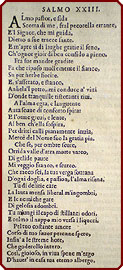
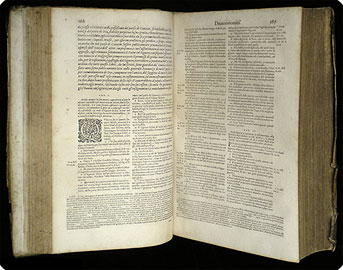
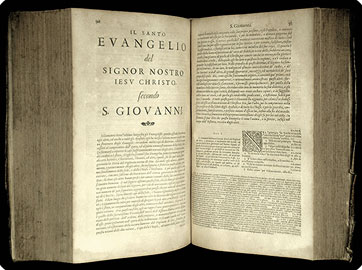
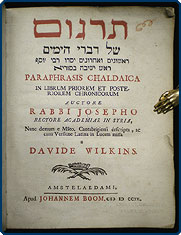
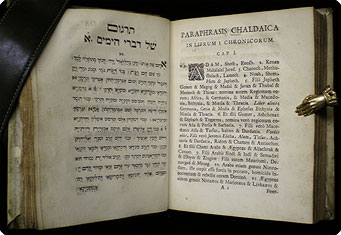
 How GREAT This Scholar Must Have Felt When He Found This! Bible. O.T. Chronicles. Aramaic. Targum. 1715. [four lines in Hebrew characters, transliterated as] Targum shel Divre ha-yamim rishonim ve-aharonim, yisdo Rabi Yosef, rosh yeshivah be-Surya. [then in Latin] Paraphrasis Chaldaica in Librum priorem et posteriorem chronicorum, autore Rabbi Josepho, rectore academiae in Syria. Amstelaedami: apud Johannem Boom, 1715. 4to. [27] ff., 415, [1(blank)] pp.
 Click the interior images for enlargements.
 Printed in Hebrew (with the points) and Latin on opposite pages, this has a title-page printed in black and red; the Latin text is in roman with occasional italic.
An uncommon work in commerce now and in Brunet's time: “Livre recherché et peu commun.” Not heavily held in U.S. libraries, if WorldCat is to be believed, for it locates only eight copies.
• Vinograd, II, 55; Amsterdam 1072; Steinschneider 1157; Zedner 148; Darlow & Moule 2416. Contemporary vellum over paste boards, boards warped and front pastedown abraded and torn by this. Spine lettered in black in 20th-century and with an old library call number at base; library pressure-stamp in lower margin of title-page. A few leaves with slightly tattered foremargins. (25775)
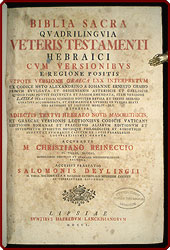
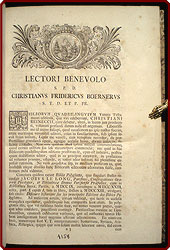
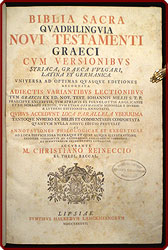
 The Leipzig Polyglot Bible. Polyglot. 1747. Reineccius. Biblia Sacra quadrilinguia Veteris [ac Novi] Testamenti Hebraici ... accurante M. Christiano Reineccio. Lipsiae: Sumtibus Haeredum Lanckisianorum, 1747–51. Folio (37.4 cm, 14.75"). 3 vols. I: [20], 1604 pp. II: [36], 607, [1] pp. III: Add. engr. t.-p., [22], 968 pp.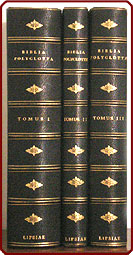
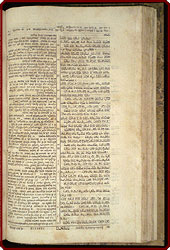 Click the interior images for enlargements.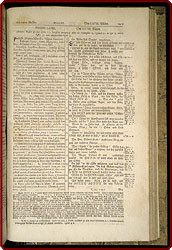
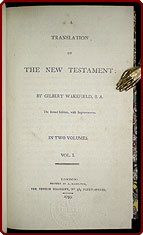
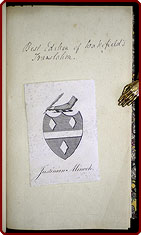
It's the Notes that Are the Real Treat Here Bible. N.T. English. Wakefield. 1795. A translation of the New Testament ... the second edition, with improvements. London: Pr. by A. Hamilton for George Kearsley, 1795. 2 vols. 8vo (21.3 cm, 8.4"). I: [4], viii, 410, [2] pp. II: [4], 472 pp.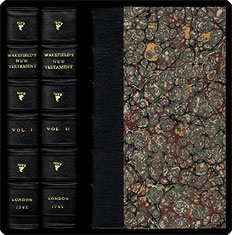
 Click the interior images for enlargements.
 Each volume closes with extensive Notes; the last leaf of vol. I offers a list of other works by this author for sale from the same publisher; and the last page of the second volume has an affixed errata slip. The notes are quite direct and personal, with Wakefield remarking, e.g., on what effect or variety of accuracy he is trying to achieve; what the knot of difficulty at a particular point actually is, for the translator; and whose “excellent” reading he is following (and how the chosen version from the Coptic differs from the Syriac or AEthiopic). He expresses surprise that an “obvious construction” has “escaped the critics” so “remarkabl[y]” long as it has, and in another case confesses that he is “quite at a loss” as to how one clause is supposed to connect with another — definitely, he's a scholar who yetlives in his pages.
Provenance: Armorial bookplates of Justinian Minoch laid in.
• ESTC T93093; Darlow & Moule 933 (see note); Herbert 1362. On Wakefield, see: Oxford Dictionary of National Biography online. Recent quarter black morocco and stone pattern marbled paper–covered sides, leather edges tooled in blind; spines with gilt-stamped title, volume number, place/date, and compartment decorations. Bookplates laid in as above. Half-titles and title-pages with handsome old institutional pressure-stamp; each first text page with inked numeral. Intermittent light foxing, pages otherwise clean. An engaging pair of books in all respects. (25784)
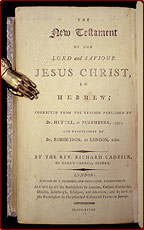
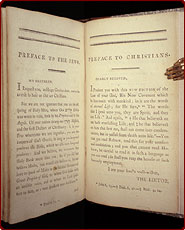
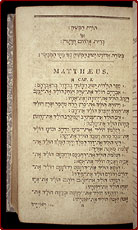
 Gospels in Hebrew Bible. N.T. Hebrew. 1798. The New Testament of our Lord and Saviour Jesus Christ, in Hebrew; corrected from the version published by Dr. Hutter, at Nuremburg, 1599; and republished by Dr. Robertson, at London, 1661. London: T. Plummer, 1798. 8vo (16.7 cm, 6.56"). 40, 319 (i.e., 320) pp.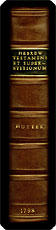
 Click the interior images for enlargements.
 This volume has the first two parts bound together, comprising the four Gospels; a third part was added in 1800, but is not considered intrinsic to the work by either Darlow and Moule or Lowndes. The Hebrew is printed with the points.
Provenance: Private pressure-stamp of “J.H. Williams, Rector of Llangadwaladr” (Anglesey).
Uncommon: OCLC and ESTC find only six U.S. holdings of this Hebrew-only printing, one having since been deaccessioned.
• ESTC T2307 (for part I); Darlow & Moule 5164; Lowndes 2654; Horne, Introduction to the Critical Study & Knowledge of the Holy Scriptures, 48. Recent quarter calf and marbled paper–covered boards, spine with gilt-stamped leather title-label and gilt-dotted raised bands. Title-page with inner margin reinforced and pencilled inscription dated 1825 in upper margin; additional title-page with inked numeral in lower margin; title-page, additional title-page, final page, and one other pressure-stamped with the Rev. Williams's stamp and/or that of a seminary. Foxing; two pages with ink stains touching but not obscuring text. Final leaf with small central tear, without loss of text. Occasional unobtrusive pencilled corrections, underlining. In fact a nice clean copy. (25810)
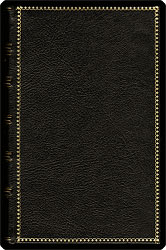
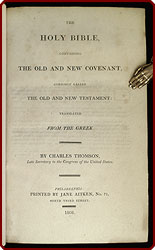
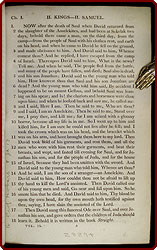
 AT LEAST THREE “FIRSTS” — First English SeptuagintBible. English. 1808. Thomson. The Holy Bible, containing the Old and New Covenant, commonly called the Old and New Testament: Translated from the Greek. By Charles Thomson.... Philadelphia: Pr. by Jane Aitken, 1808. 8vo. 4 vols. I: [252] ff. II: [245] ff. III: [222] ff. IV: [240] ff.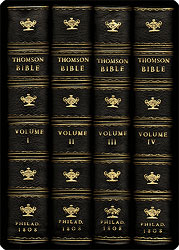
 Click the images for enlargements.
  It was also the first translation of the Greek New Testament into English by a native of Ireland, and of course it is the work of a key figure of the American Revolution.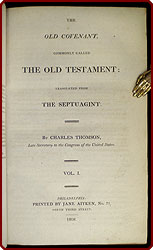
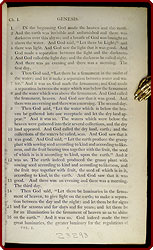
On 4 July 1776 only two signatures were affixed to the unanimously adopted Declaration of Independence — those of John Hancock, president of the Congress, and Charles Thomson, secretary, in order to authenticate the document that had been voted on and approved. Yet by a curious twist of fate (read rather, surely, of a political enemy's knife), when the calligraphic copy that is so well known to every school child was ready shortly after 19 July, authenticator Thomson was not invited to sign it!
When he had retired from public life in 1789, Thomson was to turn his interest in the Bible and Greek to the 20-year task of producing this monumentally important work.
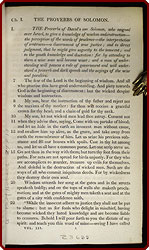
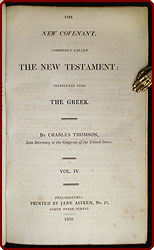
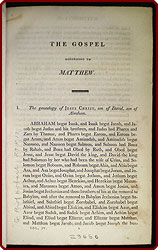
Its printer was the daughter of Robert Aitken, who had printed the first Bible in English in America. A major edition of the English Bible, this is essential for any Bible collection, not just for collections of American Bibles — though as an American Bible and simple Americanum it has a revered place.• Rumball-Petre, Rare Bibles, 184; Hills 153; Herbert 1514; O'Callaghan 91–92; Shaw & Shoemaker 14486. On Thomson, see: Dictionary of American Biography, XVIII, 481–82. Modern full black morocco, signed “GB” (Grace Bindings). Gilt spines. Black endpapers. The effect, richly elegant. Faintly visible pressure-stamps of a library (properly deaccessioned), each volume with neatly pencilled collection note and small old inked 5-digit number to first text leaf; in fact a remarkably clean, ever–well cared for, and handsome set. (26019)
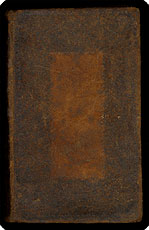
For the FIRST Time, in America . . .Le Nouveau Testament ET le Vieux Bible. French. 1815. La sainte Bible, contenant le Vieux et le Nouveau Testament: Imprimée sur l'édition stéréotype de Londres, et selon l'édition de Paris, de l'année 1805... New York: New-York Bible Society (pr. by J. Seymour), 1815. 12mo (18.2 cm, 7.2"). 798, 246 pp.
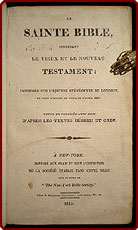
Provenance: Front free endpaper with contemporary inscription, “Susan Prescott's / from a friend — “ Front pastedown with small booklabel of prominent collector Michael Zinman.
• Shaw & Shoemaker 34103; O'Callaghan, 126–27; Rumball-Petrie 193; not in Darlow & Moule. Contemporary mottled sheep, framed and panelled in blind with contrasting leather colors, spine plain without label; binding rubbed overall, but sturdy and solid. Front pastedown with label as above, front free endpaper with inked numeral and inscription above, title-page with almost entirely effaced inked inscription. Front fly-leaf with irregular, nickel-sized hole; a few leaves with their corners crimped; one leaf with a section of margin gone at fore-edgenot touching text (natural paper flaw?). Otherwise, pages mildly age-toned, some lightly to moderately spotted. A good copy. (25187)

ProtestantFrench–GermanDIGLOT Bible. N.T. French & German. 1819. Beausobre–Lenfant & Luther. Le Nouveau Testament suivant la traduction des Mrs. [sic] de Beausobre et Lenfant ... das Neue Testament nach der Uebersetzung D. Martin Luthers. Basel: In der Schweighauser'schen Buchhandlung, 1819. 8vo (18.5 cm, 7.3"). [8], 1101 (i.e., 961), [1 (blank)] pp. (536–37 used twice in pagination, 959–1098 skipped).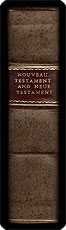
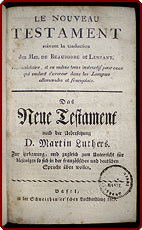
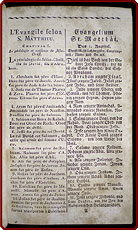
OCLC locates only one U.S. institutional holding of this edition, which has since been deaccessioned.
• Darlow & Moule 4318. Recent speckled paper–covered boards, spine with gilt-stamped leather title-label, all edges stained blue. Front fly-leaf with early inked inscriptions, one dated 1851. Title-page with early institutional rubber-stamp, last page with pressure-stamp, second page of contents with inked annotation along inner margin and rubber-stamped numeral in lower margin. Pp. 959–1098 skipped in pagination; text complete. Foxed, but not badly; clean. (25856)
Tamil New Testament Bible. N.T. Tamil. 1824. The Tamul New Testament of our Lord and Saviour Jesus Christ. [Madras: Madras Auxiliary Bible Society, 1824]. 8vo (19.7 cm, 7.75"). [1106] pp.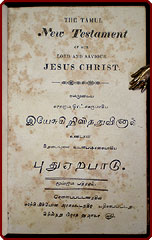
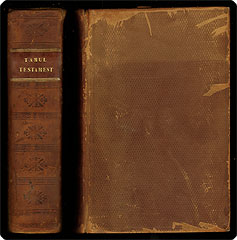
• Darlow & Moule 9120. Contemporary diced calf, spine with gilt-stamped leather title-label and blind-tooled compartment decorations; binding worn and abraded, especially at edges and joints, with upper portion of front cover and inner portion of back cover sunned. All edges marbled; front hinge (inside) tender. Front pastedown with traces of now-absent bookplate. Pages with varying degrees of age-toning; Matthew, Mark, Luke, John, and Acts with English titles added in pencil. (26177)

“The Uninterrupted Harmony” of the New Testament Bible. N.T. English & Greek. 1825. Scientia biblica: Containing the New Testament, in the original tongue, with the English Vulgate, and a copious and original collection of parallel passages, printed in words at length. London: W. Booth, 1825. 8vo (23.2 cm, 9.2"). 3 vols. I: xvii, [3], 592 pp.; 1 plt. II: [4], 669, [3 (2 adv.)] pp. III: [4], 546, [2], [547]–551, [1] pp.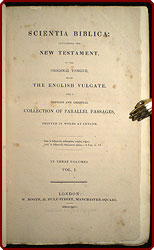
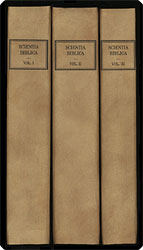 Click the interior image for an enlargement.
 Vol. I opens with a copper-engraved dedication to the king; vol. III closes with a list of subscribers.
Complete sets in good condition are not commonly found on the market.
• Herbert 369; NSTC 2B26321. Original boards (signed binding:
each front pastedown with small ticket of G. Peck, bookbinder), newly rebacked
in the style of the era with tan paper spines in mottled tones bearing new
printed paper labels; corners and edges rubbed, sides showing moderate wear.
Each front pastedown with early inked numeral. Page edges untrimmed; pages
lightly age-toned, with intermittent spotting.  A
very good set. (25087)
A
very good set. (25087)
 For
BIBLE SCHOLARSHIP,
For
BIBLE SCHOLARSHIP,
Syriac N.T. for Bagster's Polyglot Bible. N.T. Syriac. Peshitta. 1828. [Title-page in Nestorian, romanized as] Dîyatîqi' Hedata'. H. Ketaba' de-Ewangelîyôn Qadîsha' de-Maran we-Alahan Yeshû' Meshîha'. London: S. Bagster, 1828. Large 4to (28.6 cm, 11.25"). [8] pp., 568 columns (i.e., 286 pp).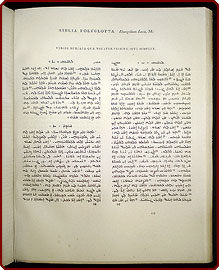
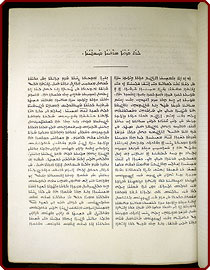
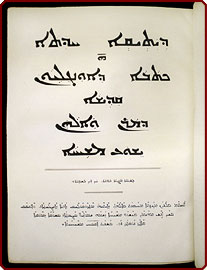
 Click the images for enlargements.
 This copy, interleaved with lined pages, was apparently meant for a scholar's use — but the added blank leaves have been left blank.
• Darlow & Moule 8987. Recent black moiré cloth, spine with gilt-stamped leather title and publication labels; half-title with institutional perforation-stamp, final page with rubber-stamped numeral, no other markings. Scattered faint spotting, otherwise clean.  A handsome copy of an interesting work “got up” in an interesting way. (26950)
Revised First Marathi N.T. — First American Press in India Bible. N.T. Marathi. Hall et al. 1836. The New Testament of Our Lord and Saviour Jesus Christ. Translated from the original Greek into Maráthí. [Bombay]: The Bombay Auxiliary Bible Society (pr. at the American Mission Press), 1836. 8vo (21 cm, 8.25"). [662] pp.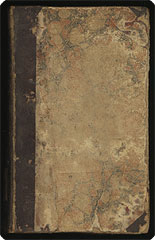
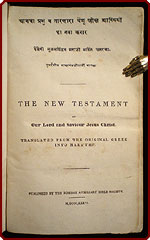
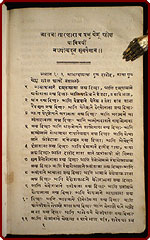 Click the interior images for enlargements.
 Uncommon: OCLC and NUC Pre-1956 find only three U.S. holdings, one of which has been deaccessioned.
• Darlow & Moule 6673; Book of a Thousand Tongues (2nd ed.) 818 (for 1830 ed.). Contemporary half sheep with marbled paper–covered boards, spine with gilt-stamped title; rubbed, scuffed, and faded, spine with small area of discoloration from now-absent shelving label. Front cover slightly sprung, front hinge (inside) strongly reinforced some time ago with cloth tape. Front pastedown with institutional bookplate and rubber-stamp, title-page verso also stamped; front free endpaper with pencilled ownership inscription; rear pastedown and free endpaper with light pencilled annotations. Pages age-toned, with scattered spots of light foxing; some corners dog-eared; one leaf with small hole with loss of a few letters. Occasional inked and pencilled annotations (in Marathi). (25144)
Uncommon Edition ofMartyn's Landmark Translation Bible. N.T. Persian. 1841. Martyn. The New Testament of Our Lord and Saviour Jesus Christ, translated from the original Greek into Persian, at Sheeraz.... Calcutta: Pr. at the Baptist Mission Press for the American & Foreign Bible Society, 1841. 8vo (24.2 cm, 9.5"). [4], 584 pp.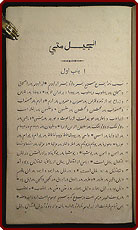
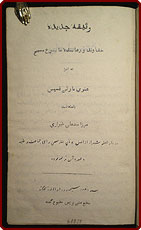
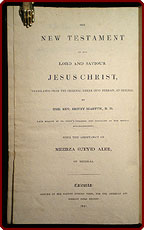 Click the images for enlargements.
 Scarce. OCLC and NUC Pre-1956 find only one U.S. holding of this edition.
• Darlow & Moule 7340; Book of a Thousand Tongues (2nd ed.) 1047 (for first ed.). Publisher's blue textured cloth, spine with printed paper label; boards and spine sunned (spine more so), with cloth cracked at joints and rubbed at extremities, spine label chipped and faded, spine with small area of discoloration and inked shelving number. Front pastedown with institutional bookplates. Two leaves towards front and last two leaves each with inner margins reinforced some time ago. Pages slightly age-toned, with occasional small pencilled marks of emphasis and marginalia in both English and Farsi. (25151)
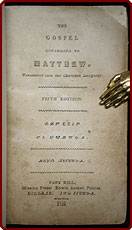
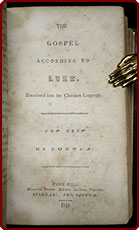
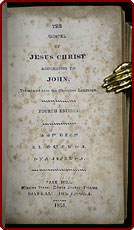
A Composite New Testament inCHEROKEE Bible. N.T. Cherokee. Worcester & Boudinot. [Composite New Testament, as below]. Park Hill: Mission Press, 1842–59. 12mo (13 cm; 5"). Various paginations.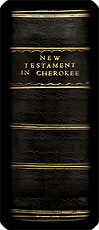
 Click the images for enlargements.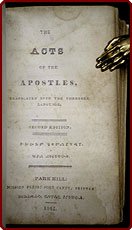
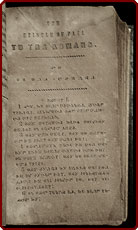
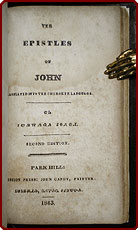
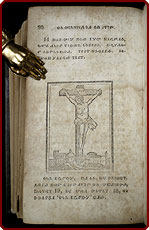 Creating composite New Testaments composed of mixed editions of the separately published Gospels and other books of the New Testament in Cherokee was a common practice at the Park Hill Mission Press in the middle of the 19th century. The main translators were Samuel A. Worcester, a medical missionary, and Elias Boudinot, a Cherokee who had been educated at the Foreign Mission School in Cornwall, Connecticut. His name at birth was Galagina, but at the school he adopted the name of its chief benefactor. Evan Jones was a Welsh-born missionary who spent 50 years among the Cherokee; John B. Jones was his son and was educated at the University of Rochester and then worked with his father as a missionary among the Cherokee until his death in 1876. The Rev. Stephen Foreman was a Cherokee Presbyterian minister and politician, born in Georgia in 1807, the son of John Anthony Foreman, of Scotch descent, and his Cherokee wife Wattie. He attended Union Theological Seminary in Virginia and Princeton Theological Seminary in New Jersey.
The first complete New Testament came from the press of the American Bible Society with a publication date of 1860, but it seems not to have really been published until 1862.
 Present are 13 separately published works containing 23 books of the N.T. in Cherokee using Sequoyah's syllabary (generally called the “Cherokee alphabet”) and printed at the famous Park Hill mission press. Absent from the present offering are Titus, Philemon, Hebrews, and Jude only. The first three of these were printed as a unit, while Jude was a stand-alone.
There is one illustration, a crucifixion, in John.
This is the most complete composite N.T. in Cherokee that we have ever had in our more than a quarter century dealing in American Indian language materials and Bibles.
• Matthew: Pilling, Proof-sheets, 4224; Newberry Library, Ayer Indians, Cherokee-7; not in Darlow & Moule. Mark: Not in Pilling, Proof-sheets (no edition listed); not in Newberry Library, Ayer Indians, (1850 edition listed); not in Darlow & Moule (1858 edition listed). Luke: Not in Pilling, Proof-sheets (no edition listed); not in Newberry Library, Ayer Indians, Cherokee-9; not in Darlow & Moule 2439. John: Pilling, Proof-sheets, 4228; Newberry Library, Ayer Indians, Cherokee-10; not in Darlow & Moule (1838 edition listed). Acts: Pilling, Proof-sheets, 4230; Newberry Library, Ayer Indians, Cherokee-7; not in Darlow & Moule. Romans: Not in Pilling, Proof-sheets; not in Newberry Library, Ayer Indians; not in Darlow & Moule 2446(?). Corinthians: Not in Pilling, Proof-sheets; not in Newberry Library, Ayer Indians; Darlow & Moule 2445. Philippians: Not in Pilling, Proof-sheets; not in Newberry Library, Ayer Indians; Darlow & Moule 2447 (?). Epistles of Paul: Pilling, Proof-sheets, 1214; Newberry Library, Ayer Indians, Cherokee-15; not in Darlow & Moule. Also see North & Nida, Book of a Thousand Tongues (1972), 215 for the publication of the various books of the Bible. Modern black morocco, covers diced and blind-tooled, spine with gilt ruling/beading and a neat gilt spine-label. Most of the Bible parts are browned and more than a few have waterstains. Despite these not uncommon faults we are proud to offer this volume, for we know just how scarce an item it is. (25891)
Calcutta Baptist Mission Press Bible. O.T. Psalms. Bengali. 1844.; Bible. O.T. Proverbs. Bengali. 1844. [four lines in Bengali, then] The Psalms of David and the Proverbs of Solomon in Bengálí. Calcutta: Pr. for the Bible Translation Society and the American and Foreign Bible Society, at the Baptist Mission Press,
1844. 12mo (16.3 cm; 6.5"). 178, 53, [1 (blank)] pp.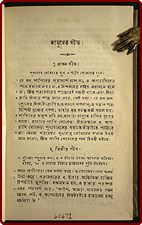
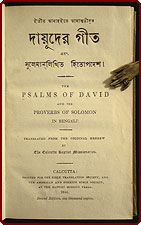 Click the images for enlargements.
 • Publisher's purple cloth with faded printed paper spine label. Ex-library: call number on spine, bookplate removed, pencilled notations, rubber-stamps. Withal, a clean crisp copy. (21736)
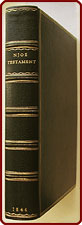
SRANAN!Bible. N.T. Sranan. Treu. 1846. Da Njoe Testament vo wi Masra en Helpiman Jesus Kristus. Bautzen: Ernst Moritz Mouse, 1846. 8vo (21.7 cm, 8.55"). 592 pp 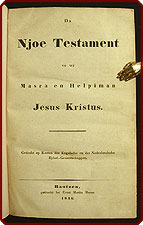
 the
Book of Psalms appears here in a new translation done by Treu.
the
Book of Psalms appears here in a new translation done by Treu.
• Darlow & Moule 6985. Recent full morocco framed in gilt double fillets, spine with gilt-ruled raised bands and gilt-stamped title, signed by Grace Bindings in blind at inner area of rear cover, lower turn-in. Pages age-toned and paper a bit brittle; one leaf with short tear from outer margin, extending into text.
“Oh,
Wha’ll
Gie MeWings
like the Doo?”Bible. O.T. Psalms. Scots. Waddell. 1871. The Psalms: Frae Hebrew intil Scottis. Edinburgh: J. Menzies & Co.; Glasgow: T. & J. Lochhead and Wm. Love, 1871. 4to (21.7 cm, 8.5"). [2], 2, 105, [1] pp.; illus.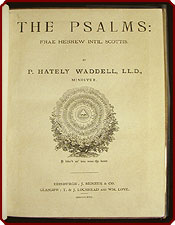
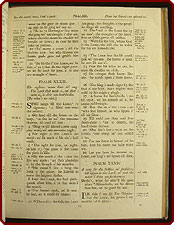
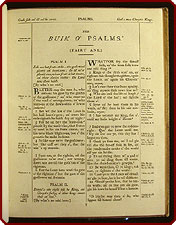 Click the interior images for enlargements.
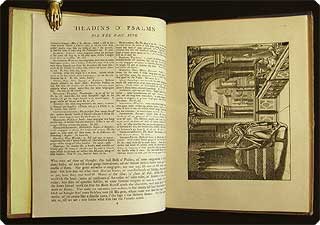
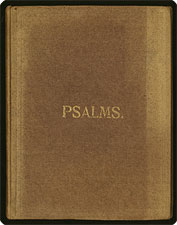
• Publisher’s cloth, front cover with gilt-stamped title; cloth faded along edges and spine. Front hinge (inside) slightly tender. Pages faintly age-toned; in fact, a very clean nice copy.
Printed for DUTCH Missionaries inIndonesia & The Philippines
Bible. N.T. Luke. Sangir. Kelling. 1880. Indjil ko susi, ko niwohe i Lukas. Nisalin su bahasang Sangihe. London: British & Foreign Bible Society, 1880. 12mo (16.5 cm; 6.5"). 196 pp.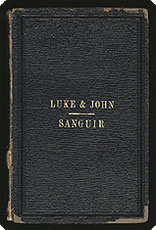
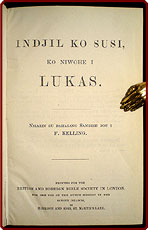
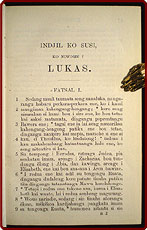 Click the interior images for enlargements.
 The gospels of Luke and John are in Sangir (a.k.a. Sangihe, a.k.a. Sangirese: Siau), an Austronesian language spoken in Indonesia and the Philippines, and despite the initial large printing, this publication of Luke and John is uncommon. We find only one copy reported in U.S. libraries.
• Darlow & Moule 7976. Publisher's black roan in imitation of straight-grain morocco, contents in gilt on front cover. Leather worn at edges and chipped from spine with some small loss; front joint (outside) starting and volume fragile. Internally very good. Now housed in a simple, acid-free phase box. (25032)
For
BIBLES, TESTAMENTS, &
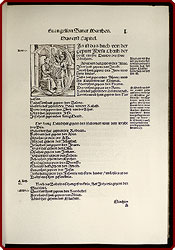
TheFamous September Testament — Well Evoked! Bible. N.T. German. (1522) 1883. Luther. Die Septemberbibel: Das Neue Testament deutsch von Martin Luther. Berlin: G. Grote, 1883. Folio (32.4 cm, 12.75"). [4], 9, [9] pp., CVII, [6], LXXVII, [26] ff.; illus.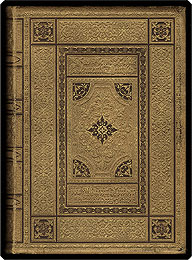
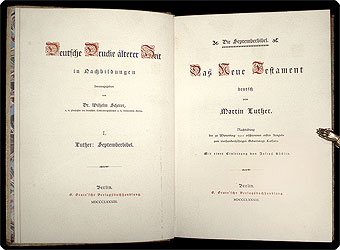 Click the images for enlargements. 21 full-page woodcuts by Lucas Cranach. Illustrating the Book of Revelation, the woodcuts appear here in their original state, before ordinary crowns took the place of the papal tiaras worn by the Antichrist and the Whore of Babylon.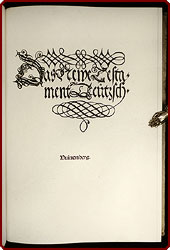
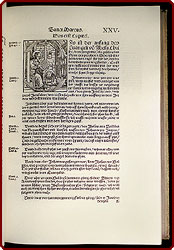
• Binding as above, with light rubbing; front pastedown with Leipzig bookseller's small ticket. Occasional faint smudges; pages mostly clean. A handsome thing. (26301)
First Printing ofAny Portion of the Bible in This Language Bible. O.T. Genesis. Fang. 1894. La Genèse, premier livre de Moïse. Londres: Societé Biblique Britannique et Étrangè, 1894. 12mo (16 cm; 6.25"). Frontis. color map, 186 pp.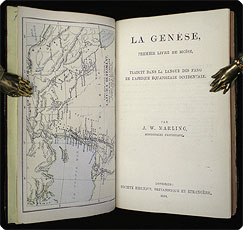
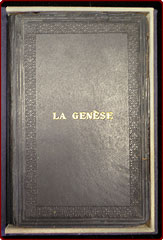
This is the first printing of any portion of the Bible in Fang (here Gabon-Fang). The translator was A.W. Marling of the American Presbyterian Mission.
Rare: We trace only two copies in U.S. libraries.
• North & Nida, Book of a Thousand Tongues (1972), 387. Publisher's black flexible leather (very black, not the charcoal that our photo seems to show!) stamped in blind and gold: chipped at edges and spine repaired. Now in a cloth clamshell case with a leather spine label. (25426)
The Gospels in a Turkic Language Bible. N.T. Gospels. Yakut. 1898. [title-page in Cyrillic transliterated as] Gospoda nashego Iisusa Khrista Sviatoe Evangelie na iakutskom iazykie. Kazan: Tipo-lit. V.M. Kliuchnikova, 1898. 8vo (24 cm; 9.5"). 237, [1(blank) pp.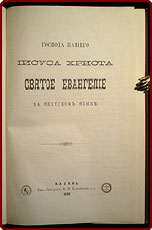
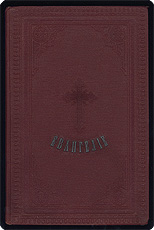 Click the interior image for an enlargement.
 Uncommon: We find only one copy reported as held in a U.S. library.
• Darlow & Moule 9538. Publisher's red cloth stamped in blind and with one word in gilt on front cover. A very good copy. (25045)
Psalms
in Sangir
/ Sangihe
/ Sangirese:
Siau
Bible. O.T. Psalms. Sangir. Kelling et al. 1901. Buke u Masmur ko susi. London: British & Foreign Bible Society, 1901. 8vo (19.2 cm; 7.5"). 222 pp.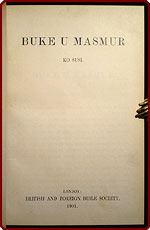
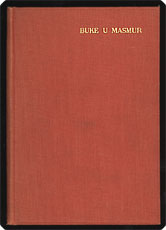
Sangir is an Austronesian language spoken inthe Philippines and Indonesia, especially in the Silawesi and Siau regions.
Click the interior image for an enlargement. Uncommon: We locate only one copy in U.S. libraries.
• Darlow & Moule 7983. Publisher's red cloth. Very good copy. (25001)
ForVanautu, Where They SpeakTOLOMAKO Bible. N.T. Acts. Tolomako. Yates et al. 1906. A translation into Santoese (St. Philip's Bay) of the Doings of the Apostles[:] ra vei hira Varisula. Melbourne: Melbourne Auxiliary, British & Foreign Bible Society (Arbuckle, Waddell &Fawckner, Printers), 1906. 12mo (18.5 cm; 7.25"). 70 pp.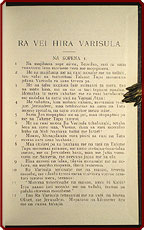
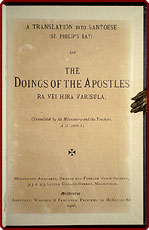 Click the images for enlargements.
 The first translation of any portion of the Bible into Tolomako only occurred in 1904.
Given the small size of the Tolomako-speaking population, this must have been printed in an edition of 200 or fewer copies. We find only one copy in U.S. libraries.
• Darlow and Moule 8064; Dance, Oceanic scriptures, 573. Publisher's moiré-style dark green cloth, plain without lettering or labels. Front free endpaper excised with front hinge (inside) exposed; title-page with significant off-setting, therefore, from the binding. A good copy of a very scarce work. (25030)
First Pentateuch in thisIsland Language Bible. O.T. Pentateuch. Pangasinan. 1912. Benitez. Saray simaran onaan á lebro'y Santa Biblia ya Genesis, Exodo, Levitico, Numero tan Deuteronomio. Manila: Sociedad Bíblica Británica y Extrangera, 1912. 12mo (18 cm; 7.25"). 541, [1 (blank) pp.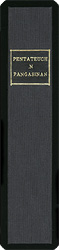
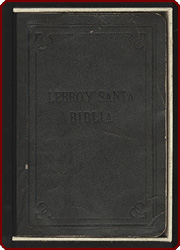
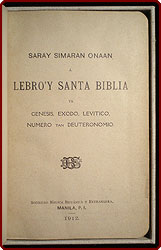
The first translation of any book of the Bible into Pangasinan did not come about until 1887, followed by the first Testament in 1908 and the first complete Bible in 1915. This is the first printing of the Pentateuch. It was translated by Eduardo Benitez assisted by Teodoro Basconcillo and A. Rayner, all of the American Methodist Episcopal Mission. It has chapter headings and some footnotes.
Rare. Searches of NUC Pre-1956, COPAC, and OCLC locate no copies in U.S. libraries and only the B.F.B.S. copy at Cambridge.
• North & Nida, Book of a Thousand Tongues (1972), 346. Publisher's flexible black fabric over light boards, stamped in blind on front cover; expertly rebacked and remnants of original spine reapplied. Small “nick” to fore-edge of first two leaves, without loss; paper a little age-toned, with interior otherwise quite clean. Housed in a dark blue cloth clamshell case. (25180)
A Language ofKazakhstan Bible. N.T. Gospels. Udmurt. 1912. [title-page in Cyrillic type transliterated as] Gospoda nashego Iisusa Khrista Sviatoe Evangelie ot” Matfeia, Marka, Luki i Ioanna na votskom” iazykie. Kazan: TSentral’naia tipografiia, 1912. 8vo (21 cm; 8.25"). 327, [1 (blank)] pp.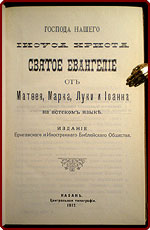
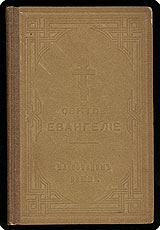
Only one U.S. library reports owning a copy of this translation.
Click the interior image for an enlargement. • Darlow & Moule 9564 (for the 1904 printing). Publisher's quarter brown cloth with tan paper covers, stamped in blind. “Kazakhstan Russia” in ballpoint on the front free endpaper. A very good copy. (25046)
New Testament forFlorida Island Bible. N.T. Gela. Graves. 1923. Na lei gegere te tabu. London: British & Foreign Bible Society, 1923. 12mo (17 cm; 6.5"). 579, [1 (blank)] pp.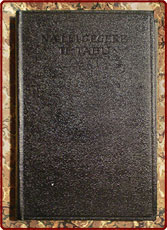
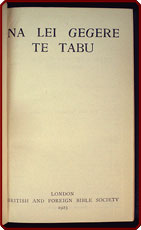
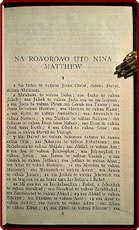 Click the interior images for enlargements.
 Uncommon: We trace only one copy in U.S. libraries.
• Publisher's black cloth; title blind-stamped on cover. All edges carmine. Light offsetting to the free endpapers. A very good copy, clean and even bright. (25028)
First Printing ofAny Portion of the BiblePacific Island Language Bible. N.T. Gospels. Roviana. Goldie et al. 1946. Ka made Gosipeli pa zinama Roviana (Matiu, Maka, Luke, meke Jone). Sydney: Commonwealth Council of the British & Foreign Bible Society, 1946. 8vo (18 cm; 7"). 77, 43, 82, 59 pp.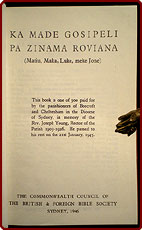
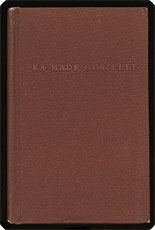 Click the interior image for an enlargement.
 The title-page states: “This book is one of 300 [copies] paid for by the parishioners of Beecroft and Cheltenham in the Diocese of Sydney, in memory of the Rev. Joseph Young, Rector of the Parish 1903-1926. He passed to his rest on the 21st January, 1945.”
Uncommon. We trace only two copies in U.S. libraries.
• Publisher's red cloth. “North Central New Georgia” in ballpoint on the front free endpaper. A very good copy. (25022)
For more BIBLES & TESTAMENTS, Or
for an unillustrated PDF catalogue offering 100
Bibles, Testaments,
& Bible Parts in Non-European Languages,
mostly not in that catalogue,
please CLICK
HERE.
 TO
Part III . . . TO
Part III . . . |