 18TH-CENTURY BOOKS
Aa-Al • Am-Az • Ba-Beq • Ber-Bo • Bibles • Bp-Bz
Ca-Cb • Cc-Coq • Cor-Cz • Da-Di • Dj-Dz
Ea-England • English-Ez • F • Ga-Gp • Gr-Gz • Ha-Hb
Hc-Hz • I-K • La-Lel • Lem-Log • Loh-Lz • Maa-Mar
Mas-Mz • N-O • Pa-Pi • Pj-Pz • Q-R • Sa-Sch
Sci-Se • Sf-Sol • Som-Sz • Ta-Th • Ti-U • Va-Wil • Wim-Z
 He Tries to
 Cover It ALL!
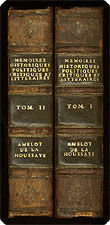
 Amelot de la Houssaye, Abraham-Nicolas, sieur. Memoires
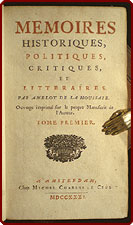
historiques, politiques, critiques, et literraires. Par Amelot de la Houssaie. Ouvrage imprimé sur le propre manuscrit de l'auteur. Amsterdam: Michel Charles Le Cene, 1731. 12mo. 2 vols. I: 561 pp. II: 462 pp., [11 (adv.)] ff.
Amelot de la Houssaye, Abraham-Nicolas, sieur. Memoires
historiques, politiques, critiques, et literraires. Par Amelot de la Houssaie. Ouvrage imprimé sur le propre manuscrit de l'auteur. Amsterdam: Michel Charles Le Cene, 1731. 12mo. 2 vols. I: 561 pp. II: 462 pp., [11 (adv.)] ff.
$350.00
• First edition. Anecdotes of the French court under Louis XIV. Title-page handsomely printed in red and black.
Provenance: From the collection of 19th-century scholar Dr. Johann August Neander (1789–1850), a convert from Judaism who became a leading scholar of Christian church history.
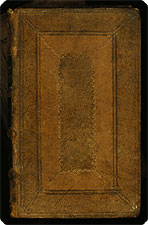
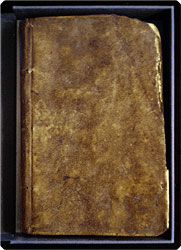
• Brunet 18324. Contemporary calf, spine with raised bands, gilt-stamped compartment decorations at top/bottom, and later black leather gilt-stamped labels; covers blind-tooled in concentric compartments. Rubbed with bits of leather lost at extremities; offsetting from leather along margins of endpapers and title-pages. Marbled endpapers, free ones missing in both volumes; front pastedowns each with library bookplate and both title-page versos with call number in pencil. Initial pages of vol. II toned. A good solid set. (21186)

 Defending the Immortality of the Soul
&
also the Necessity of a Revealed Religion
Anonymous. Free thoughts upon the discourse of free-thinking. London: John Pemberton, 1713. 8vo (19.8 cm, 7.8"). [4], 68 pp.
$400.00
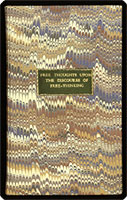
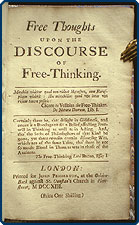
• First edition of this anonymously published, unattributed response to Anthony Collins's Discourse of Free-thinking. That controversial treatise, the groundbreaking work of the 17th- and 18th-century English Freethought movement, inspired numerous rebuttals, with the present item being one of the less commonly seen replies.
• ESTC T96164. Recent marbled paper–covered boards, front cover with gilt-stamped leather title-label. Pages slightly age-toned, else clean. (20770)
 For more RELIGION, click here.
 Or for FREE THINKING, click here.
Duty
Revisited with
a New
Spin: Faith
Added
Anonymous.
The new Whole duty of man, containing the faith as well as practice of a Christian;
made easy for the practice of the present age ... fourteenth edition. London:
Edward Wicksteed, [1756]. 12mo (18.1 cm, 7.15"). Frontis., add. engr. t.-p.,
[2], xiv, 556 (i.e., 565), [18], 584–85, [3] pp.
New
Spin: Faith
Added
Anonymous.
The new Whole duty of man, containing the faith as well as practice of a Christian;
made easy for the practice of the present age ... fourteenth edition. London:
Edward Wicksteed, [1756]. 12mo (18.1 cm, 7.15"). Frontis., add. engr. t.-p.,
[2], xiv, 556 (i.e., 565), [18], 584–85, [3] pp.
[SOLD]
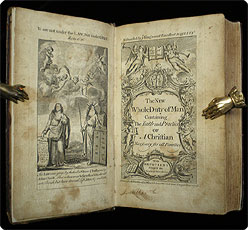
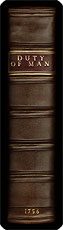
• Extensive reworking of Richard Allestree's devotional classic, first published in 1658. This much-altered version of the hugely popular guide to moral conduct “treats of the faith as well as practice of a Christian” (p. 583) and was first published in 1741 in competition with a printing of the old, unrevised version, which — as the title-page here notes — “was designed for those unhappy Times in which it was written.” Much criticism of the original text is present. The updated rendition cites several major areas where the first Duty had been lacking, with details under those topics including “the Duty of Princes,” “the King's Supremacy in ecclesiastical Affairs, and Power to punish evil Ministers,” “the Deceit and sin of Borrowing on bad Securities,” and (for wives) “How to behave to an adulterous Husband; and how to reclaim him.”
 Click the images for enlargements.
The original Whole Duty is now generally ascribed to Allestree although, as the DNB says, “it has by some been supposed that Allestree joined [his good friend and biographer] Bishop [John] Fell” in writing it.” Allestree (1619–81) was a royalist Church of England clergyman; Bishop Fell reports that “few of his time had either a greater compass or a deeper insight into all parts of learning” (DNB). The hand responsible for the present alterations of his most famous work has not yet been identified.
The volume begins with a copper-engraved frontispiece depicting Moses giving the law and Jesus giving grace and truth, and an additional engraved title-page. The frontispiece to the original edition, done byHollar, is reproduced here as a full-page illustration. The section of “Private Devotions: Containing directions and prayers for morning and evening . . .” has a separate title-page.
Provenance: Large ownership note of Nathan Levering on imprimitur page; the start, perhaps, of his second signature (much smaller) to the bottom of the title-page.
This edition is uncommon, as are most of the other printings from this time period. OCLC and ESTC locate only three U.S. institutional holdings, two of which have since been deaccessioned.
• ESTC T80506. On Allestree, see: Oxford Dictionary of National Biography online. Contemporary speckled calf framed in gilt double fillets, recently rebacked, spine with gilt-stamped leather title-label and gilt-dotted raised bands; corners and edges rubbed. Lower edges (closed) institutionally rubber-stamped; frontispiece and several pages pressure-stamped; dedication with inked annotation and numeral. Front fly-leaf with early inked annotation consisting mostly of numerals; title-page verso with inked ownership inscription as above. Foxing and the occasional stain; one leaf with short tear from outer margin touching text without loss; one index leaf with tear affecting a few words. In fact, a decent copy of this interesting book. (25857)
For more RELIGION, click here.
For more CONDUCT Books, click here.
For more Books with SPECIAL
PROVENANCE, click here.
This book also appears in the GENERAL
MISCELLANY — click here.

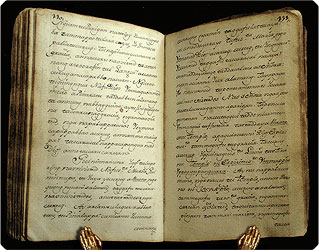
Extended MANUSCRIPT in an UNCOMMON PHILIPPINE LANGUAGE
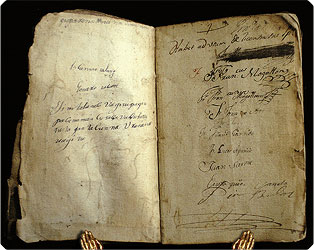
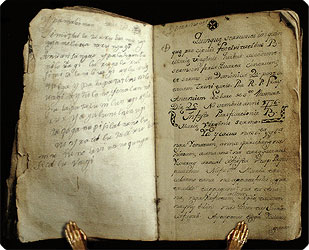
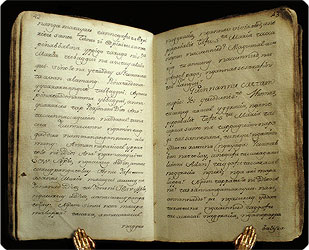
Antonio Lobato de Santo Tomás. Manuscript in Ibanag on paper: “Quinque sermones in quinque precipuis festivitatibus B. Maria Virginis. Quibus accedunt sermo in feria quarta cinerumz et sermo in dominica 2o post octavam trinitatis. Per R. P. fray Antoniium Lobatao de Sto. Thomas. Tuguegarao, The Philippines: 1776–80. Small 4to. 196 pp.
UNCOMMON PHILIPPINE LANGUAGE
Antonio Lobato de Santo Tomás. Manuscript in Ibanag on paper: “Quinque sermones in quinque precipuis festivitatibus B. Maria Virginis. Quibus accedunt sermo in feria quarta cinerumz et sermo in dominica 2o post octavam trinitatis. Per R. P. fray Antoniium Lobatao de Sto. Thomas. Tuguegarao, The Philippines: 1776–80. Small 4to. 196 pp.
$30,000.00
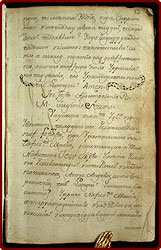
Click the interior images for enlargements.
• Precious few manuscript sources in the Ibanag language survive from the Spanish colonial era of the Philippines. Only a handful of missionaries worked in the region of the northeastern Philippine provinces of Isabela and Cagayan, most notably in Tuguegarao City, Solana, Cabagan, and Ilagan, where the language was/is spoken; and not all mastered the tongue. Fray Antonio Lobato was one of those who did and it was he who took Fr. José Bugarin's Ibanag–Spanish dictionary, created in the previous century, and edited it to a usable work — though the result was not published until the 19th century, and, apparently, no other work was published in the language during the 16th, 17th, or 18th centuries.
The importance, then, of  a large body of work set down in the Ibanag language, from the 18th century and as written/spoken by one of the seminal scholars of the language, should be obvious for anyone researching the language as understood by missionaries, as used by missionaries, as influenced by Spanish, and as held out by Spaniards of authority as the model of Ibanag speech to be emulated. Beyond this, of course, is the interest of the sermons themselves, letting us see what the Ibanaq speakers were hearing from their missionaries — or, at least, this missionary — in this place, in this period.
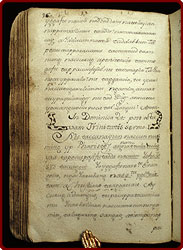
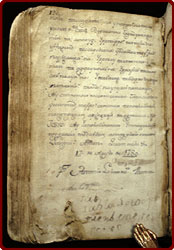
Fray Antonio's sermons are here written in a clear, easy to read hand and the dates of composition or of delivery are often noted.
Provenance: A signature “Fr. Antonio Lobato de Sto. Thomas” appears at the bottom of the last page and is almost certainly that of the the friar himself, which would mean that this is his autograph manuscript of the sermons.
• Contemporary very stiff vellum. Binding gnawed by a rodent with loss. Written on a good quality European paper, with some soiling and an occasional stain. No faults are serious and overall this is a remarkably good survival for an 18th-century Philippines manuscript. Now housed in a blue cloth clamshell box. (23668)
For more MANUSCRIPTS, click here.
For DICTIONARIES/GRAMMARS/
LANGUAGES, ETC., click here.
For VOYAGES, TRAVELS, & books on
“EXOTIC” PLACES, click here.
Or, for CATHOLICA, click here.
This also appears in the HISPANIC
MISCELLANY — click here.
&, in the GENERAL
MISCELLANY — click here.
Aristophanes. Aristophanis comoediae ex optimis exemplaribus emendatae studio Rich. Franc. Phil Brunck Argentoratensis. Argentorati: Joh. Georgii Treuttel, 1781–83. 4to (26.8 cm, 10.5"). 3 vols. I: Frontis., [16], 295, [1], 182, 291, [1] pp. II: [2], 310, 199, [1], 257 (i.e., 259: 63/64 repeated in pagination), [1] pp. III: [2], 291, [1], 128, 228, [160 (index)] pp.
[SOLD]

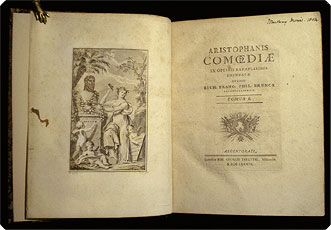
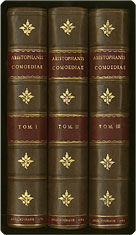
• First edition, large-paper issue of Richard François Philippe
Brunck’s edition of Aristophanes’s works, with the Greek text annotated
in Latin and followed by a Latin translation. The dates on the main and separate
title-pages and on the colophons range from 1781 through 1783. Dibdin calls
this “A very celebrated edition,” and Brunet a “belle édition,”
also noting that examples in the present quarto format are much less common
than in the octavo format issued at the same time.
Click
the interior image for an enlargement.
• Brunet, I, 453–54; Dibdin, I, 301–02; Graesse,
I, 207; Schweiger, I, 46. Recent quarter calf and marbled paper–covered
sides, leather edges tooled in blind, spine with gilt-dotted raised bands,
gilt-stamped leather title and volume labels, and gilt-stamped decorations
in compartments. All edges gilt. Vol. I title-page with inked ownership inscription
dated 1884 in upper outer corner; frontispiece with ink stain to outer margin
not touching image (in our picture above, this misleadlingly looks like it
could be a wormhole). Faint spots of foxing in some sections, pages otherwise
clean.
[Arnall,
William]. The second part of the case of tythes; containing animadversions
on a reverend prelate’s remarks upon the bill now depending in Parliament...to
which are prefix’d the reverend prelate’s remarks. The third edition,
with additions. London: J. Peele, 1731. 8vo (19 cm, 7.5"). 32 pp.
$425.00
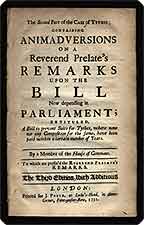 • A political writer who took up his pen at a very tender age, Arnall
became a target of Pope’s wrath (in the epilogue to the Satires:
“Spirit of Arnall, aid me whilst I lie!”). Here he involves himself
in the contemporary debate over tithing rights, questioning assertions made
in favor of the clergy. The points he rebuts were made by Thomas Sherlock, in
his Remarks upon a Bill Now Depending in Parliament; the response appeared
in its earlier editions under the simpler title Animadversions on a Reverend
Prelate’s Remarks, with this third edition being the first to bear
the expanded title, which apparently refers to Arnall’s text serving as
the second part of the prelate’s remarks.
• A political writer who took up his pen at a very tender age, Arnall
became a target of Pope’s wrath (in the epilogue to the Satires:
“Spirit of Arnall, aid me whilst I lie!”). Here he involves himself
in the contemporary debate over tithing rights, questioning assertions made
in favor of the clergy. The points he rebuts were made by Thomas Sherlock, in
his Remarks upon a Bill Now Depending in Parliament; the response appeared
in its earlier editions under the simpler title Animadversions on a Reverend
Prelate’s Remarks, with this third edition being the first to bear
the expanded title, which apparently refers to Arnall’s text serving as
the second part of the prelate’s remarks.  Conveniently, both Sherlock’s argument and Arnall’s
response are printed here.
Conveniently, both Sherlock’s argument and Arnall’s
response are printed here.
• ESTC T108041. On Arnall, see: The Dictionary of National
Biography, II, 103). Removed from a nonce volume and now in a Mylar folder.
Final page stamped by a now-defunct institution. Small area of worming in
lower outer corner throughout, not touching text.
[Asgill,
John]. Mr. Asgill’s defence upon his expulsion from the House of
Commons of Great Britain in 1707. With an introduction, and a postscript. London:
A. Baldwin, 1712. 8vo (19.2 cm, 7.55"). 87, [1] pp.
$200.00
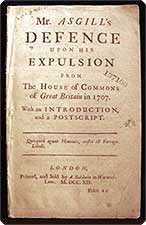
• Asgill, expelled from the Irish House of Commons for the questionable
state of his finances and then from the English House for having published his
claim that true believers in Christ will be translated wholly into Heaven rather
than experiencing bodily death, here expounds on his rapturous religious
tenets while affirming his belief in the Scriptures and denying
any wrongdoing—especially in the pesky land speculation matter. One might,
upon perusing Asgill’s arguments, agree with the assessment made by the
printer of the original treatise, who “fancy’d [Asgill] was a little
craz’d” (p. 40).
his rapturous religious
tenets while affirming his belief in the Scriptures and denying
any wrongdoing—especially in the pesky land speculation matter. One might,
upon perusing Asgill’s arguments, agree with the assessment made by the
printer of the original treatise, who “fancy’d [Asgill] was a little
craz’d” (p. 40).
This example is apparently a variant state of the first edition of 1712 (ESTC
does not distinguish between variants, grouping all entries under one listing),
with p. 61, line 8 ending “of the Romish Persuasion.’
• ESTC T41498. On Asgill, see: The Dictionary of National Biography,
II, 159–61. Removed from a nonce volume, now in a Mylar folder. Title-page
with small numeric stamp, spots of discoloration. A few pages more notably
browned than their neighbors; otherwise generally clean.
 The Very Rare Richmond Printing
 First Edition of the First Register — Anti-Slavery Content
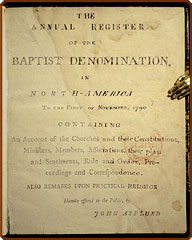
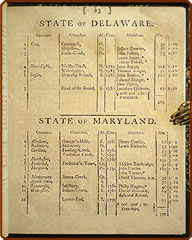
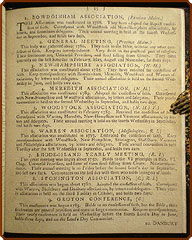
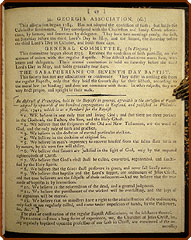
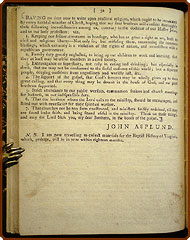
Asplund, John. The annual register of the Baptist denomination, in North-America; to the first of November, 1790. Containing an account of the churches and their constitutions, ministers, members, associations, their plan and sentiments, rule and order, proceedings and correspondence. Also remarks upon practical religion. [Richmond: Printed by Dixon, Nicolson, and Davis, April, 1792]. 4to (18.5 cm; 7.5"). iv, 5-60 pp.
First Edition of the First Register — Anti-Slavery Content
Asplund, John. The annual register of the Baptist denomination, in North-America; to the first of November, 1790. Containing an account of the churches and their constitutions, ministers, members, associations, their plan and sentiments, rule and order, proceedings and correspondence. Also remarks upon practical religion. [Richmond: Printed by Dixon, Nicolson, and Davis, April, 1792]. 4to (18.5 cm; 7.5"). iv, 5-60 pp.
$2250.00
Click the interior images for enlargements.
• First edition of the first Baptist annual register, with an anti-slavery statement set firmly forth.
The wonderful cataloguers at the American Antiquarian Society write of this edition: “Apparently printed in sections, presumably by John Dixon, Thomas Nicolson and Augustine Davis, rival Richmond printers. The first 16 p. were probably printed in 1791; p. 17-60 in or before April, 1792. Evans, however, postulates that the first 16 p. were printed by Thomas Dobson of Philadelphia in September, 1792, and that Asplund replaced the original gatherings A and B of this edition with Dobson’s corrected sheets. Cf. the prefaces to the 1794 and 1796 editions, with title: The universal register of the Baptist denomination . . .”
In addition to its exhaustive account of who's who and what's where, this lists
both principles of belief and “Rules of Decorum”; the latter, e.g.,
forbid laughing and whispering when another member of the association is speaking
in assembly. Just before the Appendix, Asplund remarks on the un-Christian “inconsistency”
of “Keeping our fellow-creatures in bondage, who have as good a right
was we, both to civil and religions liberty — Not only so; but misusing
them, concerning common blessings, which certainly is a violation of the rights
of nature and inconsistent with a republican government.” This
was a standard Baptist stance, if not one universally held; it is striking here
as appearing on p. 52, in the part of the pamphlet that Evans and the AAS agree
was Richmond-printed. At the end of that section,
Asplund notes thathe
is writing from the American “field” —
“N.B. I am now travelling to collect materials for the Baptist History
of Virginia, which, perhaps, will be in print within eighteen months.”
Rare. We trace fewer
than half a dozen copies in U.S. libraries.
• Evans 26580; Sabin 2222; ESTC W37301. 19th-century half
morocco with marbled paper covered boards; binding with label of “John
C. Moore, Rochester, NY.” Ex-library with area of discoloration on front
board where call number label was removed; bookplate on front pastedown; rubber-stamp
on title-page, and small stamp and pencilling on rear of same. Approximately
60% of title-leaf replaced in pen and ink facsimile. Some foxing and age-toning.
Not an ideal copy, but given the rarity, a darned good one. (24456)
For more PRE-1820 AMERICANA, click here.
For other ABOLITION items, click here.
For more RELIGION, click here.
For Books for the BUSTED
BIBLIOPHILE, click here.
This book also appears in the GENERAL
MISCELLANY — click here.
Dobson Printing of Asplund's Annual Register
Asplund, John. The annual register of the Baptist denomination, in North-America; to the first of November, 1790. Containing an account of the churches and their constitutions, ministers, members, associations, their plan and sentiments, rule and order, proceedings and correspondence. Also remarks upon practical religion. [Philadelphia: Pr. by Thomas Dobson, 1792]. Small 4to. iv, 5-57, [1], 69-70 pp.
Asplund's Annual Register
Asplund, John. The annual register of the Baptist denomination, in North-America; to the first of November, 1790. Containing an account of the churches and their constitutions, ministers, members, associations, their plan and sentiments, rule and order, proceedings and correspondence. Also remarks upon practical religion. [Philadelphia: Pr. by Thomas Dobson, 1792]. Small 4to. iv, 5-57, [1], 69-70 pp.
$650.00
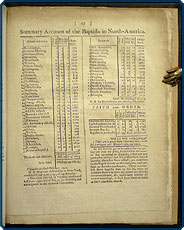
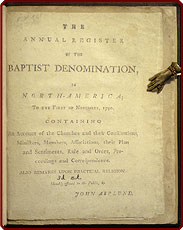
• According to the OPAC at the American Antiquarian Society, this is “An abridgment of the 70 p. Philadelphia edition (Evans 26583) printed by Dobson in September 1772 [i.e., 1792]. In the present issue, the appendix relating to the Baptist churches of Great Britain (p. 58-66) has been omitted, and p. 57 has been reset.
Click the images for enlargements.
As is the case with the 70 p. issue, the first 16 p. are the same sheets as appear in the original [Richmond, April 1792] edition (Evans 26580), and were probably printed in 1791. Evans, however, postulates that the first 16 p. were printed by Dobson in September 1792. He accounts for their presence in copies of the [Richmond] edition of 60 p. by suggesting that Asplund substituted the corrected Philadelphia sheets for the unsatisfactory sheets of the earlier edition. Cf. the prefaces to the 1794 and 1796 editions, with title: The universal register of the Baptist denomination.”
In addition to its exhaustive account of who's who and what's where, this lists both principles of belief and “Rules of Decorum”; the latter, e.g., forbid laughing and whispering when another member of the association is speaking in assembly. Between the “Rules of Decorum” and the Index, Asplund remarks on the un-Christian “inconsistency” of “Keeping our fellow-creatures in bondage, who have as good a right was we, both to civil and religions liberty — Not only so; but misusing them, concerning common blessings, which certainly is a violation of the rights of nature and inconsistent with a republican government.”
• Evans 26582; ESTC W37302. Uncut copy. In 20th-century black buckram binding. Ex-library with bookplate but no other markings. (24467)
For more PRE-1820 AMERICANA, click here.
For other ABOLITION items, click here.
For more RELIGION, click here.
For more of PHILADELPHIA
interest, click here.
This also appears in the GENERAL
MISCELLANY — click here.

St.
Augustine It
isNOT
— Anselm,
Bernard,
& the Dean
of Canterbury,
It IS!
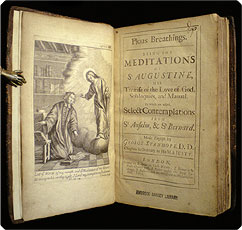
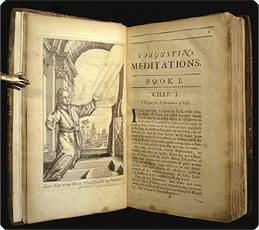
Augustinus Aurelius, S. (pseudo). Pious breathings. Being the Meditations of St. Augustine, his Treatise of the love of God, Soliloquies, and Manual. To which are added, select contemplations from St. Anselm, & St. Bernard. London: S. Sprint, T. Bennet, R. Parker, J. Bullord, & M. Gilliflower, 1701. 8vo (20.7 cm, 8.1"). [10], 414 pp. (pagination 177/78 skipped, 209/10 repeated, text complete); 4 plts.
$325.00
Click the images for enlargements.
• First edition of this translation by George Stanhope, dean of Canterbury and an acclaimed preacher. Although Stanhope and the title-page attribute the first four items to St. Augustine, the works were not written by that saint — the accompanying pieces by St. Anselm and St. Bernard, however, are correctly assigned.
The volume is illustrated with a frontispiece and three other copper-engraved plates done by “I. Simons.”
• ESTC T97614. Contemporary speckled calf framed and panelled
in blind with contrasting plain calf panel and blind-tooled corner fleurons,
rebacked with lighter speckled calf, spine with gilt-stamped leather title-label;
sides abraded. Contemporary inked ownership inscription to back of frontispiece
and similarly old small inked notation (monogram?) to title-page; ; title-page
institutionally rubber-stamped at base (no other markings). Pages age-toned;
intermittent light spotting and staining. (24438)
For more ILLUSTRATED BOOKS, click here.
For more RELIGION, click here.
For more CATHOLICA, click here.
This also appears in the GENERAL
MISCELLANY — click here.
PLACE
AN ORDER |
E-MAIL US |
PRB&M HOME